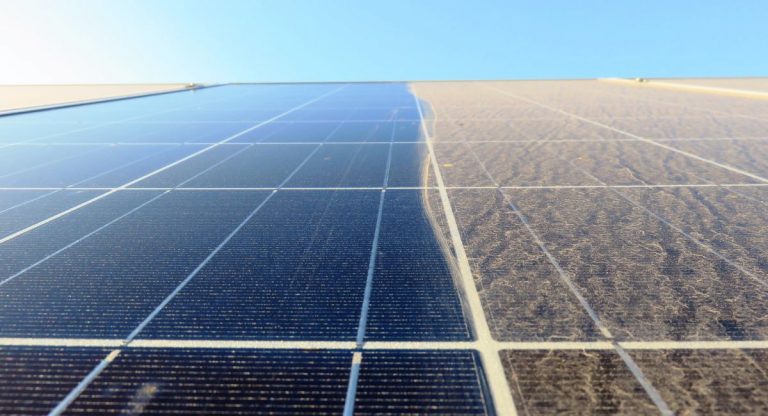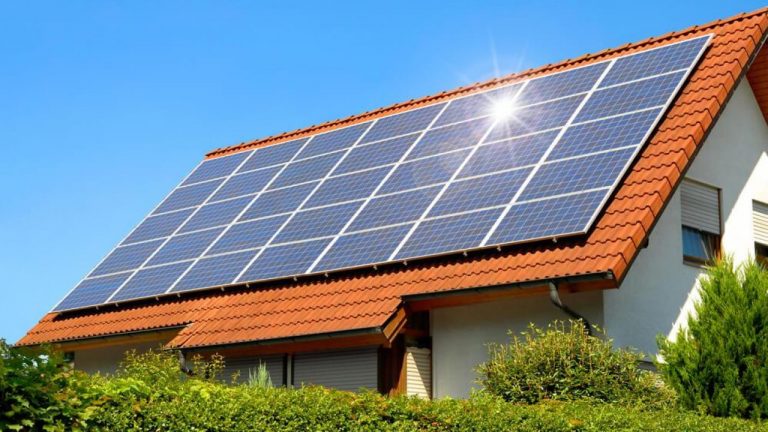
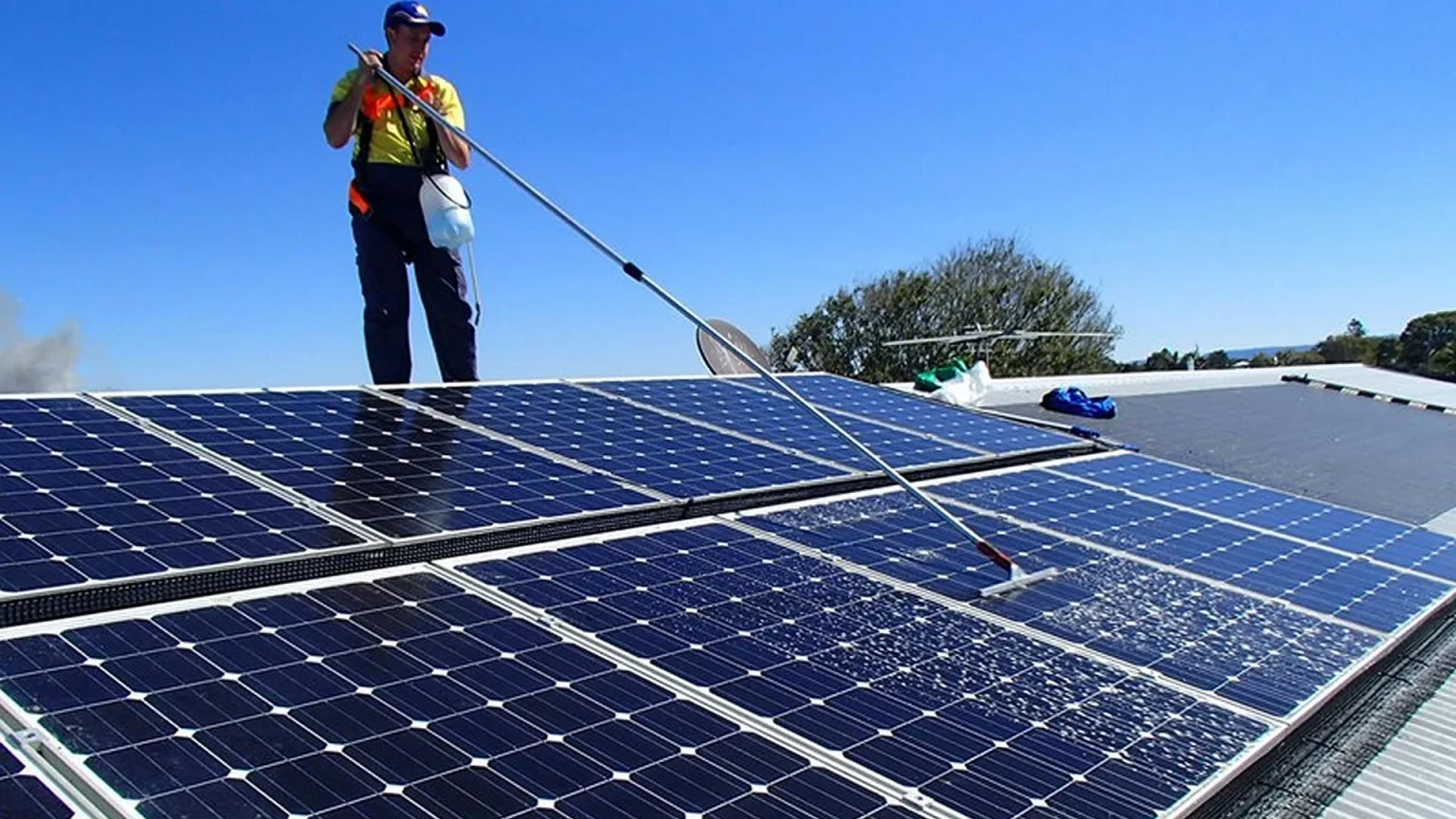
Solar panels on North Shore properties face a contamination environment that is more demanding than most homeowners appreciate when they first have a system installed. The combination of mature native tree canopy, abundant wildlife, suburban pollution and Sydney’s UV intensity creates conditions where panels lose output faster than in many other parts of the country, and where the question of cleaning frequency has a more specific and considered answer than the generic once-a-year advice that circulates online.
Getting the frequency right is not about being obsessive with maintenance. It is about understanding what is happening to the panels between cleans and making decisions that protect the financial return on a significant investment.
The North Shore corridor, covering suburbs from Chatswood and Lane Cove through to Pymble, Gordon, Wahroonga and Killara, has a specific environmental profile that determines how quickly solar panels accumulate performance-reducing contamination.
The North Shore’s defining characteristic is its mature native and introduced tree canopy. That canopy is the source of most of what lands on solar panels in the area, and understanding the specific debris and contamination types helps explain why frequency recommendations here differ from those for a coastal suburb or a more urbanised part of Sydney.
Eucalyptus and native tree pollen and debris. The North Shore’s dominant vegetation includes eucalypts, angophoras, banksias and scribbly gums, all of which produce pollen in quantities that are measurable in their effect on panel surfaces. During spring flowering periods, pollen loads on North Shore rooftops are among the highest in the Sydney metropolitan area. Pollen is fine, adhesive and combines with morning dew to form a film that bonds to panel glass surfaces through repeated wet-dry cycling.
Fine organic dust from decomposing leaf litter. The dense canopy across the North Shore produces a continuous fine organic dust from decomposing leaves and bark. This material is airborne and settles on horizontal surfaces including solar panels throughout the year. It is not visible as individual particles but accumulates as a brownish haze on the panel surface over weeks and months.
Bird and possum activity. The North Shore’s bushland character supports high populations of currawongs, cockatoos, kookaburras, lorikeets and brush-tail and ring-tail possums. All of these animals use rooftops and solar panels as perching, travelling and basking surfaces. Their droppings cause disproportionate output losses relative to their physical size because of how solar panel circuitry handles concentrated shading at the cell level.
Urban and traffic particulates. Despite its leafy character, the North Shore is not isolated from Sydney’s urban pollution. Arterial roads including the Pacific Highway, Mona Vale Road and the various connecting routes through the suburbs contribute fine particulate from vehicle exhausts that settles across the area. This combines with organic debris to form a composite contamination layer that is more adhesive than either source alone.
Generic solar panel cleaning advice, based on average Australian conditions, typically suggests an annual clean. For the North Shore, this frequency leaves panels operating below capacity for extended periods given the area’s specific contamination sources.
The Australian Renewable Energy Agency has noted in research on residential solar performance that soiling losses in vegetated urban environments can significantly exceed average soiling rates due to the combination of biological and particulate contamination, and that cleaning frequency needs to be calibrated to local conditions rather than applied as a uniform national standard.
Research published in the journal Solar Energy on soiling losses in urban environments with high biological contamination shows that pollen-rich environments produce panel soiling rates that can be two to three times higher than environments dominated by mineral dust alone. The North Shore’s spring pollen season creates exactly this elevated soiling condition.
For most North Shore properties, twice-yearly cleaning delivers the right balance between cost and output protection. Some properties, particularly those with direct native canopy overhead or significant bird activity, benefit from three cleans per year.
The precise frequency appropriate for any North Shore property depends on several specific factors that vary between properties even within the same suburb.
Direct native tree canopy. Properties in Pymble, Gordon, Wahroonga or Killara where large eucalypts or banksias are directly adjacent to or overhanging the roof face a higher continuous debris and pollen load than properties in more open positions. These properties should treat two cleans per year as the minimum and consider three where monitoring data shows faster output decline.
High bird activity. Properties near parks, bushland corridors or garden areas with significant bird populations experience concentrated deposit accumulation from bird droppings that general soiling cleaning schedules do not adequately address. Bird droppings are acidic and can begin etching anti-reflective coatings if left for extended periods. Properties with notable bird activity benefit from more frequent inspection and cleaning.
Low panel angle. Flat or low-angle panels do not benefit from any self-cleaning effect from rainfall. The Clean Energy Council’s guidance on solar system installation and maintenance notes that panel angle affects the rate at which soiling accumulates, with flatter panels accumulating contamination faster than steeply pitched equivalents. North Shore properties with roof pitches below approximately fifteen degrees should increase cleaning frequency relative to the standard recommendation.
System age and panel condition. Older panels that have experienced some anti-reflective coating degradation may accumulate contamination more readily than newer panels with intact coatings. For systems more than eight to ten years old, annual inspection of panel surface condition alongside the cleaning service is advisable.
Open property position with minimal canopy overhead. Properties in less vegetated sections of the North Shore, or with panels installed on roof aspects that face away from the dominant tree coverage, accumulate contamination more slowly. Annual cleaning may be adequate for these properties if monitoring data supports it.
Recently installed gutter guard systems. While gutter guards primarily affect gutter performance rather than panel performance directly, properties with well-maintained rooftop environments generally experience lower overall organic debris loading on all roof surfaces. This is an indirect benefit rather than a direct one.
Consistent monitoring data showing stable output. If a property’s inverter monitoring data shows output that is consistent with seasonal expectations and shows no unexplained year-on-year decline, the current cleaning frequency may be adequate. Data-driven decisions are more reliable than schedule-based assumptions in either direction.
These questions help determine whether current cleaning frequency is appropriate.
Building a maintenance schedule that reflects the North Shore’s specific conditions rather than generic national advice gives panels the best chance of performing at or near their rated capacity throughout the year.
For properties with moderate tree coverage, two cleans per year:
September to October. The most impactful clean of the year for North Shore properties. This service clears the winter accumulation and addresses the spring pollen load that begins in August and September. Completing this clean before the highest-sunlight summer months ensures panels are operating at full capacity during the period when they have the greatest potential to generate. A clean completed in late September or early October delivers maximum value because it captures the post-winter residue without waiting for the full spring pollen season to add to it.
February to March. The second annual clean addresses summer accumulation. Sydney’s summer brings active biological activity from native vegetation, high bird activity and the urban particulate load from hot, still weather conditions. A February or March clean clears this build up before the autumn period and confirms the system is performing well in the lead-up to the lower-sunlight winter months.
For properties with heavy native canopy or significant bird activity, three cleans per year:
Add a service in June to address the autumn and early winter accumulation. This mid-year clean maintains performance through the lower-sunlight winter period and provides an additional inspection opportunity to identify any panel or mounting hardware issues before they develop into more significant problems.
A professional solar panel cleaning service on a North Shore property should meet a standard that goes beyond a basic rinse. The combination of organic and particulate contamination common on North Shore panels requires appropriate technique and water quality to fully restore panel surface clarity.
The interval between professional cleans should not be a passive waiting period. Active monitoring of inverter output data allows homeowners to identify unusual performance decline between scheduled services and act before the loss compounds further.
Timing solar panel cleans to align with the North Shore’s specific seasonal patterns maximises the financial return from each service and ensures panels are at full capacity during the periods when they have the most to give.
For North Shore solar panel owners who clean once a year, September to early October is the right window. This timing reflects several converging factors that make spring the highest-priority period for panel maintenance.
Sydney’s solar irradiance peaks during the summer months of November through January, when long days and high sun angles combine to deliver the maximum available generation potential. Panels that are carrying a contamination layer going into this period are losing output during the days when the financial return on clean panels is highest.
Spring also follows the winter period, during which pollen from late-winter flowering native species, fine organic dust from winter leaf decomposition and the urban particulate load from cold, still weather conditions have been accumulating on panel surfaces. A September clean addresses all of this accumulated winter soiling before it compounds with the spring pollen season.
The Bureau of Meteorology’s solar irradiance data for Sydney confirms that the November to January period delivers the highest average daily solar radiation of the year for the Sydney metropolitan area, which directly supports the case for ensuring panels are clean heading into this window rather than starting it with a soiling load already in place.
For the majority of North Shore properties on a twice-yearly schedule, February or March is the second optimal window. The reasoning is practical: summer in Sydney has added another six months of contamination since the spring clean, and the autumn and winter months ahead have lower solar irradiance than summer. A February clean captures the peak summer accumulation before it compounds further and sets the system up to perform well through autumn.
For North Shore homeowners wanting to understand what professional solar panel cleaning involves for their specific area and what a properly executed service covers, GutterGorilla’s solar panel cleaning service provides detail on technique, water quality standards and what each service should include.
Homeowners across the North Shore looking for locally relevant information on rooftop maintenance services suited to the area’s native vegetation environment and property types can find that on GutterGorilla’s North Sydney page.
A North Shore solar system represents a significant financial outlay that was made to deliver returns over a twenty-five year design life. The contamination environment the system operates in is more demanding than average, and the cleaning frequency required to protect those returns reflects that reality.
Twice a year, timed around spring and late summer, is where most North Shore homeowners should start. Properties with heavier canopy coverage or notable bird activity should move to three times per year. And regardless of the schedule, active monitoring of inverter data provides the early warning that allows adjustments to be made before output losses become significant.
The investment in cleaning is modest. The return, measured in recovered generation output and protected panel longevity, is consistently larger.