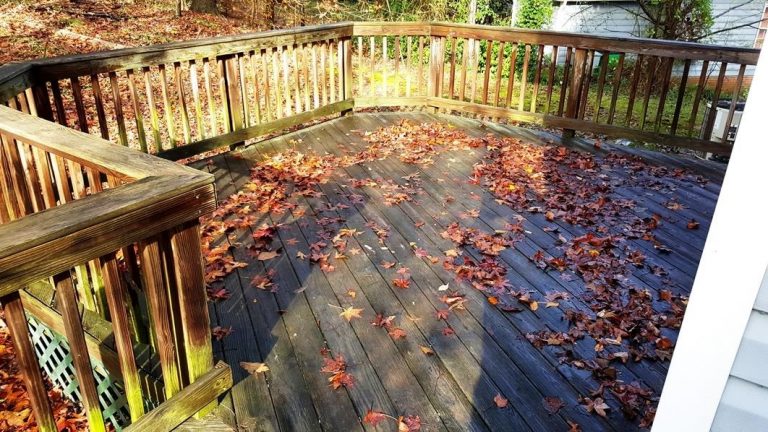
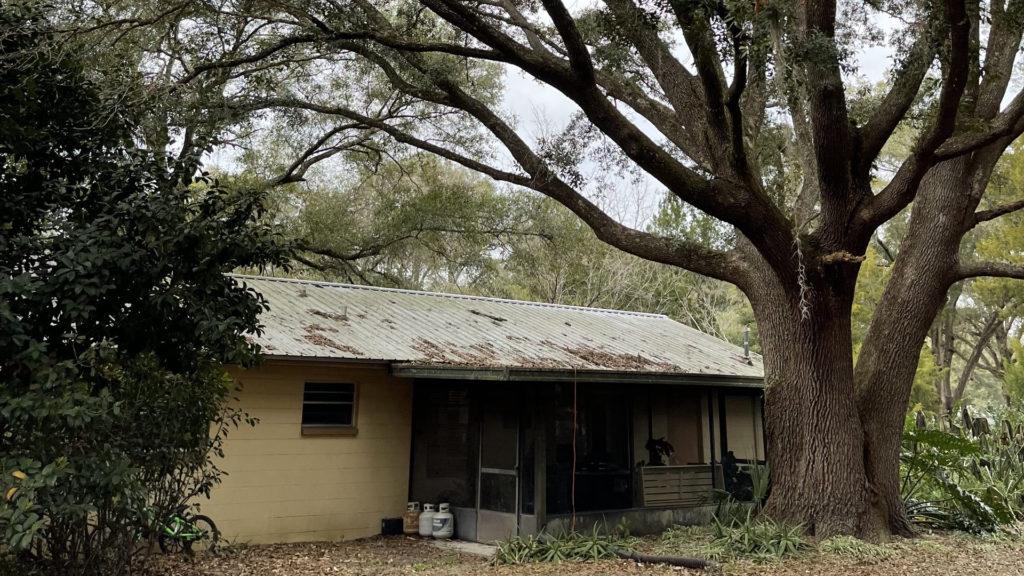
There are few things that add as much character and livability to a home as a mature tree. The dappled shade in summer, the wildlife activity, the visual depth they give to a garden, these things have genuine and measurable value. Many of the most desirable residential streets in Australia are defined by their trees as much as by their homes.
But trees near properties also create problems that are real, recurring, and in some cases expensive. The beautiful camphor laurel that shades the back deck also fills the gutters every autumn. The towering eucalyptus that frames the view also drops branches in storms and sends roots along the sewer line. Understanding these tensions clearly, without dismissing either the value of the tree or the genuine risks it poses, is what allows homeowners to manage the relationship intelligently rather than reactively.
The starting point for managing tree-related property problems is understanding which specific hazards large trees create and why they create them. Trees do not damage property through any malicious process. They follow biological imperatives: growing toward light, sending roots toward water and oxygen, and responding to weather stress in ways that can have significant consequences for structures nearby.
Of all the property impacts that large trees create, the most consistent and the most financially significant over time is the burden they place on roof drainage systems. Leaves, bark strips, seed pods, fine organic particles, and twigs deposited on the roof surface by adjacent trees migrate toward gutters with every rain event and every wind.
The scale of this can surprise homeowners who have not tracked it carefully. A single large eucalyptus in full leaf drop can deposit enough material in one windy week to partially block a downpipe entry. A jacaranda in flower can carpet a roof in fine debris that compacts almost immediately when wet. A camphor laurel sheds almost continuously, depositing a persistent organic layer in gutters that decomposes into a dense mulch-like material that is considerably more difficult to remove than loose leaves.
The financial consequence is that gutter maintenance frequency needs to be calibrated to the actual debris load from adjacent trees rather than to a generic twice-yearly schedule. For many properties with large, actively shedding trees, three or four professional cleans per year is the appropriate response. Anything less allows debris to accumulate between events to a level that creates blockage risk during the storms that test the system most severely.
The health dimension of wet leaf and organic debris accumulation in gutters, including mould growth, bacterial development, and mosquito breeding, is covered in detail in the article on whether wet leaves in gutters cause health problems. The physical and structural consequences are only part of the picture.
Large trees near homes create risk of branch failure that is different from the risk of a full tree falling. Mature trees shed branches as a normal biological process. In Australian species, particularly eucalypts and angophoras, this process is well-documented and sometimes dramatic. Summer branch drop, where large branches detach from otherwise healthy trees during hot, calm days, is a phenomenon specific to Australian native species and can occur without warning.
Storm-related branch failure is more predictable in timing but less predictable in scale. A fast-moving severe thunderstorm, the type common in south-east Queensland and coastal NSW, can strip large branches from trees in minutes. Branches falling from heights of ten to twenty metres carry sufficient energy to damage roof tiles, crush metal sheeting, destroy gutters and fascia, and in severe cases penetrate roof structures.
The risk is not uniform across all trees. Trees that show specific warning signs of structural weakness should be assessed professionally before the next storm season:
None of these signs necessarily mean immediate removal is required. They mean a qualified arborist should assess the tree and provide a risk assessment before the homeowner proceeds on assumption.
The damage categories that large trees create for adjacent properties extend well beyond gutters and rooflines. Understanding the full range helps homeowners see the complete picture of what tree management actually involves.
Tree roots grow toward water, oxygen, and nutrients. They follow soil fracture lines, drainage pathways, and moisture gradients that often run along the edges of paved surfaces. As roots grow under concrete paving, driveways, and footpaths, they exert upward pressure that lifts, cracks, and eventually dislodges the surface above them.
This process is slow and cumulative. A root that is one centimetre in diameter today will be five centimetres in diameter in five years. The lifting force it applies increases with its cross-sectional area. A driveway that shows a slight ridge in one area today may have a significant crack and trip hazard in the same location three years from now.
Fencing is similarly affected. Root growth under fence line posts displaces the post from its footing and can cause the fence line to become unstable. In boundary fence disputes between neighbours, this type of root encroachment is a common contributing factor to what becomes a more complex neighbourhood issue.
Underground services including stormwater pipes, sewer lines, and in some areas, water supply lines, are vulnerable to root intrusion in a specific way. Roots do not typically break healthy pipes. They enter through existing small gaps at joints, through hairline cracks in older pipes, or through any point where seal integrity has been lost over time.
Once inside a pipe, a root finds abundant water and nutrients and grows aggressively. The root mass expands to fill the available space, then begins to constrict or block flow. Eventually, the expanding root system can fracture the pipe walls from inside.
The cost consequences of this progression depend on how early the problem is identified. Early-stage root intrusion discovered during a routine CCTV drain inspection can be addressed with root clearing and a targeted repair or relining of the affected joint. Late-stage root intrusion that has caused pipe fracture requires excavation, pipe replacement, and surface reinstatement above the affected section.
On properties where large trees are within ten to fifteen metres of known underground service lines, periodic CCTV inspection of those lines, every five years as a minimum, is a practical risk management measure that can identify root intrusion before it progresses to the pipe failure stage.
Trees that overhang property boundaries or whose roots extend beneath a neighbour’s land create a specific category of legal and financial exposure. In most Australian states and territories, a property owner is responsible for managing trees on their land to a reasonable standard. If a tree on your property drops a branch that damages a neighbour’s roof, or if your tree’s roots fracture their sewer line, questions of liability arise that depend on whether you knew or should have known about the risk.
The legal position is nuanced and varies by jurisdiction, but the practical implication is consistent: if a tree on your property has visible signs of structural risk, and you are made aware of it and do not act, you have a more difficult position if that tree subsequently causes damage to a neighbour’s property than if the damage occurred without any prior warning.
Maintaining documentation of tree assessments and any management work carried out, including dates and the qualifications of anyone who assessed the tree, is therefore not only good property management practice but also part of managing potential liability exposure.
Foundation damage from tree roots is among the most financially consequential problems that large trees near homes can create. It is also among the least predictable in its timing and one of the hardest to attribute clearly once it has occurred.
Tree roots affect foundations primarily through their influence on soil moisture. Large trees draw substantial volumes of water from the soil around their root zone. In clay-dominant soils, which are common across much of south-east Queensland, coastal New South Wales, and parts of Victoria and South Australia, this water extraction causes the soil to shrink. Soil shrinkage adjacent to a foundation creates differential settlement where one part of the building’s base loses support.
The result is foundation cracking, door and window frame distortion, and wall cracking that follows patterns consistent with soil movement rather than direct structural loading. The connection between the tree and the symptom is not always obvious, which is why diagnosis requires both a building assessment and a site assessment that considers the species, size, and proximity of adjacent vegetation.
Managing tree root influence on reactive clay foundations does not always require removing the tree. Root barriers installed between the tree and the building, managed irrigation to maintain more consistent soil moisture, and foundation design upgrades in severe cases are all options that a qualified geotechnical engineer or structural engineer can advise on.
When root intrusion has caused pipe damage, the repair approach depends on the extent and location of the damage:
Each successive option is significantly more expensive than the one before it, which is the practical argument for early detection through periodic inspection.
The title of this section deliberately avoids the framing of removal as the default solution, because in most cases it is not the most appropriate response. The majority of tree-related property problems are better managed than eliminated.
For trees that are structurally sound, not in immediate contact with the building, and not showing active root encroachment on services, active management typically produces the best outcomes for both the property and the tree. Management includes:
For homeowners looking to reduce debris entry into gutters while maintaining a less intensive cleaning schedule, well-specified gutter guards can reduce the frequency of blockages from large-leaf debris, though the product needs to match the specific debris profile of the trees involved.
For properties where debris load is high and gutter cleaning is already scheduled regularly, the gutter cleaning page provides information on what a professional service appropriate for high-debris environments should include.
Removal is appropriate when the tree presents a genuine and unmanageable safety risk, when its root system has caused or is clearly causing significant structural damage that cannot be mitigated, or when the combination of maintenance burden and risk has become genuinely unsustainable for the property owner.
The decision to remove a mature tree should be made with professional advice from a qualified arborist, not on an emotional or reactive basis after a single adverse event. Most councils in Australia have tree protection orders that require approval before significant pruning or removal of mature trees, and removal without council approval can result in substantial fines.
Beautiful trees are worth keeping in most cases. They create genuine value that bare blocks cannot replicate. But they create genuine problems too, and those problems need to be managed rather than ignored. The homeowners who get the best outcomes are those who understand what their trees actually require of them: arborist inspections, calibrated gutter maintenance, periodic drain checks, and the willingness to act on early-stage problems before they become expensive ones.