There is a version of this question that most South Sydney homeowners ask themselves at some point, usually while standing in the backyard noticing the gutters look a bit full, or when a neighbour mentions they just had theirs done. The answer that follows is usually something along the lines of “they’ll probably be fine for another season.”
Sometimes they are. Often they are not. And in South Sydney specifically, the cost of finding out the hard way tends to be considerably higher than the cost of the maintenance that would have prevented it.
South Sydney sits in a part of the city where several environmental factors stack up in ways that make gutter neglect more consequential than it might be elsewhere. The coastal influence from Botany Bay, the airport corridor pollution, the established residential tree canopy across suburbs like Hurstville, Kogarah, Rockdale and Blakehurst, and the mix of older and newer housing stock all contribute to a gutter environment that demands more attention than many homeowners give it.
Gutter damage from neglect does not happen in a single event. It follows a predictable sequence that starts small and compounds over time, which is why it catches so many homeowners off guard.
Stage one: debris accumulation. Leaves, bark, seed pods, organic dust and fine particulate from the surrounding environment collect in the gutter trough. Initially the gutter still drains, just more slowly. Water finds paths around the debris during rainfall and the system appears to be functioning.
Stage two: compaction and silt formation. Over weeks and months, wet debris compacts into a dense mat at the base of the gutter. Fine particles settle beneath it as silt. The effective internal depth of the gutter reduces and water starts backing up rather than flowing toward the downpipe during moderate rainfall.
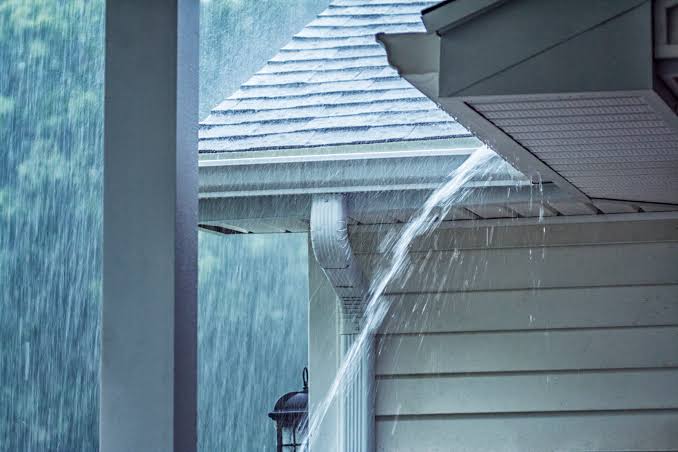
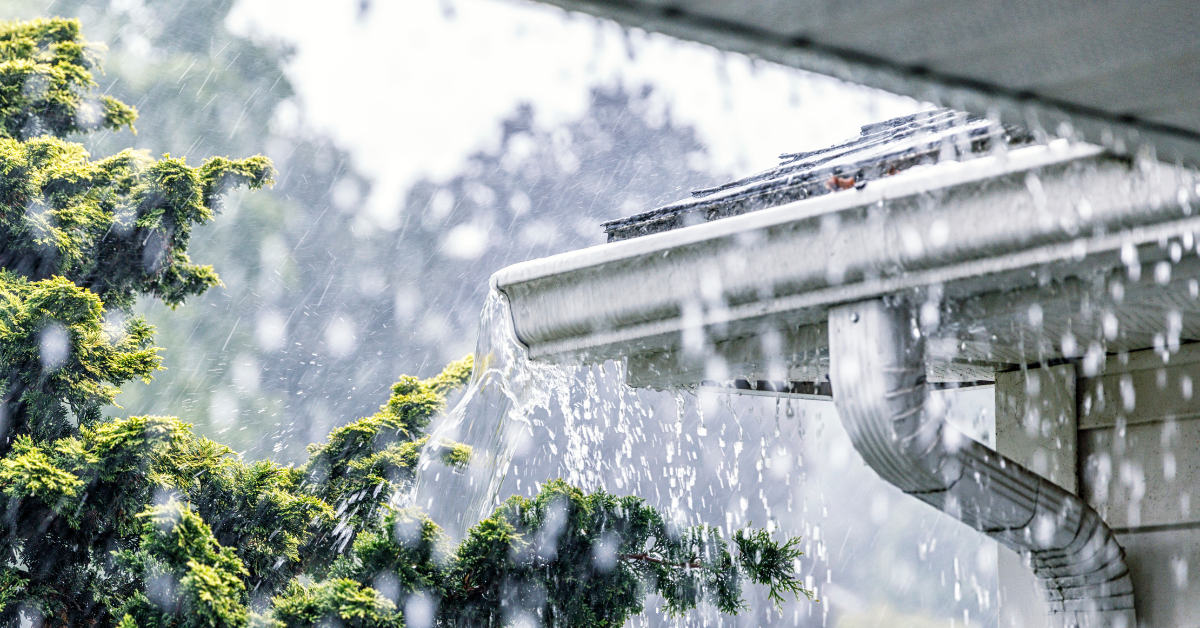
Stage three: downpipe blockage. Material from the gutter washes into the downpipe inlet and begins to accumulate there. A partial blockage forms that worsens with each rain event as more material is pushed into the restricted opening. The gutter fills faster, overflows sooner and the overflow becomes the primary drainage pathway rather than the exception.
Stage four: structural damage begins. Standing water in the gutter and repeated overflow contact with the fascia, the building envelope and the roof edge starts affecting building materials. This is where the costs escalate and where what was a maintenance issue becomes a repair issue.
According to NSW Fair Trading’s building defect guidance, water ingress at the roof perimeter is consistently among the most common causes of residential building defects reported across New South Wales. Blocked gutters are a primary contributing factor in a significant proportion of those cases.
The financial consequences of gutter overflow on South Sydney properties are easier to quantify than many homeowners expect, because the damage types and their repair costs are well documented in the local building trade.
These figures represent real contractor costs in the current Sydney market. They sit at dramatically higher levels than the professional gutter cleaning that prevents them, which for a South Sydney residential property typically costs between $180 and $420 per service.
Downpipes are where the consequences of gutter neglect become most acute and most expensive most quickly. A blocked downpipe does not just reduce drainage efficiency. It effectively removes the drainage system from the equation entirely, leaving the gutter with nowhere to send water except over its edges.
Downpipe blockages in South Sydney form through several mechanisms, each of which is more common in this area than in less urbanised parts of Sydney.
Debris compaction at the inlet. The junction between the gutter and the downpipe inlet is the narrowest point in the entire drainage system. Fine organic material and silt that accumulates in the gutter gravitates toward this low point and concentrates at the inlet opening. Once a partial blockage forms at the inlet, subsequent rainfall pushes more material into the restriction rather than flushing it clear.
Root intrusion at below-ground sections. South Sydney’s established residential gardens include many large trees whose root systems extend well beyond the visible canopy. Below-ground sections of downpipes, particularly older terracotta or early PVC pipes, can be partially or fully infiltrated by roots over time. A root-affected downpipe may appear to drain adequately for years before the restriction reaches the point of complete blockage. Sydney Water’s maintenance guidance identifies root intrusion as a significant factor in residential drainage failures across established Sydney suburbs.
Joint separation in older pipes. Downpipes on older South Sydney properties may have joints that have separated from thermal cycling or ground movement over decades. These separation points collect debris that would otherwise pass through freely, building into blockages from the inside while the exterior of the pipe shows no visible problem.
Coastal particulate accumulation. In the southern coastal sections of South Sydney, fine salt-bearing particulate that passes through the gutter and into the downpipe can accumulate at bends and transitions, combining with organic material to form a compacted plug that water cannot shift without mechanical intervention.
It is worth being specific about why a blocked downpipe is a distinct and more serious problem than a full gutter.
A full gutter overflows visibly during rain. The overflow is usually obvious from ground level or from inside the home if it is causing ingress. The problem is apparent and the response is relatively clear.
A blocked downpipe may not be obvious at all until the gutter above it fills and overflows. And because the overflow then has nowhere to drain, it continues overflowing for longer after rain stops, as the standing water in the gutter above the blocked pipe has no drainage pathway. The volume of water that contacts the building in this scenario is considerably greater than in a simple overflow event where the downpipe is clear.
On South Sydney properties with internal box gutters or concealed parapet drainage, which are common on terrace-style homes in the area, a blocked downpipe sends water into concealed spaces within the building structure rather than visibly over the external edge. By the time the problem is detected, water may have been entering the building fabric through multiple rainfall events.
Understanding what happens when gutters are neglected is the first part of the picture. Understanding what appropriate maintenance looks like and why it prevents those outcomes is what makes the knowledge actionable.
For the vast majority of South Sydney residential properties, cleaning gutters once per year is not sufficient. The area’s combination of debris sources, coastal conditions and established tree canopy means that a single annual clean leaves gutters running through at least one full high-risk period without clearance.
Twice per year, timed around the main debris seasons, keeps most South Sydney properties clear through the periods of highest accumulation and provides regular enough inspection to identify structural issues before they develop into damage.
The most effective timing for South Sydney properties follows this pattern:
Properties in coastal sections of South Sydney, or those with large trees directly overhanging the roof, benefit from a third service in February to address storm-season accumulation before the autumn debris period begins.
A gutter clean that prevents the damage described above is not simply a matter of removing visible debris from the gutter surface. The service needs to address the full drainage system to be effective.
A service that skips downpipe flushing is not a complete service. The gutter surface can look perfectly clear while a significant blockage exists in the downpipe below it, and the next rainfall event will produce the same overflow it would have without any cleaning at all.
The financial case for consistent gutter maintenance in South Sydney is straightforward when the numbers are laid out honestly.
A twice-yearly professional clean at approximately $250 per service costs around $500 per year. Over ten years, that is $5,000 in maintenance expenditure.
A property where gutters are not maintained and which suffers a single significant water ingress event affecting the ceiling, fascia and external render faces repair costs that can easily reach $5,000 to $10,000 in a single incident. A property that suffers repeated overflow over several seasons before the damage is addressed faces costs that can significantly exceed that figure.
The Australian Building Codes Board notes in its guidance on building maintenance that proactive maintenance of drainage systems delivers substantially better long-term outcomes than reactive repair, both in financial terms and in terms of the building elements preserved. This is not a contentious finding. It is consistent with what building professionals across South Sydney observe in the properties they are called to assess.
For South Sydney homeowners who have let their gutter maintenance slide, understanding the risk profile they are currently carrying is more useful than general warnings about neglect.
These indicators suggest that neglected gutters have moved beyond the inconvenience stage and into the early damage stage.
Any of these signs warrants prompt action. The appropriate response is a professional inspection and clean followed by an honest assessment of whether repair work is needed alongside the maintenance service.
The Insurance Council of Australia consistently identifies water damage as one of the leading categories of home insurance claims in New South Wales. What is less well understood by many homeowners is that insurance policies typically include conditions around reasonable maintenance of the property.
A water damage claim where an assessor determines that gutters had not been maintained for an extended period may be assessed differently to a claim on a property with documented maintenance history. While insurers assess claims on their individual circumstances, the maintenance condition in most policies is real and worth understanding.
Keeping records of professional cleans, including the date of service and any condition reports provided, creates a maintenance history that supports any future claim assessment. It is a minor administrative step with potentially significant implications.
For South Sydney homeowners booking a professional clean, the difference between a provider that addresses the full system and one that covers only the visible gutter surface is significant in terms of what is actually protected.
Questions worth asking before booking include whether downpipe flushing is included as standard, whether the service includes a structural assessment and condition report, and whether before and after documentation is provided. A provider that cannot confirm all three of these elements is not offering a complete service regardless of the price quoted.
For South Sydney homeowners wanting to understand what local professional gutter services cover and what is relevant to the specific property types and conditions in the area, local providers include JavsGutterCleaning and GutterGorilla, GutterGorillas South Sydney page provides locally specific detail.
Full information on what a professional gutter cleaning service should include and how to evaluate providers is available on GutterGorilla’s gutter cleaning page.
The temptation to leave gutters for another season is understandable. The consequences are not immediately visible, the weather might stay dry, and other maintenance priorities always seem more pressing. But in South Sydney, where coastal conditions accelerate material degradation and older housing stock has less tolerance for moisture ingress than newer construction, that delay tends to cost more than the clean would have.
The question is not really whether neglected gutters cause damage. They do, consistently and predictably. The question is whether the damage happens on a property that has been maintained and therefore catches it early, or one that has been neglected and finds out the hard way what deferred maintenance actually costs.