Most people associate mould with summer, when heat and humidity combine to create the kind of sticky, tropical conditions that seem like obvious mould weather. Winter, by contrast, feels like it should be the safer season: cooler temperatures, less humidity in the air, and the assumption that mould activity slows down along with everything else outside.
The reality on the ground in Australian homes tells a different story. Winter is one of the most significant periods for indoor mould development in many parts of the country, and the connection runs directly through the extended rainfall, reduced ventilation, and specific moisture conditions that winter weather creates. Understanding this connection helps homeowners recognise the actual risk period for their property and take preventative action before mould becomes an established problem rather than after.
The relationship between winter rainfall and indoor mould growth is not a coincidence. It reflects a specific combination of conditions that winter weather patterns create more reliably than other seasons, even when winter temperatures themselves are not conducive to the rapid mould growth associated with summer heat.
Mould requires three things to establish and grow: a moisture source, an organic or hospitable surface to colonise, and a temperature range that supports fungal metabolism. Most common indoor mould species, including Cladosporium, Aspergillus, and Penicillium, can grow effectively across a wide temperature range that includes typical Australian winter indoor temperatures. The assumption that cold weather prevents mould growth is not accurate for the temperature ranges that occur inside heated homes during winter.
What changes in winter is the moisture dynamic. Winter brings extended periods of rainfall in many parts of Australia, particularly the temperate south-east, where frontal systems and east coast lows can produce days or weeks of sustained, lower-intensity rain rather than the brief, intense storms more typical of summer. This extended rainfall duration means that building materials, roof drainage systems, and external surfaces remain wet for longer continuous periods than they do during summer storm events.
Winter also changes occupant behaviour in ways that significantly affect indoor moisture levels. Windows that are opened regularly in summer for ventilation and cooling are kept closed in winter to retain heat. Extraction fans in bathrooms and kitchens may be used less consistently. Heating systems are run more, and while heating reduces relative humidity in heated air, it does not remove the absolute moisture load that cooking, showering, breathing, and drying clothes indoors all contribute to a closed-up house.
The combination of increased external moisture from extended rainfall and reduced internal ventilation from closed-up winter living creates conditions where moisture that does enter a home, whether through a roof leak, condensation, or rising damp, has fewer opportunities to dissipate before it supports mould colonisation.
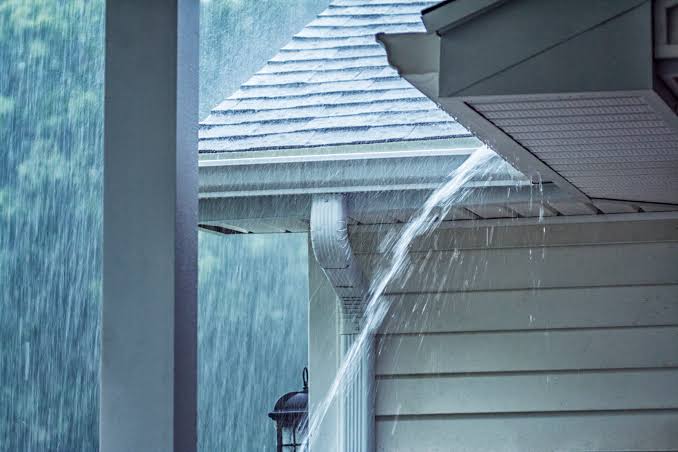
Many Australian homes have drainage systems, including gutters, downpipes, and stormwater connections, that develop deficiencies that are not apparent during the brief, intense rain events of summer storms but that become significant during the sustained rainfall periods of winter. A gutter that can handle a fifteen-minute summer downpour without overflowing may overflow consistently during eight hours of steady winter rain if it has any partial blockage or capacity deficiency, simply because the cumulative water volume passing through the system during a prolonged event is much greater.
The article on the dangerous signs your drainage system is struggling covers in detail how drainage failures manifest and progress, and many of those same failure patterns are the underlying cause of the moisture ingress that drives winter mould development in Australian homes.
Understanding the specific pathways by which winter rainfall translates into indoor mould growth helps homeowners identify where to focus their prevention efforts.
Roof drainage systems are tested differently by sustained winter rain than by intense summer storms. A blocked or partially blocked gutter during a short, heavy summer storm may overflow for the duration of the storm and then stop as the rain ends and the system catches up. During an extended winter rain event, the same blocked gutter overflows continuously for the full duration of the rainfall, which might be many hours or even days, delivering a much greater total volume of water against the fascia, external wall, or roof penetration than a single intense event would.
This sustained water contact is precisely the condition that allows water to find and exploit weaknesses in the building envelope: gaps in flashings, cracks in render, deteriorated sealants, and any point where the roof or wall system has a minor defect that would shed brief exposure but cannot resist hours of continuous water contact.
Once water has penetrated the building envelope during a sustained winter rain event, it contacts internal materials including insulation, timber framing, and plasterboard. These materials, once wet, do not dry quickly in winter conditions, when ambient humidity is often elevated and ventilation is reduced. The extended drying time, combined with materials that provide an organic substrate for fungal growth, creates the conditions mould needs to establish.
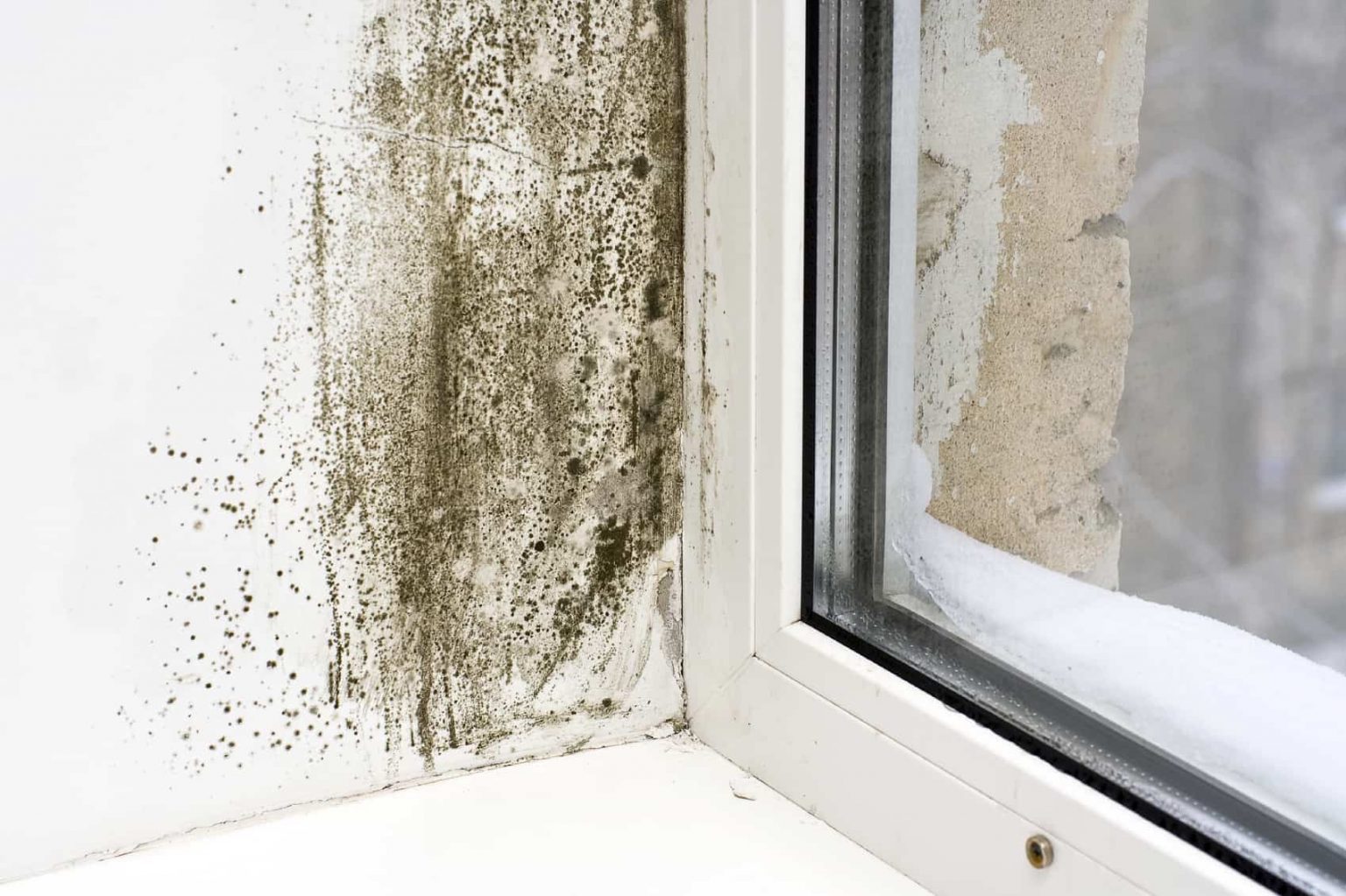
Beyond direct water entry from drainage failures, winter introduces a moisture mechanism that is largely absent in summer: condensation from temperature differentials between heated indoor air and cold external surfaces. When warm, moisture-laden indoor air contacts a cold surface, such as a single-glazed window, an uninsulated external wall, or a cold roof cavity surface, the air cools rapidly and its capacity to hold moisture decreases, causing the excess moisture to condense as liquid water on that surface.
This condensation occurs without any external rainfall being involved directly, but the conditions that produce it, cold external temperatures and high humidity from extended wet weather, are winter rainfall season characteristics. Condensation on window frames, in roof cavities, and on cold external walls provides a consistent moisture source for mould growth that operates independently of any leak or drainage failure, purely as a function of the temperature and humidity conditions winter weather creates.
For homes with sub-floor spaces or slab foundations in areas with poor drainage, extended winter rainfall raises the water table and increases soil moisture around the building perimeter for sustained periods rather than the brief saturation events that summer storms produce followed by relatively rapid drying.
This sustained soil moisture elevation increases the moisture available for rising damp through masonry walls without adequate damp-proofing, and increases the moisture load in sub-floor spaces where ventilation may already be marginal. Both pathways introduce moisture to building materials at ground level that, combined with the reduced evaporation rates of cooler winter conditions, can support mould development in skirting boards, lower wall sections, and sub-floor framing.
Several specific factors combine to make the winter precipitation and mould relationship more significant than most homeowners anticipate, and understanding each one clarifies why prevention requires attention to factors beyond simply keeping the house dry from obvious leaks.
Mould growth research consistently shows that the duration of moisture exposure is a more significant predictor of mould establishment than the intensity of a single wetting event. Building materials that are wetted briefly and then dry quickly rarely support mould growth, even if the wetting event delivers significant moisture. Materials that remain damp for extended periods, even from a relatively modest but sustained moisture source, are at significantly higher risk.
This is precisely the dynamic that distinguishes winter rainfall risk from summer storm risk. A summer storm might deliver more total rainfall in a shorter period, but the building dries relatively quickly in the warm conditions that typically follow. Winter rainfall delivers sustained moisture exposure over longer periods, followed by extended drying times in cooler, often still-humid post-rain conditions.
Winter in temperate Australia often features repeated rain events spaced closely together, with limited dry periods between them for full drying to occur. A home that experiences several days of rain, two days of partial drying, and then another extended rain event has effectively extended its exposure to elevated moisture conditions across the entire period, even though the rain itself was not continuous throughout.
This pattern of repeated, closely spaced rainfall is characteristic of the frontal weather systems that dominate winter precipitation in southern and south-eastern Australia, and it creates a cumulative moisture exposure that single-event analysis tends to underestimate.
Modern Australian homes are often heated unevenly, with living areas receiving consistent heating while bedrooms, laundries, and other secondary spaces remain significantly cooler. These cooler zones are more prone to condensation when moisture-laden air circulates from heated areas, and they often coincide with spaces that have reduced ventilation, including built-in wardrobes, under-stair storage, and rooms with limited window opening.
Mould that develops in these secondary, cooler, less-ventilated spaces during winter often goes unnoticed for longer periods than mould in main living areas, simply because these spaces receive less daily attention and visual inspection.
The connection between drainage system condition and mould risk underscores why preventative maintenance, addressed in detail in the article on why preventative maintenance saves more money than emergency repairs, is particularly relevant in the context of winter mould prevention. A gutter system that is cleaned and inspected before the onset of the winter rainfall season is far less likely to experience the overflow events that introduce the sustained moisture exposure mould requires.
Bringing together the factors discussed above into a practical framework helps homeowners understand both the conditions to watch for and the actions that reduce risk during the winter rainfall season.
Mould growth during prolonged damp weather is most likely to establish where several conditions converge:
The surprising link between winter rain and mould growth comes down to duration, ventilation, and the compounding effects of sustained moisture exposure rather than the more commonly assumed factors of heat and obvious humidity. Winter conditions create a moisture risk profile that is genuinely different from summer, not necessarily less dangerous simply because the temperature is lower. Homeowners who understand this and prepare their drainage systems and ventilation habits accordingly are in a much stronger position to keep their homes mould-free through the wetter months of the year.