Home insurance premiums across Australia have risen substantially in recent years. The combination of more frequent and more intense weather events, increasing replacement costs, reinsurance market pressures, and a reset in how the industry prices climate-related risk has pushed premiums upward in ways that are not evenly distributed across different property types and locations. For homeowners in flood-prone areas, coastal zones, and bush interface suburbs, the increases have been particularly sharp.
This shift in the cost of insurance is having a secondary effect that receives less attention than the premium numbers themselves: it is changing how homeowners think about and act on property maintenance. The relationship between insurance costs and maintenance decisions is more complex than it might initially appear, and understanding it helps homeowners navigate both challenges more effectively.
The immediate response many homeowners have to rising insurance premiums is straightforward: assess whether the coverage is still worth what it costs, shop around between insurers, and consider increasing the excess to reduce the annual premium. These are rational responses to a cost increase, but they do not address the deeper shift in the risk-maintenance relationship that rising premiums signal.
Insurance premiums are fundamentally a price signal. They communicate what insurers assess as the probability and likely cost of claims from a given property in a given location. When premiums rise, it reflects an insurer’s updated assessment that the properties they are covering are more likely to generate claims, and that those claims are likely to be larger, than their previous pricing assumed.
For Australian homeowners, the premium increases of recent years have been driven largely by two factors: the increasing frequency and intensity of weather events, particularly in storm, flood, and fire categories, and the significantly higher costs of building materials and skilled labour that have inflated the cost of every claim that does occur.
Neither of these factors is under the direct control of the individual homeowner. But how the homeowner manages their property in the context of these elevated risks is within their control, and it is this management that determines how well they are actually protected by the insurance they are paying for.
Most Australian home and contents policies include a maintenance clause that requires the policyholder to keep the property in reasonable condition and to address known defects in a timely manner. This clause is not incidental: it is foundational to how insurance works as a risk transfer mechanism. The insurer is accepting the risk of sudden, unforeseen events. They are not accepting the risk of predictable deterioration that results from an owner’s failure to maintain.
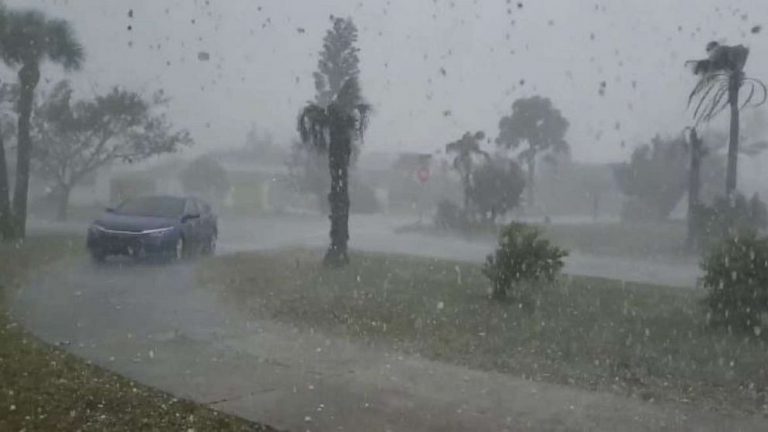
As premiums have risen, insurers have become more rigorous in applying this distinction at the point of claims assessment. A damaged roof after a hailstorm is a claimable event if the roof was in reasonable condition before the hail. The same damaged roof may face a contested or reduced claim if the assessment reveals that the fascia was already rotted, the ridge capping mortar was already missing in sections, and the gutters were blocked in ways that suggest long-standing maintenance neglect.
The higher the premium a homeowner is paying, the more important it is that they are genuinely protected by their policy, not just nominally covered by a document that may not pay out fully if the property was in poor condition at the time of the event.
The impact of rising insurance premiums on maintenance spending plays out differently across different homeowner profiles, and the direction is not always what would be most beneficial from a risk management perspective.
For homeowners who are experiencing significant premium increases at the same time as cost-of-living pressure from mortgage rates, energy costs, and general inflation, there is a real temptation to offset the insurance cost increase by reducing spending elsewhere in the household budget. Maintenance is a visible and apparently deferrable expense, which makes it a target for reduction when budgets are under pressure.
This is financially counterproductive in a specific and well-documented way: the cost of deferred maintenance is higher than the cost of timely maintenance, and the difference is amplified in the conditions that are simultaneously driving insurance premiums up. Extended wet periods that cause more damage to unmaintained properties, more intense storms that exploit existing vulnerabilities more severely, and higher repair costs when eventual rectification is needed all make the penalty for deferred maintenance more severe at exactly the time when homeowners are most tempted to defer it.
The article on why preventative maintenance is more valuable than ever for Sydney homeowners makes the case for this in specific Sydney context, but the principle applies across Australia: the current environment has increased the return on preventative maintenance, not decreased it, even as cost pressures have made the maintenance budget more contested.
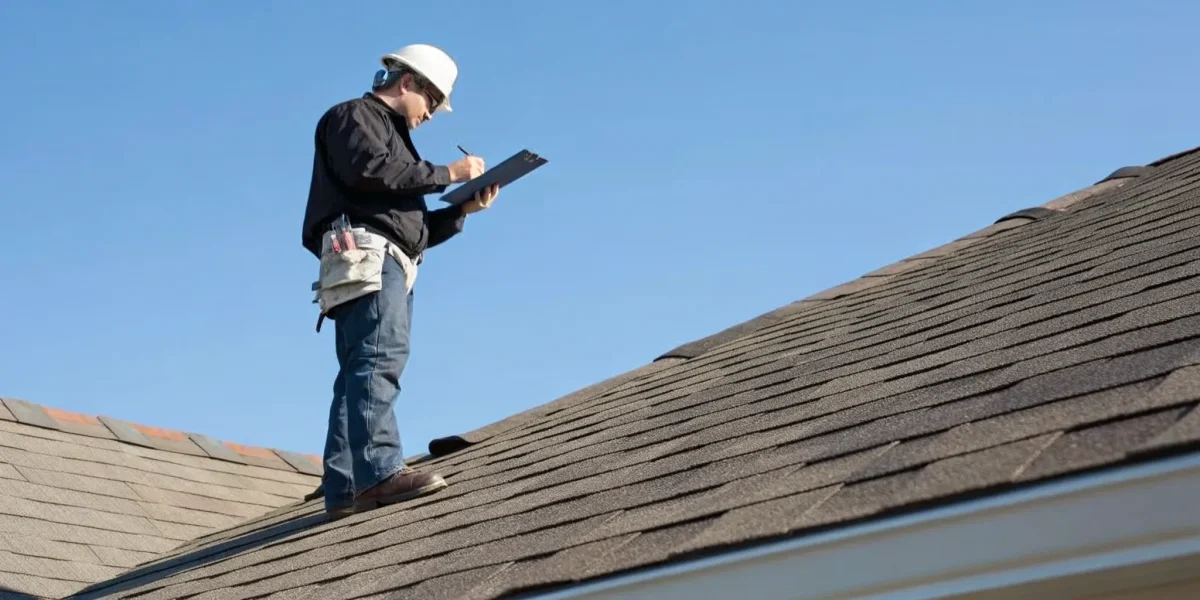
Even homeowners who do maintain their properties adequately often fail to document that maintenance in ways that are useful when an insurance claim arises. A gutter clean that was completed without retaining the invoice, a roof inspection whose findings were verbally communicated but not written down, a flashing repair that was carried out by a tradesperson who did not provide a written receipt: none of these maintains a verifiable record that a claims assessor can use to confirm the property was in reasonable condition before the loss event.
In a lower-stakes insurance environment, this documentation gap may not matter much. In an environment where insurers are more rigorous about distinguishing maintained from unmaintained properties, the absence of documentation is functionally equivalent to the absence of maintenance from the insurer’s perspective. A homeowner who has actually maintained their property but cannot demonstrate it is in a weaker position than they should be.
Some insurers offer premium discounts for specific property characteristics, including the presence of gutter guards, fire-resistant construction features, or security systems. These incentives are intended to encourage risk reduction actions. But the discount structure can create a misalignment: a homeowner who installs gutter guards to access a premium discount but then does not maintain the guards or the drainage system below them has reduced their premium without actually reducing the risk the insurer was trying to incentivise away.
The insurance industry has not yet created a framework where documented ongoing maintenance earns ongoing premium reduction in the way that a single upfront action does. This gap means the financial incentive for consistent maintenance is not as directly connected to the insurance premium as it logically should be, and homeowners are left to understand the indirect connection, through claims outcomes rather than premium pricing, themselves.
A clearer picture of the relationship between insurance costs and maintenance decisions emerges from looking at the actual financial flows involved.
For a typical Australian residential property, the annual cost of a comprehensive home and contents insurance policy ranges considerably depending on the property’s location, size, and risk profile. In flood-affected areas, coastal zones, and bushfire-exposed locations, annual premiums have in some cases doubled or tripled in recent years.
The annual cost of maintaining the same property, including professional gutter cleaning, an occasional roof inspection, and routine attention to paint, sealant, and timber elements, is a fraction of the annual insurance premium for most properties. Yet the maintenance expenditure is the one most commonly reduced when overall costs need to be managed.
This proportion matters. If a homeowner reduces their maintenance budget by fifty percent in response to rising insurance costs, they are saving a relatively small amount while simultaneously increasing the probability that their insurance claim will be contested, reduced, or denied. The financial logic of this trade is poor.
Making an insurance claim, even for a genuine and valid event, typically affects future premium costs. This is the well-understood mechanism of claims history influencing renewal pricing. But a claim that is paid on a property with documented maintenance issues also signals to the insurer that the risk profile of the property is higher than baseline, which can affect not just the premium but the terms of renewal coverage, including the introduction of specific exclusions for particular types of water damage.
For homeowners in high-risk areas who are already paying elevated premiums, a claim that reveals maintenance deficiencies can trigger a cycle of increased premiums, reduced coverage terms, and difficulty obtaining competitive renewal quotes. Maintaining the property in genuinely good condition, and documenting that maintenance, is the most effective way to avoid entering this cycle.
Gutters and roof drainage are specifically relevant to insurance outcomes because they are the most common proximate cause of the water damage claims that are the highest-volume category in Australian home insurance. A blocked gutter that overflows during a storm, a downpipe that is partially blocked and causes the gutter to fill beyond its drainage capacity, or a sagging gutter section that has been directing water against the fascia for months: all of these are maintenance failures that insurers can identify through inspection as contributing to or causing the water damage being claimed.
As covered in the article on whether gutter problems can increase insurance risks on the Gold Coast, the connection between gutter maintenance and insurance claim outcomes is direct and documented. The Gold Coast context in that article reflects the specific exposure of a high-rainfall coastal environment, but the principle applies across all Australian regions where water damage claims are significant.
The influence of rising insurance costs on maintenance decisions does not flow in only one direction. For some homeowners, rising premiums and the related experience of complex claim processes has increased attention to maintenance as a risk management tool. For others, it has created the counterproductive dynamic of reducing maintenance spending to offset insurance costs.
A useful reframe for homeowners facing rising premiums is to consider their maintenance budget as having two components: the cost of keeping the property in good condition for its own sake, and the cost of maintaining the conditions that make their insurance meaningful and accessible when they need it. The second component is directly analogous to an insurance excess, in that it is the portion of the risk the homeowner retains by keeping the property in the condition the policy requires.
Framed this way, cutting maintenance spending while paying rising insurance premiums is equivalent to paying more for an excess that is also increasing. The homeowner is paying more for coverage that is simultaneously becoming less certain to pay out because the property condition that the coverage requires is not being maintained.
For more articles on home maintenance, insurance, and the specific risks that Australian weather events create for residential property owners, the Gutter Gorilla blog provides practical guidance across a range of topics relevant to homeowners managing both property condition and insurance costs.
Rising insurance premiums are changing home maintenance decisions in ways that are sometimes counterproductive from a risk management perspective. The homeowners who navigate this most effectively are those who understand that their insurance coverage is contingent on a maintained property, that maintenance spending and insurance spending are connected through claim outcomes rather than being independent budget lines, and that the current environment has made the return on timely maintenance higher, not lower, than it has historically been.