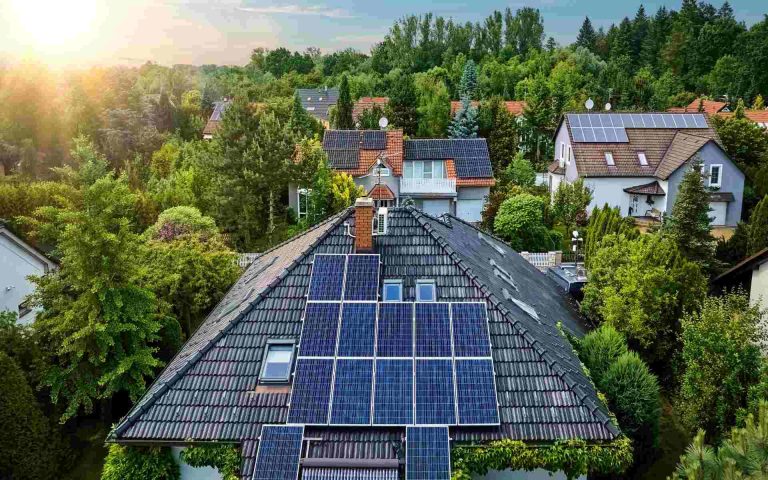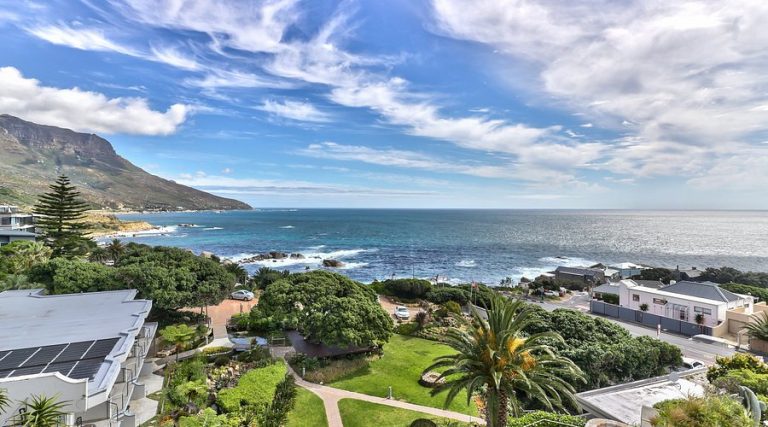
Solar panels on the Northern Beaches of Sydney should, in theory, be among the best-performing residential systems in New South Wales. The peninsula receives strong solar irradiance across most of the year, faces a generally favourable orientation for north-facing roof planes, and benefits from the reliable clear conditions that coastal Sydney typically provides outside of its storm season.
In practice, many Northern Beaches homeowners find that their systems are producing less than the initial yield projections suggested, and less than comparable systems in inland locations seem to deliver. The gap between expected and actual output is real, it is consistent, and it is explained by a set of factors that are specific to the Northern Beaches environment and that are not always communicated clearly at the point of system installation.
The Northern Beaches solar output gap comes from the same environmental characteristics that make the area an appealing place to live: the ocean proximity, the coastal conditions, and the natural environment that surrounds the residential areas. These characteristics create specific performance challenges that accumulate over time and that require active management to keep production where it should be.
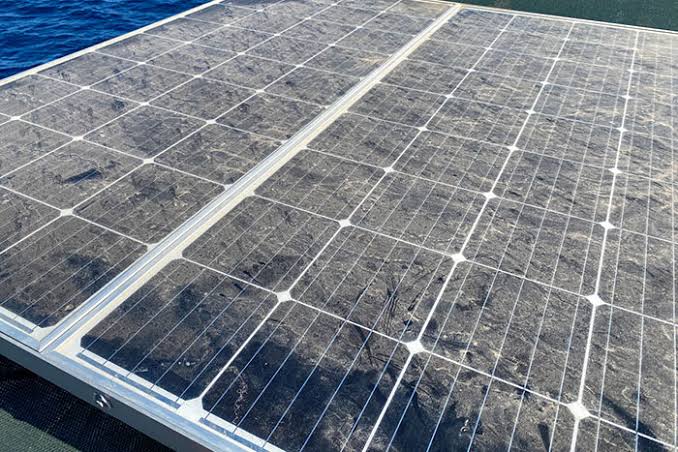
The most direct cause of underperformance in Northern Beaches solar systems is the marine aerosol soiling that accumulates on panel glass continuously in this environment. Salt particles carried by onshore winds from the Pacific deposit on every exposed surface, including solar panel glass, as a fine layer that is invisible to the naked eye in early stages but measurably affects light transmission even at low concentrations.
What distinguishes marine aerosol from ordinary dust, and what makes it the hidden reason rather than an obvious one, is its physical behaviour on glass surfaces. Marine salt particles are hygroscopic: they attract moisture from the air. When they do, they form a thin electrolytic film that bonds to the glass surface far more tenaciously than dry dust. This bonded film is not removed by rainfall in the way that loose dust is. Rain on a salt-contaminated panel surface can actually worsen the soiling in some conditions by dissolving the salt partially, redistributing it across a wider area as it runs off, and then leaving a thicker deposit when the water evaporates.
The result is that Northern Beaches panels accumulate a persistent, progressive soiling layer that builds between professional cleaning events regardless of how much rain falls. Homeowners who assume that rainfall keeps their panels clean are mistaken about how marine aerosol specifically behaves on glass.
The output loss from marine aerosol soiling is not trivial. Research on solar panel soiling in coastal Australian environments consistently shows that panels in high-salt-air exposure locations experience soiling losses in the range of five to fifteen percent of annual generation compared to what the same panels would produce in clean condition.
For a six-kilowatt system on the Northern Beaches producing a theoretical annual output, a consistent ten percent soiling loss across the year represents a meaningful reduction in both self-consumption savings and any export earnings. Over five years without adequate cleaning, the cumulative value of this lost generation is substantial. And the loss is not uniformly distributed across the year: it accelerates during periods of extended dry weather when salt accumulates without any partial dissolution by rain, and it reaches its highest level just before the first significant rain of the wet season when concentration on the panel surface is at its peak.
Beyond the marine aerosol soiling that is the primary driver of underperformance, several additional factors specific to the Northern Beaches environment contribute to the output gap that many homeowners observe.
The Northern Beaches has significant heritage conservation areas and development controls that affect where solar panels can be placed on a property. In many suburbs, panels must be installed on roof planes that are not visible from the street, which often means south-facing, east-facing, or west-facing roof planes rather than the north-facing planes that produce optimal output in the Southern Hemisphere.
A panel array installed on a south-facing or significantly west or east-facing roof produces meaningfully less energy annually than an equivalent array on a true north-facing plane. This orientation deficit is a fixed characteristic of the installation that no amount of maintenance can change. However, when it is compounded by soiling loss, the combined underperformance is amplified: a south-facing array that is also salt-soiled is performing at a double disadvantage.
Understanding the orientation contribution to the output gap helps homeowners interpret their monitoring data correctly, separating the portion of underperformance that is environmental and fixed from the portion that is maintenance-related and recoverable.
The Northern Beaches has high levels of bird activity, supported by the adjacent national parks, the foreshore reserves, and the diversity of native vegetation that provides habitat and food sources across the peninsula. For solar panel systems, this activity manifests in two ways: bird perching on or adjacent to panels that results in droppings directly on panel surfaces, and nesting activity beneath panel arrays that creates a range of secondary issues.
Bird droppings are among the most damaging forms of panel soiling because they are highly localised, acidic, and adhere strongly to glass surfaces. A concentrated dropping from a cormorant, an ibis, or even a sulphur-crested cockatoo covers a small fraction of a panel’s face but can reduce the output of that panel significantly more than the area fraction would suggest. This is because soiling that creates a completely opaque patch across cells that are connected in series can shadow those cells and trigger the bypass diode behaviour that shunts the affected cells out of the generation circuit, reducing string output by a multiple of the affected area.
On the Northern Beaches, where bird activity is consistently high relative to more urban locations, this localised soiling mechanism contributes to the output gap in ways that are not captured by average soiling loss figures.
The Northern Beaches coastal location moderates temperature extremes compared to inland western Sydney. This actually has a modest positive effect on solar panel output: panels operating in lower peak summer temperatures experience less temperature-related output derating than equivalent panels in hotter inland locations. The temperature coefficient penalty for operating above Standard Test Condition temperature applies less severely at the Northern Beaches than in Western Sydney.
However, this advantage is modest and is more than offset by the salt soiling and bird activity factors in most Northern Beaches installations.
For Northern Beaches homeowners who suspect their system is underperforming, a structured diagnostic approach identifies the cause and the appropriate response more efficiently than guesswork.
If you do not already have a reliable monitoring baseline for your system’s expected output on clear days in each season, establishing one is the necessary first step. Review your inverter monitoring data for the past twelve months and identify the typical range of daily generation on clear, cloud-free days in summer and winter. Note whether this range has changed year-on-year, and by how much.
A system that consistently produces less than it did twelve months ago on comparable weather days is showing a performance decline that requires investigation. A system whose output is stable but below initial projections may have an orientation, shading, or specification mismatch rather than a maintenance issue.
The Northern Beaches has mature tree canopies that grow every year. Vegetation that was not significantly shading a panel array when it was installed may have grown to create meaningful shading in the two to five years since. Shading that affects panels during peak generation hours, typically between 10am and 2pm, has a disproportionate impact on daily output and is worth assessing specifically against the shading situation that existed at installation.
Neighbours’ additions, new structures, antenna systems, and satellite dishes added after the solar installation can also create new shading that was not anticipated in the original design.
For Northern Beaches panels that have not been cleaned within the past three to six months, commissioning a professional clean and monitoring output for the three to five days following the clean provides the clearest available evidence of whether soiling was the primary cause of any underperformance.
If output recovers significantly after cleaning, soiling was the driver. If output remains at the pre-clean level, the underperformance has a different cause that warrants further investigation, potentially including inverter performance assessment, panel-level fault detection, or a more detailed shading analysis.
The broader context for this diagnostic approach, and the environmental factors that drive it across Australian coastal locations, is covered in the article on why environmental conditions affect solar panels more than expected.
Northern Beaches salt air affects not just the panel surfaces but the metal components of the system: the aluminium mounting rails, the stainless steel fixings, the junction boxes, and the cable connections. Annual visual inspection of accessible hardware for corrosion, and particularly of any visible cable connections and junction box conditions, can identify developing issues before they affect system safety or performance.
Mounting hardware that has corroded may still appear to be holding the panels securely but may have compromised electrical isolation characteristics. Any visible corrosion on hardware components that appear to be structurally affected, or any discolouration around junction boxes that suggests heat or moisture intrusion, should be assessed by a qualified solar electrician.
The Northern Beaches experience with solar underperformance is consistent with the broader pattern observed along the Australian east coast’s northern beaches and coastal areas, where the marine environment creates similar challenges for different communities.
All solar panels degrade slightly in output over their service life. Manufacturers typically warrant output at no less than eighty to eighty-five percent of rated power after twenty-five years, implying an average annual degradation rate of approximately half a percent to one percent per year. This is the baseline.
On the Northern Beaches, salt air exposure, UV intensity at this latitude, and the specific humidity and thermal conditions of the coastal environment can accelerate degradation in the encapsulant, backsheet, and electrical components of panels beyond this baseline, particularly in systems that are not cleaned and inspected regularly. The combined effect of natural degradation plus salt air corrosion of components plus soiling loss from marine aerosol creates a more significant performance gap over time than degradation alone would produce.
The economic case for understanding and addressing solar panel output decline on the Northern Beaches is made in more detail in the article on the hidden cost of living by the ocean on the Northern Beaches. The maintenance costs specific to the marine environment, of which solar panel cleaning is one component, are part of a broader pattern where coastal living is more expensive to maintain than inland alternatives, and where understanding those costs in advance produces better financial outcomes than discovering them over time.
For a system sized to offset a significant portion of household electricity consumption, a consistent ten to fifteen percent soiling loss means that proportion of the offset is not being achieved. The household is drawing from the grid for energy that its solar system should be producing, and the cost of this is invisible in the electricity bill because homeowners see only the total consumption charge rather than the component that should have been solar-sourced.
For Northern Beaches homeowners looking for professional solar panel cleaning services that understand the specific marine aerosol soiling profile of this location and use appropriate water quality and technique to address it effectively, the Northern Beaches page provides information on what services are available locally.
The hidden reason solar panels produce less power on the Northern Beaches is not hidden in the sense of being obscure or technical. It is hidden in the sense of being invisible on the panel surface until its effect is visible in the output data, and often not connected to the marine environment that caused it by homeowners who assume their panels are clean because it has been raining. The combination of marine aerosol soiling, orientation constraints, bird activity, and the gradual component degradation that the coastal environment accelerates creates a performance gap that is real, consistent, and largely recoverable through the maintenance approach this environment requires.