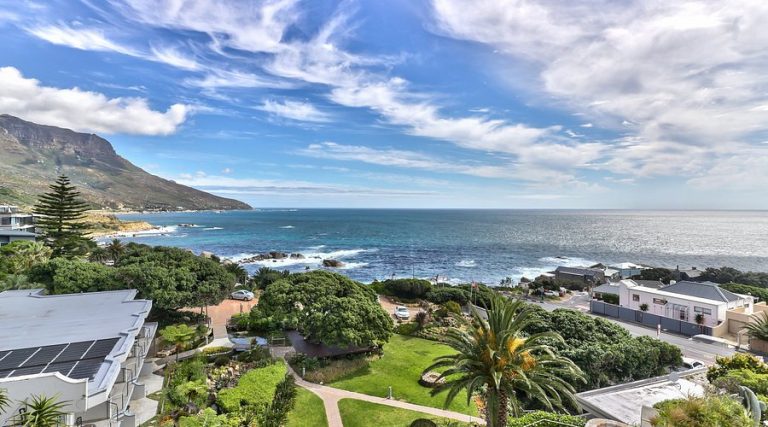
The Northern Beaches of Sydney is celebrated for its climate. Mild temperatures, ocean breezes, sunshine across most of the year, and the moderating influence of the Pacific that prevents the extreme heat events common in Western Sydney. From a lifestyle perspective, the climate is one of the area’s defining attractions.
From a home maintenance perspective, it is one of its most significant challenges. The same oceanic moisture that moderates temperatures also maintains elevated humidity levels across the peninsula for much of the year. That persistent atmospheric moisture creates maintenance demands that differ from inland Sydney suburbs in both character and frequency, and that many Northern Beaches homeowners discover gradually rather than at the point of purchase.
Humidity affects building materials through mechanisms that are distinct from direct rainfall or flooding. It does not require a rain event to create moisture contact. It does not depend on drainage failure to introduce water to a building system. It works continuously, at any time of day and in any weather, by maintaining an atmospheric moisture level that materials in or on the building absorb, release, and re-absorb as conditions fluctuate.
Atmospheric humidity is the amount of water vapour present in the air, expressed as relative humidity: the proportion of moisture the air holds relative to its maximum capacity at the current temperature. On the Northern Beaches, relative humidity levels are consistently elevated compared to inland Sydney, driven by evaporation from the ocean surface and the consistent onshore airflow that brings maritime air across the peninsula.
Elevated humidity affects building materials through several mechanisms. Many building materials, including timber, plasterboard paper facings, paint substrates, and the organic matter in insulation and wall cavities, are hygroscopic: they absorb moisture from the air when relative humidity is high and release it when relative humidity is lower. This absorption and release cycle creates the same wet-dry cycling in materials that direct rainfall produces, but at a lower intensity and with a much higher frequency.
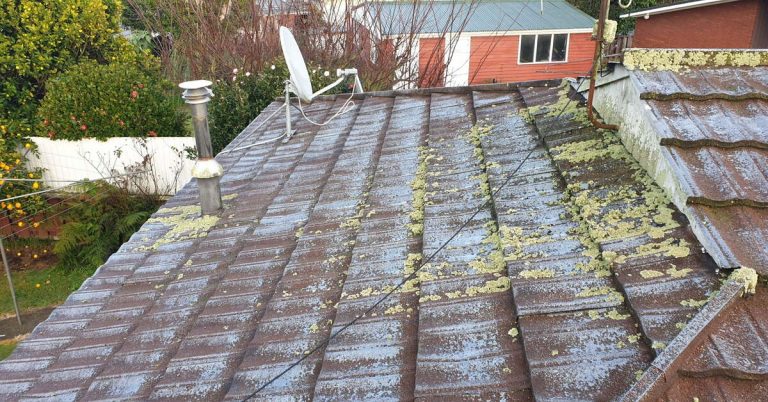
Over time, this cycling stresses paint bonds, promotes the biological growth that thrives in persistently damp conditions, and maintains the moisture level in organic materials that enables decay fungi to operate. The difference from rain-driven damage is that humidity-driven damage does not require any specific failure in the building envelope. It operates on every exposed surface, through ventilated spaces, and within wall cavities regardless of whether the external surface is intact.
The Northern Beaches experiences its highest humidity in summer, when warm ocean water evaporates at high rates and north-easterly onshore winds deliver that moisture consistently to the peninsula. Summer relative humidity regularly exceeds seventy to eighty percent during the day and can approach saturation overnight when temperatures drop slightly.
Winter humidity is lower on average but remains elevated relative to inland conditions. The temperature patterns of the Northern Beaches, moderated by the ocean throughout the year, mean the seasonal humidity swing is less extreme than in more continental climates. The result is that there is no period of genuinely low humidity during which moisture-driven deterioration in building materials stops entirely and allows recovery.
Understanding the specific damage categories that elevated Northern Beaches humidity produces helps homeowners identify current issues and prioritise preventative action.
External timber elements, including window frames, door frames, fascia boards, weatherboards, and pergola and deck structures, are among the most humidity-sensitive components of a Northern Beaches home. Timber absorbs moisture from the air when humidity is high and dries when conditions allow, but in a consistently high-humidity environment, the drying is never complete before the next humid period begins.
The cumulative effect is timber that spends more of its service life in a damp condition than in a dry one. Timber that is persistently damp provides suitable conditions for decay fungi, which require moisture in the wood fibre to establish and grow. Decay that initiates in external timber on a Northern Beaches property can progress faster than in inland locations because the periods during which conditions slow decay activity are shorter and less pronounced.
The practical repair advice for humidity-related external timber deterioration is early identification and intervention. Surface paint failure is often the first visible indicator of elevated timber moisture content: paint that blisters, peels, or chalks faster than expected is indicating that the timber beneath it has more moisture cycling than the paint bond can accommodate. Addressing paint failure promptly, before moisture levels in the timber progress to the point where decay has initiated, is significantly less expensive than addressing decay once it has become structural.
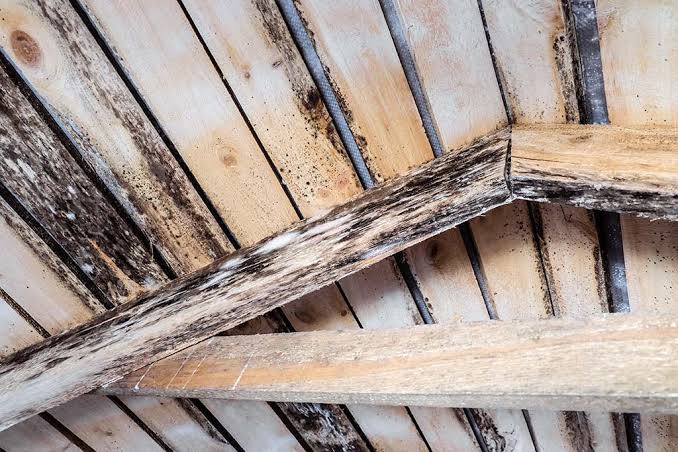
Mould on internal wall and ceiling surfaces is a common complaint among Northern Beaches homeowners, and the chronic coastal humidity is a significant contributing factor. Mould requires three conditions: moisture, a hospitable surface, and temperatures above approximately five degrees Celsius. The Northern Beaches provides the second and third conditions reliably. The humidity provides the first.
The specific mould mechanism in well-sealed homes is often condensation rather than direct water ingress. When warm, moist indoor air contacts a surface that is cooler than the dew point temperature, moisture condenses on that surface. This occurs most readily on external walls, in corners where air circulation is reduced, on glass surfaces, and in spaces behind large furniture placed against external walls.
The article on the dangerous impact standing water has during cold, wet weather covers the broader relationship between moisture and building health. For Northern Beaches homes, the humidity dimension adds a year-round background moisture loading that makes internal mould more persistent and harder to resolve through surface treatment alone than in drier inland environments.
The combination of salt air and elevated humidity on the Northern Beaches creates conditions that are particularly aggressive for metal building components. Salt air deposits chloride ions on metal surfaces, and elevated humidity provides the moisture film that activates these chlorides as an electrolyte in the electrochemical corrosion reaction.
This corrosion mechanism affects gutters, downpipes, roof fasteners, window and door hardware, balustrade systems, external light fittings, and any other metal component that is exposed to the outdoor environment. The corrosion rate in high-humidity, high-salt-air conditions can be two to three times faster than in inland locations of comparable temperature.
The maintenance implication is that annual inspection of metal components for corrosion onset is the minimum appropriate frequency for Northern Beaches properties, and that preventative treatment, lubricating hardware, treating visible surface rust before it progresses to structural corrosion, and replacing corroded components before they fail rather than after, is the approach that manages lifetime cost most effectively.
Several structural elements of Northern Beaches homes are specifically vulnerable to the cumulative effects of elevated humidity, and understanding these vulnerabilities helps homeowners target their maintenance attention effectively.
For Northern Beaches homes built on a sub-floor rather than a slab, the sub-floor space is particularly vulnerable to humidity-related problems. Elevated external humidity creates elevated humidity in the sub-floor space, particularly where cross-flow ventilation is inadequate or where the ground surface beneath the floor is not covered with a vapour barrier.
Persistent sub-floor humidity maintains the moisture content of floor bearers, joists, and flooring boards in a range that supports decay and that is attractive to termites, which require moisture in timber to sustain their activity. Sub-floor timber that absorbs and releases moisture repeatedly over years also experiences the dimensional changes that produce squeaking floors, gaps between boards, and unevenness that reflects the moisture cycling in the structure.
Sub-floor ventilation on Northern Beaches properties should be checked annually to confirm that all ventilation openings are clear and providing the cross-flow airflow that the space requires. Properties where the ground beneath the floor is not covered with a polythene vapour barrier may benefit from installation of one, as this significantly reduces the amount of ground moisture that evaporates into the sub-floor space.
Humidity that enters the roof cavity, either through ventilation openings or through gaps in the ceiling, can condense on the underside of cooler roof surfaces during overnight temperature drops. On the Northern Beaches, where overnight temperatures rarely drop dramatically, this condensation cycle is less severe than in more temperature-variable inland locations. But in combination with the generally elevated humidity, it can maintain moisture in roof insulation, on roof battens, and on the underside of the roof surface at levels that support biological growth.
Annual inspection of accessible roof cavity spaces, looking for signs of condensation staining, biological growth on timber surfaces, or wet insulation, provides the information needed to identify whether the roof cavity environment is within acceptable limits or requires intervention.
A poorly functioning gutter system amplifies humidity damage in a specific way. Gutter overflow during rain events wets external wall surfaces that are already at elevated moisture levels from ambient humidity. The additional moisture from overflow is added to a system that is already near its maximum moisture absorption capacity, and the combined effect can push materials across the threshold from acceptable moisture cycling into conditions that actively support decay and mould development.
Maintaining the gutter and drainage system in functional condition on a Northern Beaches property is therefore not just about preventing overflow damage in isolation. It is about preventing the compounding of overflow moisture with the background humidity moisture that already exists in the building materials. As detailed in the article on why Northern Beaches homes need more than just annual maintenance, the Northern Beaches environment requires maintenance at higher frequency across all systems, and the humidity dimension reinforces why the standard annual approach is insufficient.
The most effective approach to managing humidity-related mould and rot in Northern Beaches homes combines ventilation management, surface treatment timing, and drainage system maintenance into a coherent program rather than addressing each element independently.
Ventilation is the most fundamental intervention available for managing indoor humidity in a coastal home. When outdoor air is drier than indoor air, opening windows and running extraction fans reduces indoor humidity. When outdoor air is more humid than indoor air, which is common on summer mornings and evenings on the Northern Beaches, limiting air exchange reduces the moisture load entering the building.
Managing ventilation intelligently on the Northern Beaches means opening the house during the parts of the day when the sea breeze is at its peak and temperature-humidity dynamics are most favourable for moisture removal, and reducing ventilation during the high-humidity periods around dawn and dusk when outdoor air is most moisture-laden.
Extraction fans in bathrooms, laundries, and kitchens should run during and after activities that generate indoor moisture, and should vent to the outdoors rather than into the roof cavity.
For Northern Beaches homeowners looking for professional maintenance services that understand the specific humidity and coastal environment demands of the peninsula, the Northern Beaches page provides details on what local services cover and what appropriate maintenance frequency looks like for this specific environment.
Humidity creates bigger home maintenance problems on the Northern Beaches because it creates a background moisture loading on building materials that is higher than inland locations and that operates continuously rather than only during rainfall events. This persistent moisture loading accelerates paint deterioration, supports biological growth, drives timber decay, promotes corrosion, and maintains the conditions that mould requires to establish. Managing it effectively requires ventilation, surface treatment timing, drainage system function, and inspection frequency that reflects the specific demands of this coastal environment rather than generic national maintenance guidance.