Sydney’s climate has always been dynamic. The city sits at the intersection of multiple weather systems, experiences dramatic storm events, and has always demanded more from residential buildings than many international comparisons would suggest. But the character of Sydney’s weather has been shifting in ways that are directly relevant to how long roofs last, how often they need maintenance, and what conditions they now face that are materially different from what they were designed to withstand.
Homeowners and building professionals who rely on historical assumptions about roof lifespans, maintenance intervals, and material performance are increasingly finding those assumptions challenged by what is actually happening. Understanding how Sydney’s climate is changing and what it means for residential roofing provides the foundation for more realistic maintenance planning.
Sydney’s weather patterns have been showing measurable changes over the past two to three decades. The Bureau of Meteorology’s long-term records for the region document increasing average temperatures, shifts in rainfall distribution toward fewer but more intense events, and extensions of the periods between significant rainfall in some seasons.
These are not speculative projections. They are observed trends in measured data, and they have practical implications for building materials and maintenance.
Average summer temperatures in Sydney have increased measurably over recent decades, and the frequency of days above thirty-five and forty degrees Celsius has increased significantly compared to the historical average. For roofing materials, higher temperatures create two distinct problems.
The first is thermal stress. Roofing materials expand and contract with temperature changes. The daily cycle of heating through the day and cooling at night creates repeated thermal movement across the material’s structure. As average summer temperatures increase and the temperature amplitude between hot days and cooler nights remains significant, the cumulative number of thermal cycles a roof experiences over its service life increases. Each cycle stresses the joints, fixings, and material interfaces that are the most vulnerable points in any roof system. Mortar on ridge capping, sealant at flashing junctions, and fasteners holding metal sheeting all experience more cumulative stress from thermal cycling than they would have in cooler historical conditions.
The second is UV degradation. Higher temperatures do not directly increase UV radiation, but they are correlated with drier atmospheric conditions and reduced cloud cover in some seasons, which does allow more direct UV exposure to reach roof surfaces over time. The polymer-based coatings on metal roofing, the encapsulants in solar panels, and the sealants used at roofing joints all experience UV-driven photodegradation at rates that accumulate with the total UV dose received across a roof’s service life.
The rainfall that Sydney receives is increasingly concentrated in fewer but more intense events rather than distributed evenly across the year. A roof system that was designed to manage the rainfall intensity that historical records suggested as a design standard may face events that exceed that standard more frequently as the distribution of rainfall shifts toward intensity rather than duration.
This is particularly relevant for the western suburbs. The article on how Western Sydney storms create serious roof and gutter damage examines the specific storm characteristics of the western corridor in detail. But the pattern of more intense events with higher peak rainfall intensities is not confined to the west. Inner Sydney, the northern beaches, and the southern suburbs all experience increasingly intense storm events that test roof and drainage systems at rates above historical design assumptions.
When peak rainfall intensity exceeds the design capacity of a drainage system, overflow occurs. Repeated overflow accelerates the deterioration of fascia, soffits, and external walls. And each intense storm event delivers higher kinetic energy impact to roof surfaces than a gentler rain of the same total volume, which accelerates physical surface wear on tiles, coatings, and sealants.
Changing weather patterns affect not just the events that test roofs but the background conditions they operate in between events. Several of these background condition changes have measurable effects on how quickly roofing materials deteriorate.
Increasingly, Sydney’s rainfall is arriving in concentrated periods separated by longer dry intervals. This pattern creates conditions that are challenging for roof materials in ways that more evenly distributed rainfall would not. The extended dry periods allow mortar on ridge capping to dry and crack more severely before the next wetting event. Sealants dry and harden beyond their elasticity limits. The alternating between intense saturation and prolonged drying creates a more extreme wet-dry cycling pattern than the historical distribution of smaller, more frequent rainfall events.
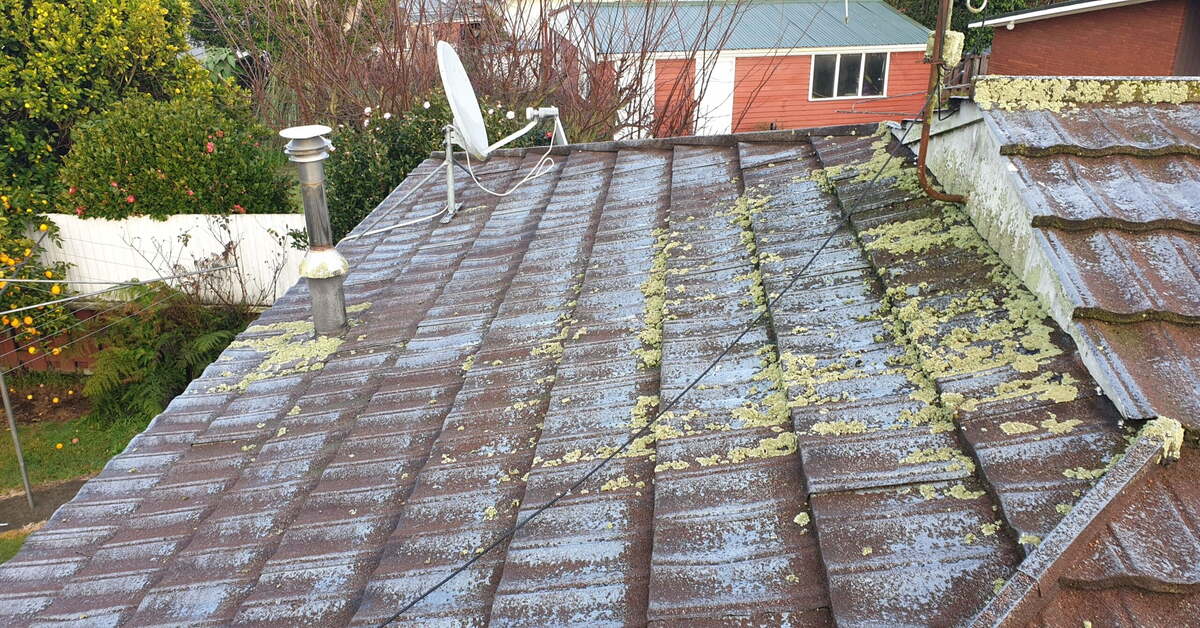
Some roof material types are more sensitive to this pattern than others. Terracotta tiles with aged glazing and concrete tiles with worn surface coatings absorb more moisture during the intense wet events and take longer to dry in conditions where subsequent dry periods are warmer than historical averages. This extended moisture residence in the tile body creates more opportunity for biological growth establishment and more freeze-thaw-equivalent stress from the thermal expansion associated with wet versus dry material.
Sydney’s coastal suburbs have always experienced salt air deposition from the Pacific. But changes in wind pattern frequency and the periods of particularly strong onshore flow have affected the distribution of salt deposition even into suburbs that were previously considered inland enough to have low coastal exposure. Areas like the inner west and parts of the northern suburbs that historically received low to moderate salt air loading are increasingly affected during extended periods of strong onshore winds.
For metal roofing, fascia, and gutter systems, increased salt air exposure accelerates the corrosion processes that are the primary drivers of metal component failure. Protective coatings that were specified for lower salt exposure environments may be reaching the end of their effective service life earlier than historical assumptions would suggest.
Beyond the incremental effects of changing background conditions, the increasing frequency of individually extreme events has a discrete impact on roof lifespan. A hail event that cracks multiple tiles or dents metal sheeting in a pattern that creates water entry points shortens the effective service life of that roof by years, not months. A fire that deposits ember residue and creates thermal stress on roof surfaces does damage that compounds with subsequent weathering.
The article on summer gutter cleaning in Sydney and fire risks in storm preparation provides context on the dual seasonal pressure that Sydney roofs now face, preparing for both fire season and storm season risks in the same period. This dual pressure is a characteristic of Sydney’s current climate that was less pronounced in historical patterns.
If climate patterns are shortening the effective lifespan of roofing materials and increasing the frequency of damaging events, the practical response has to include adjustments to maintenance frequency, inspection standards, and the triggers for maintenance intervention.
The standard recommendation for roof inspections, every three to five years for a property in good condition, is a starting point rather than a definitive guideline in the current Sydney climate. Properties that experience above-average storm activity in any given year, that are in coastal zones receiving elevated salt air, or that have experienced any significant hail or fire event should be inspected more frequently than this baseline.
A more appropriate standard for many Sydney properties in 2026 is a professional inspection every two to three years as a minimum, with additional inspections following any event that could have caused damage: significant hail, strong winds above seventy kilometres per hour, or storm events that produce visible damage to adjacent properties.
As rainfall becomes more concentrated in intense events rather than distributed across moderate events, the consequence for gutter systems is that peak loading occurs at higher rates but may be less frequent. This changes the maintenance priority: keeping gutters clear for the intense events that now test them is more important than it was in a historical pattern of more moderate but more frequent rainfall.
Timing of gutter cleaning should be aligned with the onset of the periods in the year when intense events are most likely, not distributed evenly across the calendar. In Sydney, this means pre-summer maintenance before the storm season peak is more critical than it was historically, because the storm events that arrive are now more likely to be genuinely intense rather than moderate.
Professional gutter cleaning timed for early October rather than late November reflects this shift in storm intensity distribution. The September to November period in Sydney increasingly sees the first intense events of the season arrive earlier than historical patterns, and a drainage system that is clean and fully functional before October is better positioned for what the current storm season looks like than one serviced in November after the first significant events have already arrived.
Extended dry periods followed by intense wetting create the most damaging conditions for the flexible sealants used at flashing junctions. Sealant that has hardened during a prolonged dry period loses the elasticity it needs to accommodate building movement and thermal expansion during the intense rain events that follow.
Inspection of all visible flashing sealants every two to three years, rather than on a five to seven year cycle, better matches the current weathering conditions in Sydney. And because sealant failure at flashings is one of the most common pathways for water entry that creates internal ceiling damage, catching it before it fails is substantially more cost-effective than addressing the internal damage after it has occurred.
Understanding how to respond to Sydney’s shifting climate at the material selection level, not just the maintenance level, gives homeowners better tools for extending roof lifespan in more demanding conditions.
Not all roofing materials respond equally to the conditions Sydney’s shifting climate creates. Making informed choices when replacement becomes necessary gives homeowners a more durable outcome than simply replacing like with like.
Colorbond and other pre-painted steel with coatings specifically rated for high-UV environments outperforms standard coatings under Sydney’s current UV exposure conditions. The coating system specification matters: steel roofing specified for moderate UV zones may not match the actual UV loading Sydney now receives consistently.
Concrete tiles with factory-applied polymer sealant coatings provide better resistance to the intense wet-dry cycling Sydney now experiences than uncoated concrete tiles. The polymer component maintains some flexibility through thermal cycling that pure cement coatings do not.
Terracotta tiles with factory glaze provide excellent durability under all of Sydney’s current conditions but require attention to mortar and ridge capping maintenance more than the tile body itself.
Ridge capping with flexible polymer-modified mortar rather than standard cement mortar accommodates the thermal movement that increasingly extreme temperature swings create without cracking as readily as standard mortar.
Stainless steel or aluminium fasteners and fixings rather than standard galvanised steel throughout the roof system reduce the corrosion-driven failure timeline in a climate where salt air exposure is increasing across a broader area of the Sydney basin.
For Sydney homeowners looking for information on professional gutter and roof maintenance services across the wider Sydney region, the Sydney page provides details on what local professional services involve and what to expect from a maintenance visit calibrated to current Sydney conditions.
Sydney’s climate shift is real, it is documented, and it is changing the conditions that residential roofs have to perform under. The roofing materials and maintenance schedules that were appropriate for the Sydney climate of twenty years ago are not necessarily appropriate for the Sydney climate of today. Homeowners who recognise this and adjust their maintenance approach accordingly are protecting roofs that will last as long as possible under current conditions. Those who maintain against historical assumptions are likely to find their roofs reaching the end of their effective service life earlier than expected.