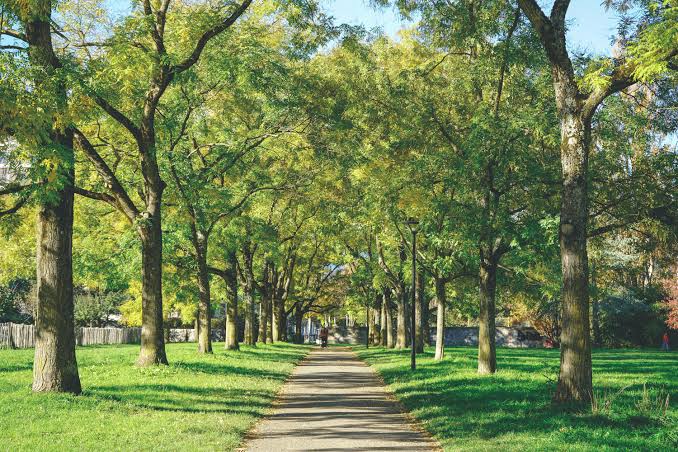
Tree-lined streets are among the most coveted residential amenities in Australian suburbs. The dappled shade in summer, the visual softening of built-up streetscapes, the wildlife activity, the sense of established neighbourhood character: these things add genuine and measurable value to the homes on those streets. Buyers pay premiums for properties in tree-lined streets, and residents consistently report higher satisfaction with their neighbourhood environment when mature trees are present.
But the same trees that create these benefits place specific and ongoing demands on the roofs and drainage systems of the properties they line. The leaf fall, debris, shade patterns, root activity, and branch proximity that mature street trees create are all relevant to how quickly gutters block, how fast biological growth establishes on roof surfaces, and how often professional maintenance is needed to keep the drainage system functioning correctly.
Understanding these demands does not mean choosing between trees and home maintenance. It means calibrating maintenance to the actual environment rather than applying a generic schedule that does not reflect what trees actually do to roofs and gutters.
The impact of street trees on residential roof maintenance is not theoretical. It follows from specific and well-understood mechanisms that operate consistently across different tree species and different street configurations.
The most direct way that trees affect roof maintenance is through the volume and type of organic material they deposit on roofs and into gutters. A single mature street tree can shed kilograms of leaf, bark, twig, and seed material over the course of a year. Multiply this by several trees with canopies that extend over or near a roofline and the debris input into the gutter system becomes significant.
The composition of this debris matters as much as the volume. Some species shed large, easily removable leaves that remain loose and drain with water flow. Others, particularly many Australian natives including eucalypts, paperbarks, and banksias, shed fine bark particles, seed capsules, and narrow leaf material that compacts readily in the gutter channel. Compacted fine debris creates blockages that simple water flow cannot clear and that require physical removal.
Council-planted street trees in established Australian suburbs include a mix of species. The increasingly common native species in recent plantings, selected for drought resistance and habitat value, tend to shed more continuously and produce finer debris than the plane trees, oaks, and liquidambars that characterise many older street plantings. The maintenance implications differ between these species categories, but both create debris loads that increase the required maintenance frequency above what a property without significant adjacent trees would need.
The practical consequence of elevated debris input from street trees is that gutters block faster. A property on a street with mature trees overhanging or adjacent to the roofline may accumulate enough debris to partially restrict drainage within six to eight weeks of a professional clean. The same property on a street without significant tree cover might take four to six months to reach the same accumulation level.
This difference in accumulation rate directly determines how often professional gutter cleaning is needed to keep the drainage system functional through rain events. A property in a heavily treed street that is cleaned twice a year as a standard residential schedule would be is going to experience periods of significant debris accumulation and drainage restriction between each clean. The same maintenance budget applied at three or four times per year instead of twice would keep the system in a consistently functional state.
Tree canopies create shade patterns on roof surfaces below them. Shaded areas of roof surfaces stay damp longer after rain, receive less UV radiation, and dry more slowly than unshaded sections. These conditions are significantly more conducive to moss, lichen, and algae growth than the fully sun-exposed roof surfaces of properties without significant tree cover.
Biological growth on roof tiles is not purely a cosmetic concern. Moss holds moisture against tile surfaces and can lift tile edges, accelerating moisture absorption into the tile body. Lichen can penetrate the surface layer of some tile types, creating micro-fracturing over years. Algae growth on metal roof surfaces can hold acidic organic compounds against the metal coating, contributing to surface corrosion in combination with any other environmental stressors.
For properties in tree-lined streets where sections of the roof spend extended periods in shade, periodic assessment of biological growth levels and treatment where growth has become established is a relevant maintenance activity that would rarely be needed for properties in fully exposed locations.
Beyond the direct physical effects of debris deposition and shade, trees adjacent to residential rooflines create specific maintenance challenges that are worth understanding individually.
Branches that contact or nearly contact a roof surface cause damage through several mechanisms. A branch resting against tiles or metal sheeting creates abrasion with each movement in the wind. Over seasons of gentle but continuous motion, this abrasion can damage tile surfaces and, in the case of metal roofing, strip protective coatings from small areas that then become corrosion initiation points.
Branches that fall during storm events cause more acute but less frequent damage. A small branch falling from height can displace a tile or dent a gutter section. Larger branch failures, which are more likely in weakened or diseased trees, can cause structural damage to roofing and drainage systems that requires significant repair.
The management response is selective pruning to maintain a gap between branch tips and the roof surface of at least one to two metres. This gap prevents contact abrasion, reduces the risk of smaller branch falls landing on the roof directly, and also reduces the debris input from the closest branches, which deposit the highest volume of material per unit of canopy area.
For street trees that are under council management, this pruning requires a request to the relevant local council rather than independent action. Most councils have formal processes for pruning requests on street trees where the tree presents a risk to adjacent private property.
Trees with extensive root systems, which includes most large mature trees, may have roots that extend beneath the property’s driveway, paving, and in some cases the foundation perimeter. Root activity beneath paving causes lifting and cracking. Root intrusion into stormwater or sewer pipes is a specific risk for older earthenware or PVC pipes in properties that were established before the surrounding trees had grown to their current size.
While root activity is not directly a roof maintenance issue, it is part of the broader impact of adjacent trees on property maintenance costs and is worth considering in the context of a property’s overall maintenance planning.
In properties near bushland or with significant native tree cover, the debris that accumulates in gutters from adjacent trees is not only a drainage concern but also a fire risk concern during fire season. Dry leaf and bark material in gutters provides an ember attack ignition pathway during bushfire events. The properties in heavily treed streets in fire-prone areas of Sydney, the Hills District, the North Shore, and the Central Coast are disproportionately exposed to this combined debris-and-fire-risk profile.
This intersection of debris management and fire safety reinforces the case for maintenance frequency above the standard twice-yearly baseline for properties in these locations.
Addressing the roof maintenance demands that adjacent trees create requires a combination of maintenance frequency adjustment, targeted repair, and where appropriate, vegetation management.
The fundamental adjustment for properties in tree-lined streets is increasing gutter cleaning frequency from the standard twice-yearly baseline to a schedule that reflects the actual debris accumulation rate for the specific property.
For properties with moderate tree cover, three professional cleans per year is typically appropriate. For properties under dense mature canopy, or those with multiple large native species directly adjacent to the roofline, four cleans per year may be needed to prevent the cycle of heavy accumulation and drainage restriction between events.
The timing of each clean should reflect the patterns of debris production from the specific species present. Deciduous street trees produce their highest debris load in autumn. Native species like eucalypts and paperbarks shed more continuously with peaks related to their specific growth cycles. A maintenance schedule that accounts for these peak periods, cleaning shortly after the main shedding events rather than at fixed calendar intervals, is more effective than a uniform schedule.
Properties adjacent to trees with significant fine debris production, particularly those with native species shedding bark particles and seed capsules, accumulate sediment inside downpipes at a higher rate than properties with coarser debris types or lower debris loads. This fine material passes through the gutter channel without creating a visible blockage at the surface but settles in downpipe bends and lower sections, progressively reducing hydraulic capacity.
Downpipe flushing should be included as a standard component of every professional gutter clean on tree-adjacent properties rather than treated as an optional extra. The combination of surface debris removal and downpipe flushing provides the complete drainage system maintenance that the elevated debris environment requires.
For properties where roof sections are consistently shaded by adjacent trees, annual assessment of biological growth levels provides the basis for deciding whether treatment is needed in any given year. Early-stage algae and light moss growth can be addressed with appropriate biocide treatments that arrest further growth without requiring physical removal. More established moss and lichen growth may require physical removal followed by treatment.
The timing of treatment is best aligned with autumn, when the wet conditions that would reactivate growth after a summer dry period are beginning. Treatment at this time reduces growth re-establishment through the season when moisture conditions are most favourable for biological activity.
The accumulated maintenance deficit that develops when properties in tree-lined streets are maintained at the same frequency as non-tree-adjacent properties eventually manifests as specific repair requirements that are more expensive and more disruptive than the incremental maintenance costs they replace.
The most common repair outcome of inadequate gutter maintenance on tree-adjacent properties is fascia board deterioration from chronic gutter overflow. The mechanism is well-established: debris accumulates faster than the cleaning schedule addresses it, gutters overflow during rain events, overflow contacts the fascia repeatedly, and the timber softens and eventually decays.
Properties in tree-lined streets where gutter cleaning has been maintained at a twice-yearly schedule appropriate for lower-debris environments accumulate the conditions for this deterioration faster than their owners typically expect. The repair scope that eventually results includes not just gutter cleaning but gutter structural assessment, fascia repair or replacement, and in some cases structural work on the rafter ends where moisture has reached them.
Extended periods of untreated biological growth on shaded roof tiles can progress from a surface treatment issue to one that affects the physical structure of the tiles. Lichen that has been established on a concrete tile for several years penetrates the surface coating and begins to affect the tile body itself. At this stage, removal of the growth requires more aggressive treatment, and some surface damage to the tile may be irreversible.
The preventative case for regular biological growth assessment and treatment on shaded roof sections is made by comparison to the cost of this more advanced treatment, which may also need to include tile replacement for sections where surface damage has progressed beyond a recoverable state.
The financial case for increased maintenance frequency on tree-adjacent properties follows the same logic as the broader preventative maintenance argument covered in the article on why preventative maintenance is more valuable than ever for Sydney homeowners: small, frequent preventative costs are consistently less expensive than the periodic large repair costs they prevent.
For properties in tree-lined streets, this calculation is simply applied at a higher maintenance frequency than for non-tree-adjacent properties. The additional cost of a third or fourth annual clean, measured against the cost of the fascia replacement, downpipe remediation, and biological growth damage that under-maintained tree-adjacent properties accumulate, is overwhelmingly favourable to the more frequent preventative approach.
The parallel to holiday home maintenance, covered in the article on why holiday homes need more roof maintenance than permanent homes, is relevant here: just as the specific characteristics of holiday homes create demands above the standard residential baseline, the specific characteristics of tree-adjacent properties create demands above the standard residential baseline in the same direction, and addressing them at the appropriate frequency produces better financial outcomes than applying a generic standard.
For property owners looking for professional gutter cleaning services that include condition assessment and downpipe flushing appropriate for high-debris tree-adjacent environments, a service that reports on system condition as well as removing debris is the most informative option for managing these properties.
For more articles on roof maintenance, debris management, and the specific factors that affect residential property upkeep in Australian environments, the Gutter Gorilla blog provides practical guidance across a range of property types and conditions.
Tree-lined streets increase roof maintenance needs in specific and well-understood ways that are manageable when the maintenance frequency and scope reflect the actual environment. The trees that make these streets desirable also make the roofs on those streets more demanding to maintain. Understanding that relationship, and adjusting maintenance accordingly, is what protects both the building and the investment value that the tree-lined location represents.