It is a common assumption among holiday home owners that their property needs less maintenance than their primary residence simply because it is used less. The house sits empty for weeks or months at a time. No one is cooking, showering, or generating the everyday wear and tear that accumulates in a home that is occupied daily. Surely that means things deteriorate more slowly?
In practice, the opposite is often true for roof and drainage systems. Holiday homes, particularly those in coastal and semi-rural locations that are most popular as Australian getaway destinations, frequently develop roof maintenance problems faster than equivalent permanent residences and suffer more serious secondary damage when those problems occur, precisely because the property is unoccupied when the damage is progressing.
This article examines why holiday home roofs need more frequent maintenance rather than less, what the specific risk factors are, and what a practical maintenance approach looks like for properties that are not continuously occupied.
The maintenance demands of a holiday home roof differ from those of a permanent residence in ways that reflect both the location characteristics of holiday properties and the absence of the daily monitoring that comes with permanent occupation.
Australian holiday homes are disproportionately concentrated in locations with demanding environmental conditions: coastal areas with salt air and high UV, mountainous areas with high wind and heavy rainfall, and bushland interface areas with significant debris loads from native vegetation.
A permanent residence in suburban Sydney faces different environmental conditions from a holiday home at Jervis Bay, in the Snowy Mountains, or on the Far North Coast of New South Wales. The holiday home is often in an environment where every stressor on roofing materials, corrosive salt air, UV intensity, debris accumulation, storm exposure, is more severe than in the suburban environment the owner is used to managing at their primary residence.
Maintenance intervals and approaches appropriate for a suburban permanent residence may be insufficient for a holiday home in a more demanding location, even without considering the unoccupied-property dimension.
The most significant difference between a holiday home and a permanent residence from a maintenance perspective is not how the roof is used but who is watching it. A family living in their home year-round notices when a ceiling stain appears after a storm. They hear the sound of water dripping from a leak. They see the gutter overflowing when rain begins. They receive the immediate feedback from the building that something is wrong.
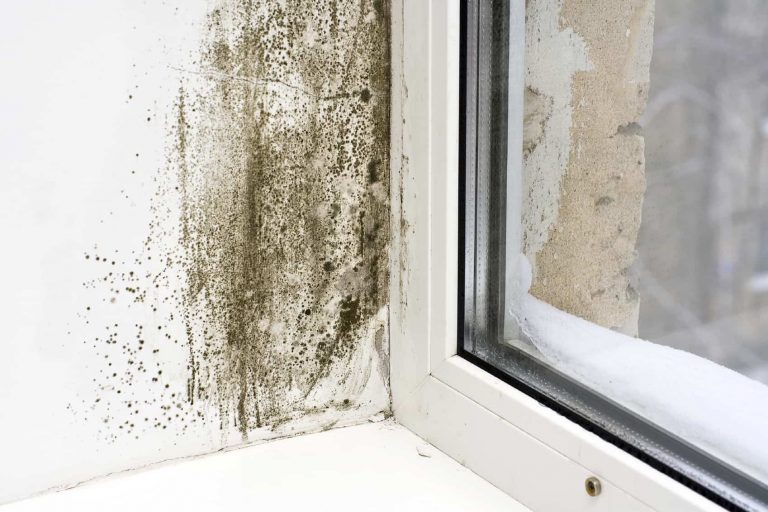
A holiday home generates no such feedback during the periods it is unoccupied. A significant rainfall event in June can damage the roof, allow water into the ceiling cavity, and begin the process of mould establishment and timber deterioration. If the property is not visited until the Christmas school holidays, that damage has been progressing for six months without anyone knowing it occurred.
This monitoring gap transforms minor issues into major ones. A small flashing failure at a roof penetration is a repair that costs a few hundred dollars if caught early. The same failure that has admitted water into the ceiling space for six months has by that point potentially damaged insulation, created mould in the ceiling cavity, stained the plasterboard ceiling lining, and may have allowed moisture to travel along timber members to affect a broader area. The repair cost is now many multiples of the original flashing fix.
Beyond the monitoring gap, several specific characteristics of how holiday homes are occupied and managed create roof maintenance demands that exceed those of permanent residences.
In a permanent residence, the occupants typically notice when debris has accumulated in the gutter to a visible level. They may not immediately address it, but they are aware of it and the observation creates a mental note that eventually translates into a cleaning appointment. The accumulation is noticed, tracked, and eventually acted on through the continuous human presence in the building.
A holiday home accumulates debris in its gutters through every wind event and rainfall through the entire period between visits. No one observes the progression from a light scatter of leaves to a compacted, partially blocking layer to a substantially blocked channel that will overflow in the next significant rainfall. Each visit to a holiday home occurs in the context of vacation enjoyment rather than property inspection, and the gutters are not visible from inside the house.
By the time a holiday home’s gutters are inspected, they are often in a significantly more advanced state of accumulation than the equivalent gutters on a permanent residence maintained at the same nominal annual cleaning frequency.
Rooflines and roof cavities of unoccupied properties attract wildlife activity at higher rates than occupied properties. The continuous human presence and noise activity in a permanent residence discourages possums, birds, and rodents from establishing in roof cavities and at eave entry points. An unoccupied holiday home presents as an undisturbed, quiet environment that is highly attractive for nesting.
Possums that establish in a holiday home roof cavity cause damage to insulation, electrical wiring, and stored materials within the cavity. They also use the same entry point repeatedly over seasons. Roof cavity damage from possum occupation discovered at a Christmas holiday may have been developing since the previous Easter visit.
Bird nesting activity in gutters and at eave ventilation points is similarly unimpeded in an unoccupied property. Nest material in gutters accelerates blockage and creates a secondary fire risk in the dry material that accumulates in the gutter channel. Nest material at eave vents blocks the ventilation that helps manage roof cavity moisture.
Every significant storm event potentially causes or reveals roof damage that requires attention. The appropriate response to storm damage is prompt inspection and, where damage is identified, prompt repair before the next rainfall tests the compromised system again.
For a permanent residence, storm events are experienced by the occupants and the immediate post-storm inspection happens naturally as part of the response to the event. For a holiday home, a storm that occurs mid-week in July may not be known to the owner until they check weather reports, and the post-storm inspection may not occur for months.
The damage that accumulates in the interim, a lifted ridge cap that admits water into the roof cavity, a displaced tile that creates a water entry point, a gutter section that was already partially blocked and was overwhelmed by the storm into overflow position, continues to affect the building through every subsequent rainfall event without correction.
The frequency and timing of roof repair interventions for holiday homes needs to reflect the specific risk profile of unoccupied coastal or rural properties rather than the general residential maintenance calendar.
The most effective adjustment to the standard residential maintenance calendar for holiday home owners is the introduction of pre-visit maintenance as a specific scheduling principle. Rather than or in addition to calendar-based maintenance intervals, a professional gutter clean and basic roof inspection should be scheduled to occur shortly before each significant visit to the property.
A pre-Christmas clean scheduled for early December ensures the property enters its highest-occupancy period with a clear drainage system and a known condition. A pre-Easter clean in late March addresses the accumulation from autumn debris shedding and the summer storm season. Pre-winter-holiday or long-weekend visits can trigger additional inspections if the property’s location warrants it.
This visit-anchored maintenance approach ensures that the property is checked and addressed at appropriate intervals that reflect the actual use pattern rather than a generic annual or twice-yearly schedule.
Holiday home owners should treat a comprehensive annual professional inspection of the roof and drainage system as non-negotiable, even if the property appears to be in good condition from the limited observation a holiday visit allows.
A professional inspection covers the elements that owners cannot practically check during a holiday visit: the condition of ridge capping mortar assessed by physical testing, the integrity of flashings at all penetrations, the pitch and fixing condition of the gutter system along its full length, the degree of downpipe sediment accumulation, and any signs of pest activity at eave and roof entry points.
For holiday homes in demanding locations, this annual inspection is best timed for early in the main storm or fire risk season applicable to the property’s region, so any identified issues can be addressed before the season tests the system.
For holiday homes that are managed by a property management agent for rental purposes, including roof and drainage maintenance in the scope of property manager responsibilities or ensuring clear communication about maintenance requirements is essential. Property managers routinely arrange cleaning, linen management, and appliance maintenance. Roof and drainage maintenance is often not included in their default scope and requires explicit discussion and arrangement.
A property that is rented throughout the year but where the roof has not been inspected in several years is a property where the maintenance gap is building toward an eventual expensive discovery.
Several specific environmental and structural factors determine how demanding the maintenance requirements are for any particular holiday home, and understanding these factors helps owners prioritise their investment.
Coastal holiday homes face the most demanding roof maintenance environment of any common holiday home category. Salt air accelerates corrosion of metal roofing, gutters, fasteners, and flashings at rates that significantly exceed inland locations. The UV intensity of coastal positions, typically facing open water or elevated on headlands, accelerates coating and sealant degradation.
For a holiday home at a beach location, the effective service life of many roof components is shorter than the same products would achieve on a permanent inland residence, and the appropriate maintenance frequency is correspondingly higher.
Holiday homes in bush and semi-rural areas face elevated debris loads from surrounding native vegetation and, in many cases, elevated bushfire exposure that makes gutter fire-readiness a specific and urgent maintenance category. Gutters on a bush location holiday home that have not been cleared since the previous summer visit may be carrying months of dry leaf and bark debris going into fire season: precisely the condition that creates the ember attack ignition risk that fire agencies warn against.
A single pre-fire-season professional gutter clean for a bush location holiday home is among the most financially and practically important maintenance investments an owner can make.
Older holiday homes, many of which were built in the 1960s and 1970s when coastal and regional properties were developed at more modest standards, often have drainage systems sized to lower specifications than current requirements. Downpipes may be smaller in diameter than current best practice recommends for the roof catchment area they serve. Gutters may have inadequate fall, corroded joints, or have been repaired multiple times with incompatible materials over their service history.
These older systems require more frequent attention, not less, because they have less margin to accommodate the degradation that occurs between maintenance visits.
For holiday home owners looking for professional gutter cleaning and maintenance services that can be arranged and coordinated without requiring the owner to be on-site, professional gutter cleaning services that include digital reporting and condition assessments provide the visibility into property condition that absence makes otherwise impossible.
For more articles on roof maintenance, gutter cleaning, and property care across different Australian environments and property types, the Gutter Gorilla blog provides ongoing practical guidance relevant to holiday home owners as well as permanent residents.
Holiday homes need more roof maintenance than permanent residences for reasons that are specific and logical: they are in demanding environments, they are unmonitored for extended periods, they accumulate damage and deterioration without the prompt response that occupant observation enables, and the consequences of undetected problems compound over the typically longer intervals between visits. Adjusting maintenance frequency and approach to reflect these realities protects the value of what is for many Australian families a significant investment and an important source of family wellbeing.