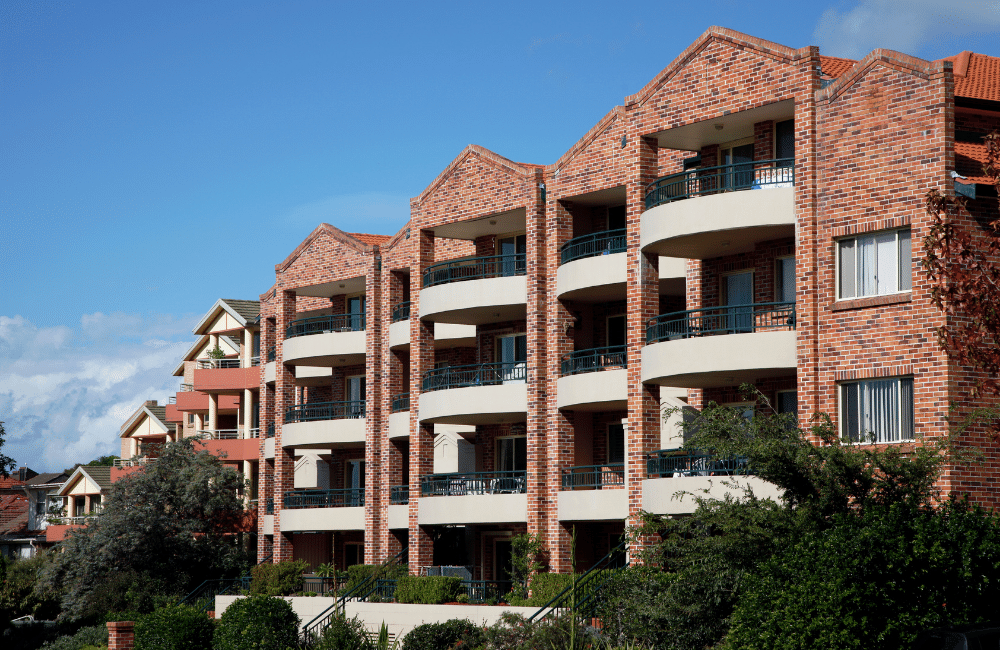
Strata buildings in North Sydney occupy a distinctive position in the property maintenance landscape. The suburb’s combination of dense residential density, mature tree canopy, high property values, and a regulatory environment that creates specific obligations for owners corporations means that roof maintenance in this context is more complex, more consequential, and more legally fraught than equivalent maintenance for standalone residential homes.
Yet roof inspections of strata buildings in North Sydney are frequently deferred, delayed, or excluded from maintenance budgets in ways that would not be acceptable for other shared building systems. The consequences of inadequate roof maintenance in a multi-unit context extend beyond the inconvenience any single homeowner might experience from a roof problem, affecting multiple lots, creating disputes between owners and their owners corporation, and in some cases generating legal and financial exposure that could have been entirely avoided by a routine inspection program.
Understanding why routine roof inspections are particularly important for North Sydney strata buildings requires understanding the specific characteristics of this suburb that amplify both the risk of roof problems and the consequences when they occur.
North Sydney’s built environment reflects decades of development concentrated on a peninsula with harbour and bushland exposure on multiple sides. Many strata buildings in the suburb are positioned under or adjacent to large mature trees, in locations exposed to harbour breezes that carry salt air, and on blocks where stormwater drainage from the roof surface needs to navigate complex multi-lot boundaries.
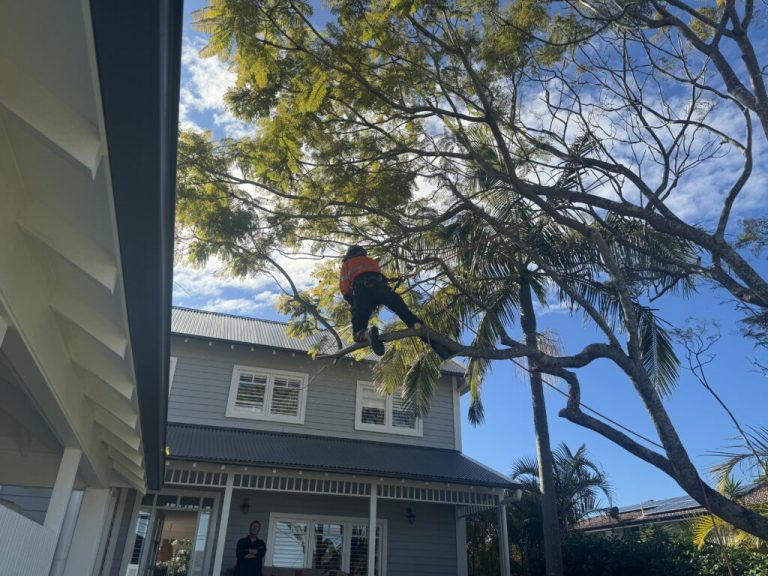
As explored in the article on why mature trees create hidden roof problems in North Sydney, the specific tree species common in North Sydney, particularly Morton Bay figs, camphor laurels, and angophoras, create debris loads and root activity patterns that affect roof and drainage systems in ways that are not visible from the ground or from within the building during normal use. For a strata building with multiple lots affected by a common roof, the hidden nature of these problems compounds the risk: no single owner has direct visibility into the shared roof system’s condition.
The climate dimension adds another layer. The article on how Sydney’s changing climate is affecting roof lifespans documents how higher temperatures, more intense storm events, and changing rainfall patterns are accelerating the deterioration of roofing materials at rates that exceed historical assumptions. For strata buildings that may have roofs approaching or at the end of their originally anticipated service life, these accelerated deterioration conditions make the timing of inspections and maintenance more critical.
The roof of a strata building is common property. Under the New South Wales Strata Schemes Management Act 2015, the owners corporation has a legal obligation to properly maintain and repair common property. This obligation is not discretionary: it is a statutory duty that applies regardless of whether the owners corporation has the funds budgeted, regardless of whether a majority of owners vote in favour, and regardless of whether any individual owner believes the maintenance is necessary.
The roof is specifically included in common property definitions and is consistently among the most significant cost items in strata building maintenance programs. When an owners corporation fails in its duty to maintain common property including the roof, individual lot owners who suffer damage from that failure have a legal pathway to seek compensation, and the owners corporation itself may face regulatory consequences.
Understanding this legal framework helps strata committee members and lot owners alike appreciate why routine roof inspections are not optional extras to be considered when the budget allows. They are part of the owners corporation’s baseline legal obligation.
Regular roof inspections for North Sydney strata buildings serve multiple functions beyond identifying specific defects. They provide a documented maintenance history, inform capital works planning, and reduce the probability of the acute failures that generate insurance claims, owner disputes, and emergency repair expenditure.
The value of routine inspection is finding problems at an early stage when they are still straightforward and relatively inexpensive to address. Roofing and drainage problems in strata buildings follow the same progression as in standalone homes, but with important differences in consequence. A blocked gutter on a standalone home that leads to fascia damage affects one building owner and a contained repair scope. The same blockage in a strata building that leads to water entering a common corridor ceiling or an occupied lot creates a situation involving multiple parties, potential disputes about responsibility and contribution, and a repair scope that may need to address both the common property failure and damage to lot property.
Routine inspection that identifies blocked gutters before they lead to overflow, or that catches a cracked tile before it creates water entry into an occupied ceiling space, resolves the issue before it touches any lot owner’s living environment. This is both the most cost-effective and the least dispute-generating approach.
Strata buildings require specialist strata insurance that covers the common property, common areas, and the building structure. Like standard home insurance, strata insurance policies include maintenance obligations and exclude coverage for damage that results from the owners corporation’s failure to maintain the common property to a reasonable standard.
The implications for strata buildings are more significant than for standalone homes because the sums insured are higher and because failures in common property maintenance affect multiple lot owners simultaneously. An owners corporation that cannot demonstrate a documented roof maintenance history when a water damage claim is investigated may find the claim partially or fully denied, leaving the costs to be recovered through a special levy on all lot owners.
Routine roof inspections with written reports and dated documentation are the practical basis for demonstrating that the owners corporation has met its maintenance obligations and that any damage claimed resulted from the insured event rather than from a maintenance failure.
The connection between external building maintenance and interior conditions is direct and documented. The article on the critical exterior checks that help keep your home warm covers this relationship from a residential perspective, but the same principles apply in a strata context. Roofs and facades that are in poor condition allow moisture ingress that affects internal temperatures, air quality, and structural integrity across multiple lots simultaneously.
In a North Sydney strata building, a roof that has not been maintained adequately may allow moisture into ceiling spaces that are shared with or directly above multiple occupied lots. The mould, structural timber damage, and insulation deterioration that result from this moisture ingress affect the living environment of multiple lot owners, and the responsibility for the common property failure that enabled the damage rests with the owners corporation.
The financial case for routine roof inspections in North Sydney strata buildings is clear when the cost of routine maintenance is compared to the cost of the reactive scenarios that inadequate maintenance generates.
A professional roof inspection of a strata building in North Sydney typically involves an experienced inspector assessing the full roof surface, all drainage components, flashings, penetrations, and any accessible roof cavity. The cost of this inspection varies with building size and complexity but is predictable and budgetable.
Compare this to the cost of the scenarios that routine inspection prevents:
Emergency repair following a storm damage event on an unmaintained roof. Emergency roofing repairs carry premium rates and may involve access equipment hire, safety management costs, and after-hours premiums. When the same storm event reveals multiple deferred issues, the scope expands rapidly.
Water damage to a lot owner’s interior from common property roof failure. Repair of internal water damage in a lot includes ceiling and lining restoration, mould remediation if applicable, and in some cases replacement of contents. The owners corporation’s insurance may cover some of this, but the claim affects the building’s insurance history and potentially future premiums.
Special levies to fund emergency common property repairs. When the sinking fund is inadequate to cover sudden large repair costs, the owners corporation must raise a special levy. Special levies are disruptive, can create financial hardship for some lot owners, and often generate conflict at general meetings.
Owners corporation legal exposure from failure to maintain. When a lot owner pursues compensation for damage caused by the owners corporation’s failure to maintain common property, the legal costs and any compensation awarded come from the common property funds, effectively from all lot owners.
The cumulative cost of any one of these scenarios in a single year typically exceeds the cost of a routine inspection program across several years.
Strata buildings in New South Wales are required to develop and maintain a ten-year capital works fund plan that anticipates the major expenditures the building will face over the planning period. Roof replacement, major drainage upgrades, and significant repair programmes are all items that should appear in this plan.
Routine roof inspections provide the condition data that makes this planning accurate. An inspection that identifies a roof surface coating at forty percent of its original condition provides the basis for planning a full recoat in two to three years. An inspection that finds ridge capping mortar in early-stage cracking allows planning for a systematic repointing program before it becomes a water entry issue.
Without this inspection data, capital works plans are based on age and assumption rather than condition, which produces less accurate forecasts and less reliable preparation for the expenditures that eventually occur.
Determining the appropriate frequency for strata roof inspections in North Sydney requires considering both the minimum standards set by the relevant building and strata legislation and the practical demands of the specific building’s environment and condition.
The NSW Strata Schemes Management Act 2015 does not prescribe a specific interval for roof inspections. It establishes the obligation to maintain common property to a reasonable standard and allows the owners corporation and the NSW Civil and Administrative Tribunal (NCAT) to determine what reasonable maintenance involves in specific circumstances.
The National Construction Code provides standards for roof construction and drainage design but similarly does not mandate specific inspection frequencies for existing buildings. The relevant standard from a strata governance perspective is what a reasonable owners corporation, advised by appropriate professionals, would consider necessary maintenance for the specific building in its specific environment.
For North Sydney strata buildings with the environmental characteristics described throughout this article, professional advice consistently supports annual inspection as the minimum, with bi-annual inspection recommended for buildings with significant tree exposure, older roofs approaching or at the end of their anticipated service life, or buildings with a documented history of water ingress.
A thorough annual roof inspection for a North Sydney strata building should include:
This scope produces a document that serves the owners corporation’s maintenance planning, insurance compliance, and capital works fund planning simultaneously.
For North Sydney strata buildings looking for local professional roof and gutter maintenance services that understand the specific demands of the North Sydney environment, the North Sydney page provides details on what local services cover and what to expect from professional inspection visits.
For strata buildings and owners corporations across Sydney looking for professional strata maintenance services appropriate for multi-lot buildings, the strata page provides information on service offerings tailored to the specific requirements of common property maintenance in strata schemes.
Routine roof inspections are not an overhead cost for North Sydney strata buildings. They are a legal obligation, an insurance protection measure, a financial planning tool, and the primary mechanism by which minor issues are resolved before they become major ones affecting multiple lot owners simultaneously. In a suburb where mature trees, salt air, changing climate conditions, and high property values all amplify the consequences of deferred roof maintenance, building the routine inspection program that these conditions require is simply responsible strata governance.