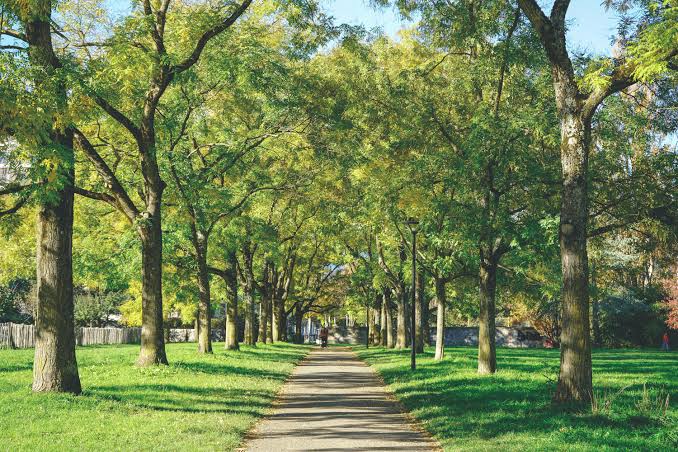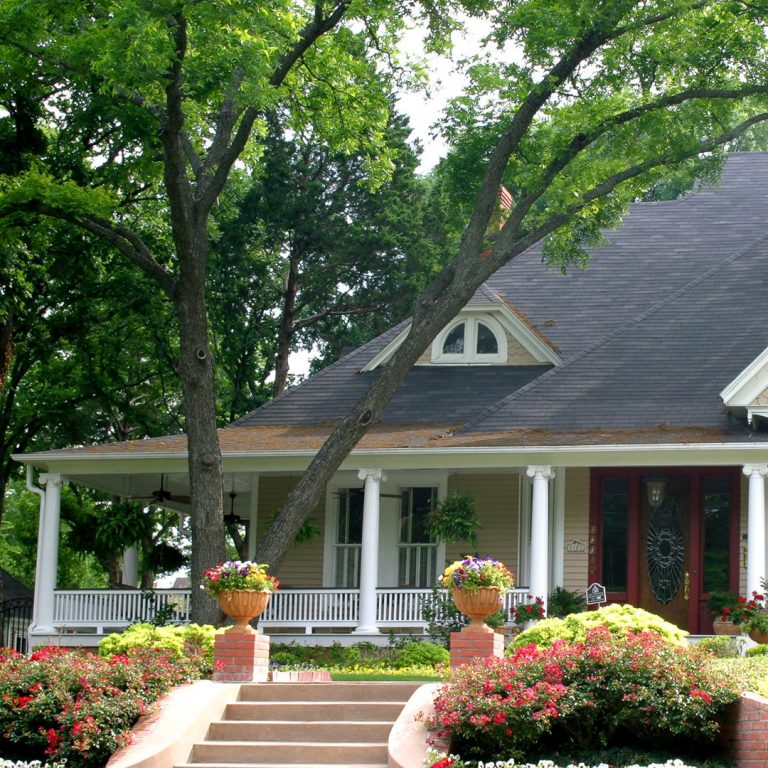
North Sydney is one of the most tree-canopied residential areas in Greater Sydney. Suburbs from Cremorne and Neutral Bay to St Leonards, Waverton, and Willoughby are characterised by streets lined with mature fig trees, camphor laurels, liquidambars, and significant native species including angophoras and banksias that have been growing in these neighbourhoods for fifty to eighty years or more. The tree cover is dense, the canopies are large, and the character it gives these suburbs is a primary driver of property desirability.
What is less visible in the appeal of this tree canopy is the set of hidden roof and drainage problems that these mature trees create for the homes beneath them. Hidden is the right word: many of these problems develop slowly, out of sight, and are only discovered when they have progressed to a stage where the repair cost is significant.
The hidden quality of tree-related roof problems in North Sydney comes from the combination of slow accumulation and locations that are not easily visible or routinely inspected.
The specific tree species common in North Sydney’s residential streets create maintenance demands that differ from the generic tree-lined street scenario. The Morton Bay fig trees that are iconic in many North Sydney streets are among the most debris-productive trees in the urban Australian landscape. Their large, tough leaves fall intermittently throughout the year rather than in a single autumn flush. Their aerial roots create additional debris. Their root systems are among the most extensive of any urban tree species and can extend to twice the canopy radius or more.
Camphor laurels, planted extensively in older North Sydney suburbs as street trees and garden specimens, shed leaves and seed clusters continuously and produce an allelopathic leaf litter that inhibits the decomposition of material in the gutter channel, causing it to accumulate faster than more biodegradable debris types.
Large angophoras, which are common in the more bushland-adjacent parts of the North Sydney local government area, shed bark strips throughout the year that are particularly effective at bridging across downpipe entries to create localised but complete blockages.
The combination of these species in North Sydney’s tree canopy creates a year-round, multi-texture debris load that is more demanding than the typical suburban gutter maintenance scenario.
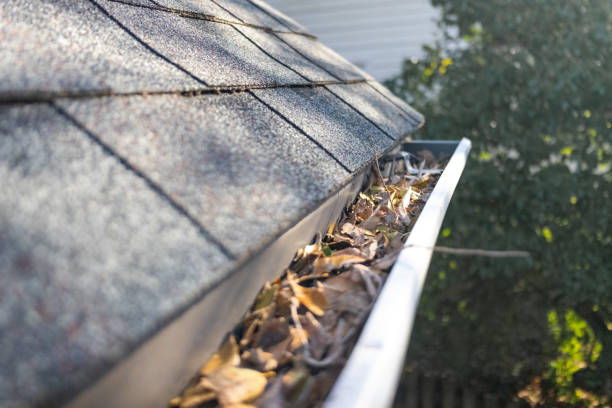
Mature trees in North Sydney create roof problems through mechanisms that are not visible from street level or from the interior of the building during normal use. The compacted debris layer in a gutter that is creating overflow events is not visible from the ground. The biological growth on a shaded roof section that is progressively damaging tile surfaces is not apparent from inside the home. The sediment accumulation inside a downpipe that is reducing drainage capacity is completely invisible without inspection.
This invisibility means the problems have to reach a certain threshold before they generate any feedback that prompts action. In many cases, the feedback comes as a ceiling stain after a heavy rain event, a visible section of gutter pulling away from the fascia, or a building inspection report before sale that identifies multiple drainage and moisture-related issues simultaneously. By any of these points, the hidden deterioration has been accumulating for a significant period.
Knowing what to look for changes the ability to catch tree-related roof problems before they become expensive. Several specific signs indicate that adjacent mature trees are affecting the roof system of a North Sydney property.
If gutters in a North Sydney property are overflowing or visibly full of debris within six to eight weeks of a professional clean, the debris input from adjacent trees exceeds what the standard maintenance interval can manage. This rapid re-accumulation is a direct sign that the maintenance frequency needs to increase, not that the last clean was inadequate.
Properties under large Morton Bay figs, camphor laurels, or angophoras may need professional attention three to four times per year rather than the twice-yearly baseline that applies to properties with lower debris loads. The article on how often you should book gutter cleaning in North Sydney covers the specific frequency considerations for this suburb in detail.
Dark staining inside the gutter channel, visible from a ladder position or during a professional clean, indicates that organic material has been sitting in contact with the gutter surface long enough to create biological growth and the organic acid conditions that initiate corrosion. This staining is a sign of chronic accumulation, not recent debris fall, and it indicates sections of the gutter that are consistently underperforming in drainage terms.
Dark staining at the base of specific gutter sections often corresponds to locations where branch canopy directly overhead creates consistent debris concentration. Identifying these sections allows targeted attention during each clean rather than assuming uniform debris distribution.
Vertical staining streaks on external wall surfaces below sections of gutter that are consistently shaded by tree canopy indicate chronic overflow from those sections. This overflow pattern is a reliable sign that the debris accumulation from the tree above is exceeding the drainage capacity of the gutter section, consistently and repeatedly.
The wall staining itself is cosmetic but the overflow that created it is structural. Each overflow event has been delivering water to the fascia board behind the staining, and sustained moisture contact with fascia timber from repeated overflow is the precursor to the fascia softening and rot that eventually requires the entire fascia board to be replaced.
Sections of the roof that are consistently shaded by adjacent mature tree canopy show higher rates of biological growth than unshaded sections. Moss, lichen, and algae that are visible on shaded tile sections from a ground-level vantage point have been established long enough to be visible at scale, which means they have been present for several seasons.
The tree-canopy shading pattern in North Sydney can produce significant variation in biological growth levels across different sections of the same roof, with heavily shaded north and east-facing sections under large trees showing substantially more growth than exposed south or west-facing sections. This variation means that roof biological growth management needs to be targeted to the shaded sections rather than applied uniformly.
The connection between tree roots and roof problems is not direct in the way that branch impacts are, but it is real and worth understanding for North Sydney homeowners with large mature trees adjacent to their buildings.
The root systems of large mature trees in North Sydney extend well beyond the visible canopy boundary. Morton Bay figs and camphor laurels in particular have root systems that can extend thirty metres or more from the base of the tree, encompassing the full building footprint of adjacent properties. These roots follow moisture and oxygen, and the pathways they follow include the margins of stormwater pipes, the edges of slab foundations, and the joints in older drainage systems.
Root intrusion into stormwater pipes that connect to the roof drainage system creates downstream restrictions that manifest as gutter overflow even when the gutter and downpipe itself are clear. A root mass that has been developing in a stormwater junction or underground pipe section for several years can reduce the effective capacity of the drainage system significantly before any visible symptom appears above ground.
For North Sydney properties on older sewer and stormwater systems, where earthenware pipes with vulnerable joint points are more common, the probability that an adjacent mature tree has contributed root intrusion to the drainage pathway is real and worth investigating as part of any assessment of chronic overflow problems.
Large tree roots that have affected soil moisture conditions adjacent to the building can create foundation movement that alters the geometry of the building structure, including the gutter system. A building that has experienced differential foundation movement from root-zone soil moisture variation may develop gutter sections that have shifted from their installed pitch as the fascia boards and wall framing have moved.
A gutter that has lost pitch due to foundation movement below will pool water and overflow during events that a correctly pitched gutter would manage without problem. The root cause, literally, is not a drainage system fault but a structural response to tree root activity.
Identifying this as the mechanism behind a chronic overflow problem requires looking beyond the gutter itself to the building structure that supports it, which is why professional condition assessments that include fascia and structural observations are more informative than surface-level debris removal alone.
For North Sydney properties where chronic overflow continues despite regular maintenance and where no obvious gutter or downpipe fault can be identified, CCTV inspection of the underground drainage system is the most reliable way to identify whether root intrusion is contributing to the problem.
Modern CCTV drain inspection equipment can assess the full length of a stormwater or sewer drain run and identify root intrusion, joint separation, and pipe deformation that are invisible from above. For a property with a known history of large adjacent tree roots and persistent drainage problems, a CCTV inspection provides the diagnostic information that determines whether the repair required is above or below ground.
Managing the interaction between North Sydney’s mature tree canopy and residential roof and drainage systems requires a combination of maintenance frequency adjustment, tree management, and targeted inspection approaches.
The foundational preventative measure for North Sydney properties with significant adjacent tree canopy is maintaining gutters at a frequency that matches the actual debris accumulation rate rather than a generic national guideline. As covered in the broader article on why tree-lined streets increase roof maintenance needs, the debris load from mature trees exceeds what twice-yearly cleaning can manage in most cases.
For North Sydney properties under or adjacent to large Morton Bay figs, camphor laurels, or angophoras, three to four professional cleans per year with downpipe flushing included at each visit is the appropriate baseline. The additional cost of this increased frequency is modest compared to the fascia repair, tile damage, and wall staining remediation costs that inadequate cleaning frequency eventually generates.
For street trees that are under council management, North Sydney Council operates a process for requesting arborist assessment and maintenance of trees that are creating documented impacts on adjacent private properties. Homeowners who have documented evidence of specific tree-related impacts, overflow staining on walls, gutter blockage patterns that correlate with specific trees, or visible branch proximity to the roofline, are in the strongest position when requesting council action.
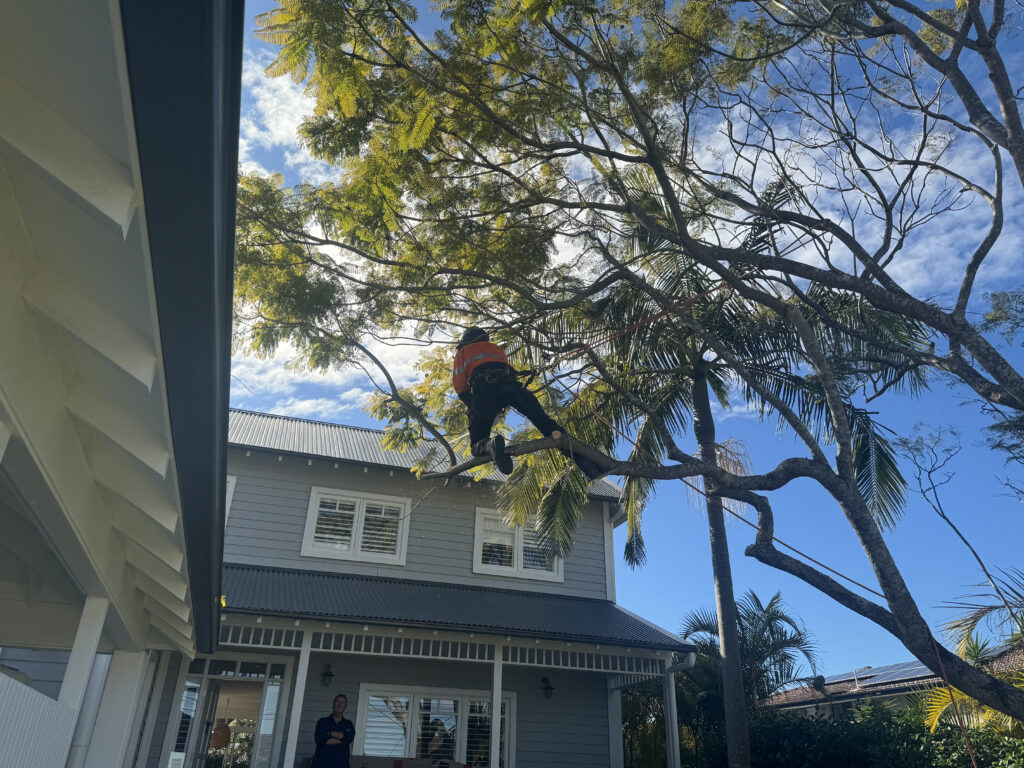
For trees on private property, the homeowner has direct control over pruning and management decisions, subject to council tree preservation orders. Trees in North Sydney’s residential areas are frequently protected by these orders, which require council consent before significant pruning or removal. An arborist report that identifies specific branch or root issues affecting the building structure is the basis for a consent application where removal or major pruning is warranted.
For North Sydney homeowners looking for professional gutter cleaning services that include condition assessment and downpipe flushing appropriate for properties with significant mature tree canopy, the North Sydney page provides details on local services and what to expect from maintenance visits in this specific environment.
Mature trees create hidden roof problems in North Sydney because the mechanisms by which they do so, slow debris accumulation, shading-driven biological growth, root intrusion into drainage, and foundation movement affecting gutter pitch, are all gradual, incremental, and not visible in normal daily observation of the property. The homeowners who manage these problems most effectively are the ones who understand the specific demands of their tree-adjacent environment and maintain at the frequency that reflects those demands rather than the baseline that applies to properties without this environmental context.