Willoughby sits in one of the more leafy parts of Sydney’s lower north shore, and that character comes with a maintenance reality that homeowners moving from other parts of the city sometimes underestimate. The suburb’s established tree canopy, proximity to bushland corridors and mix of older and newer housing stock create conditions where gutters need more consistent attention than a once-a-year approach provides.
Getting the frequency right is less about following a rigid rule and more about understanding what your specific property faces across the seasons and responding accordingly.
The right cleaning frequency for a Willoughby property depends on the specific vegetation around the home, the age and configuration of the gutter system and the roof’s complexity. But across the suburb’s varied streetscapes, a consistent pattern emerges that points toward twice-yearly cleaning as the practical minimum for most homes.
Willoughby’s tree coverage is one of its defining features. The suburb sits adjacent to Lane Cove National Park to the north and west, and significant bushland corridors run through and around the residential fabric. Streets throughout Willoughby, Naremburn, Castle Cove and Castlecrag are lined with a mix of mature native species and established exotic trees that collectively produce a year-round debris load on rooftops.
Eucalypts, angophoras and banksias found in the bushland-adjacent sections of the suburb shed continuously and do not follow a predictable seasonal pattern. Introduced species including plane trees, liquidambars and ornamental cherries on residential streets contribute a more concentrated autumn leaf fall on top of the continuous native input.
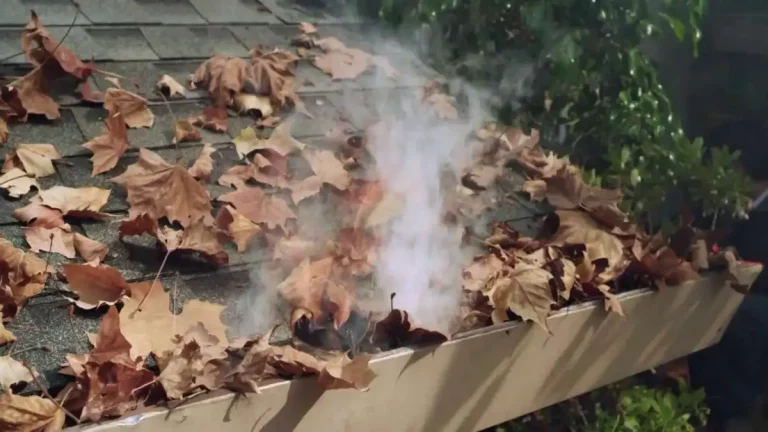
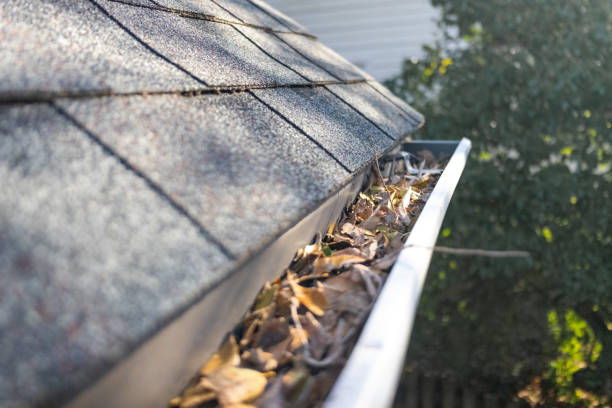
The result is a gutter environment that receives debris from multiple sources across all twelve months rather than experiencing the single concentrated autumn dump that makes annual cleaning adequate in less vegetated parts of Sydney.
The NSW Office of Environment and Heritage has documented the Lane Cove River valley and surrounding corridor as one of the most ecologically significant native vegetation zones in metropolitan Sydney, with canopy species that produce substantial year-round litter fall. Properties on the western edges of Willoughby that back onto this corridor face a particularly demanding debris environment.
Two professional cleans per year keeps most Willoughby properties clear through the two highest-risk debris and rainfall periods. This baseline applies to homes with moderate tree coverage that are not immediately adjacent to bushland.
Properties that should treat three cleans per year as the appropriate baseline include:
Once a year is not sufficient for any Willoughby property with meaningful tree coverage. The suburb’s vegetation profile does not allow for the kind of extended debris-free period that makes annual cleaning practical in more open suburban environments.
Beyond establishing the baseline frequency, understanding what drives the need for each clean helps homeowners time services for maximum effectiveness rather than simply dividing the year into equal intervals.
The most useful approach is to time cleans around the two main debris accumulation periods that affect Willoughby properties rather than picking dates based on convenience.
Late autumn, May to June. The most critical clean of the year for most Willoughby properties. By May, the deciduous species on residential streets have shed the bulk of their autumn leaves, and the spring and summer accumulation from native species has been building since the last clean. A May or June service addresses both of these inputs after they have peaked rather than in the middle of them, which means the clean stays effective for longer before debris builds to a problematic level again.
Cleaning in April, while plane trees and liquidambars are still actively dropping, produces a result that is quickly undone. Waiting until the leaf fall is substantially complete makes the service more durable.
Late summer, February. The second essential window. Sydney’s summer brings storm activity from November through to March, and those storms push debris loads into gutters rapidly. By February, a season’s worth of summer debris has accumulated, including gum leaf and bark from native species that have been actively shedding through the warmer months. A February clean addresses this build up before autumn adds another layer on top.
For properties requiring a third annual service, September is the most useful additional window. A spring clean clears winter accumulation and blossom debris before the summer storm season begins, confirming the system is at full capacity before Sydney’s most intense rainfall periods arrive.
These factors should lead any Willoughby homeowner to increase frequency beyond the standard recommendation.
Understanding what professional gutter cleaning costs in Willoughby and what distinguishes a thorough service from an incomplete one helps homeowners make informed decisions rather than defaulting to the lowest available price.
Several factors affect the cost of a professional gutter clean on a Willoughby property specifically.
Roof height and access. Many Willoughby properties are two-storey homes on sloped blocks, which affects the effective height at the rear of the property and the complexity of safe access. Higher and more complex access requirements take more time and equipment, which is reflected in pricing.
Debris volume and type. A gutter filled with compacted native debris and silt requires more time and physical effort to clear properly than one with loose dry leaves. Properties adjacent to bushland corridors tend to have denser, more compacted debris that takes longer to address thoroughly.
Service scope. A price that includes manual debris removal, independent downpipe flushing for each outlet, structural inspection and before-and-after documentation represents a different and more complete service than one that covers surface clearing only.
As a general guide for professional gutter cleaning in Willoughby:
Providers quoting below the lower end of these ranges are almost certainly reducing the service scope in ways that matter. The most common scope reduction is skipping downpipe flushing, which leaves the most consequential blockages in place regardless of how clean the gutter surface looks.
A service that does not include downpipe flushing and a condition report is not a complete service for a Willoughby property. The condition report in particular is useful for identifying the developing structural issues, bracket failures and fascia deterioration that are common on older Willoughby homes, before they become expensive repairs.
Timing is the factor that most homeowners give the least consideration and that has the most practical impact on how well a maintenance schedule actually protects a Willoughby property.
May to June is the highest-priority window for most Willoughby properties. This clean captures the autumn leaf fall after it has peaked, removes the summer native debris accumulation and clears the system before winter rainfall arrives. A gutter system that is clear heading into winter is significantly less likely to cause the overflow and water ingress that leads to fascia rot, ceiling damage and wall moisture issues.
February is the second priority window. This clean addresses the summer storm season accumulation and confirms the system is in good condition before the autumn debris period begins. It also provides an inspection opportunity to identify any damage from summer storms before it develops further.
The same annual clean frequency produces very different outcomes depending on when the cleans are scheduled. Two cleans timed in January and July clear debris before the autumn peak arrives on one end and miss the summer accumulation on the other. Two cleans timed in February and May capture both peak accumulation periods and provide meaningful protection through the highest-risk rainfall seasons.
The Australian Standard AS/NZS 3500.3 for stormwater drainage recommends that roof drainage systems be maintained to prevent blockage and overflow, and confirms that all components including downpipes should be functionally clear as part of any maintenance service. A clean timed to address peak accumulation periods delivers against this standard more reliably than one scheduled for convenience.
GutterGorilla, Willoughby gutter cleaning services and local conditions: https://guttergorilla.com.au/locations/willoughby/
GutterGorilla, Professional gutter cleaning service scope and standards: https://guttergorilla.com.au/gutter-cleaning/
NSW Office of Environment and Heritage, Lane Cove River Corridor Vegetation: https://www.environment.nsw.gov.au/
Australian Standard AS/NZS 3500.3, Stormwater Drainage Maintenance Requirements: https://www.standards.org.au/
Bureau of Meteorology, Sydney Lower North Shore Rainfall and Climate Data: http://www.bom.gov.au/
NSW Fair Trading, Residential Building Maintenance and Drainage: https://www.fairtrading.nsw.gov.au/