It is a question most homeowners in South Sydney do not ask until something has already gone wrong. A water stain appears on the ceiling after a storm. The paint on the eaves starts bubbling. A tradie up on the roof for something unrelated mentions that the gutters look like they have not been touched in years.
The answer to the question is yes, blocked gutters can and do damage roofs. But the more useful conversation is about how that damage happens, what it costs when it does, and what it takes to prevent it in a part of Sydney that has its own specific set of conditions to consider.
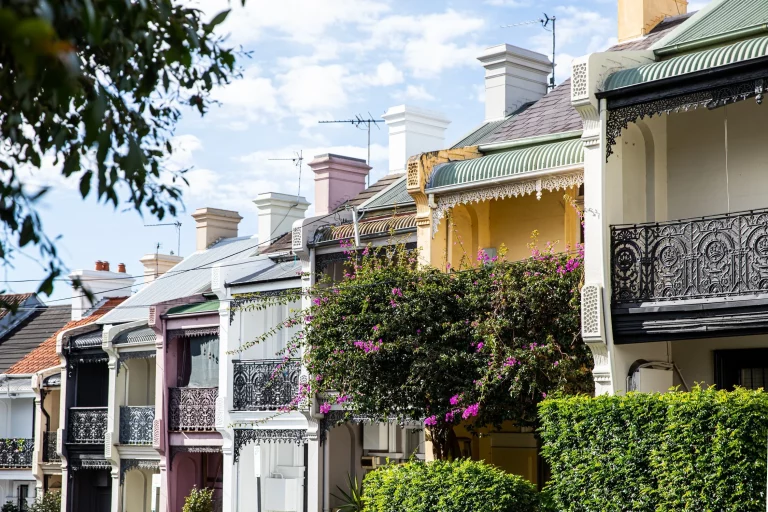
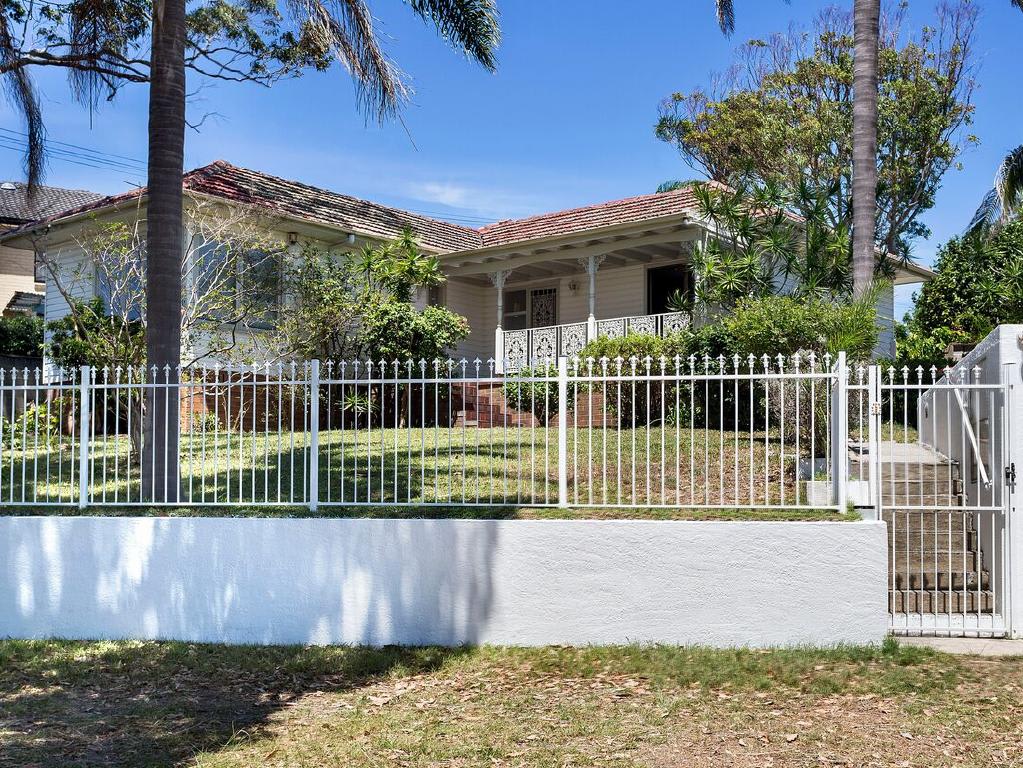
South Sydney covers a broad stretch of suburbs from Erskineville and Alexandria through to Mascot, Botany, Rockdale and across toward Kogarah and Hurstville. The housing stock across this area is varied, ranging from industrial-era workers cottages and older brick homes to newer apartment developments and post-war residential buildings.
What many of these properties share is age, proximity to Botany Bay and the airport corridor, and established residential streets with significant tree coverage. These factors combine to create a gutter maintenance environment where problems develop faster and with more consequence than many homeowners expect.
The connection between a blocked gutter and roof damage is not always direct or immediately visible, which is part of why it is so often overlooked until the damage is established.
When a gutter is blocked, water that should drain away through the downpipe instead sits in the gutter trough. During rainfall it overflows, but between rain events the standing water remains in contact with the gutter, the fascia board behind it and the roof edge above it. This persistent moisture contact is where the damage begins.
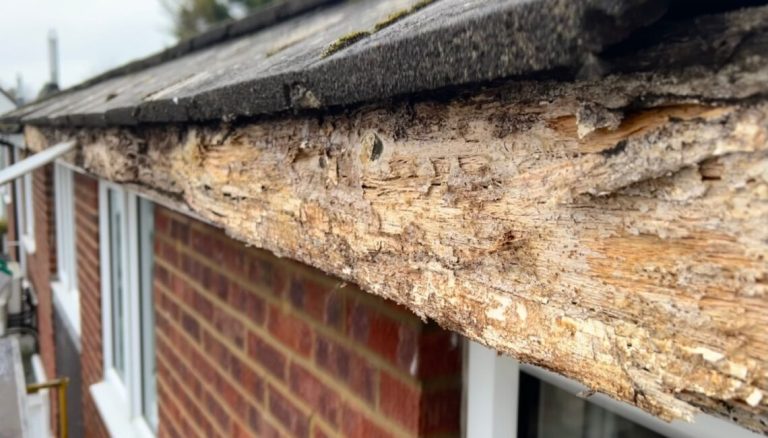
Fascia and rafter end deterioration. The fascia board runs along the roofline at the gutter edge and is typically attached to the ends of the roof rafters. On older South Sydney homes, these are timber elements that absorb moisture when their painted protection degrades. Standing water in a blocked gutter keeps the fascia in a state of continuous wet-dry cycling that accelerates rot. According to the Australian Building Codes Board, moisture management in building envelopes is a primary concern in maintaining structural integrity, and the fascia-gutter interface is one of the most common points of failure in older residential buildings.
Roof sheeting and underlayment damage. Water that backs up in a gutter can work its way under the roof sheeting at the eaves, particularly on older properties where the sarking or underlayment has stiffened or cracked with age. Once moisture gets under the roof sheeting, it contacts the timber roof structure, insulation and eventually the ceiling. The NSW Fair Trading building guide identifies water ingress at the roof perimeter as one of the most common causes of residential building defects reported by homeowners.
Weight stress on gutters and brackets. A gutter filled with wet, compacted debris and standing water carries significantly more weight than it was designed to handle. This stress transfers to the bracket fixings in the fascia board. On a property where the fascia timber is already softened from moisture, these fixings pull out progressively, causing the gutter to sag, separate from the fascia and eventually detach. A detached gutter section on a South Sydney home in a summer storm is a meaningful risk to anyone below it.
The financial scale of roof damage attributable to gutter neglect varies considerably depending on how long the problem has been developing and which elements of the roof structure are affected. As a general guide based on current contractor rates in the Sydney market:
These figures sit at dramatically higher levels than the cost of the gutter maintenance that would have prevented them. A professional gutter clean in South Sydney typically costs between $180 and $420 depending on the property.
Prevention is the operative word when it comes to protecting South Sydney roofs from gutter-related damage. The maintenance approach required is not complicated, but it does need to be consistent and appropriate to the specific conditions of the area.
The suburbs of South Sydney sit in an environment that creates specific gutter challenges beyond the general Sydney picture.
Proximity to Botany Bay and the coast means parts of the area experience salt-laden air, which accelerates corrosion on metal gutters and roofing components. Properties in Mascot, Botany, Brighton-Le-Sands and surrounding coastal suburbs face faster degradation of steel gutters and fasteners than those further inland, which means that the combined effect of moisture from blockage and salt air corrosion can shorten the effective lifespan of gutter systems significantly.
The airport flight path corridor contributes fine particulate pollution that settles across rooftops and combines with organic debris in gutters to form a dense, adhesive silt layer. This material is harder to remove than loose leaf debris and requires genuine flushing rather than just surface clearing to address properly.
South Sydney also experienced significant urban tree planting through council programs in the 1990s and 2000s, meaning many streets now have mature trees that were not there when many of the existing homes were built. The gutter systems on these homes were not sized or configured with the current debris load in mind.
For most South Sydney residential properties, twice-yearly professional cleaning is the minimum that makes sense. The most effective timing follows the debris cycle of the area’s predominant tree species.
For properties in coastal sections of South Sydney, adding a check in February after the summer storm period is worth doing. Storm events can push significant debris loads into gutters quickly, and a gutter that was clear in September may be substantially blocked by February after a season of summer storms.
A professional gutter service on a South Sydney property should go beyond removing visible surface debris.
A service that does not include downpipe flushing is not a complete service. A blocked downpipe that is not cleared means the gutter above it will overflow at the next significant rainfall regardless of how clean the gutter surface looks.
One of the challenges with gutter-related roof damage is that the early signs are subtle and easy to rationalise as something else. By the time the damage is obvious, it is typically already well established. Knowing what to look for early changes that outcome.
Some signs indicate that damage has already progressed beyond the early warning stage and requires urgent professional assessment rather than just a scheduled clean.
In these situations, a gutter clean alone is not sufficient. A qualified assessment of the roof edge structure is needed alongside the cleaning work.
Pulling together a practical approach to gutter maintenance as genuine roof protection for South Sydney homeowners involves combining the right schedule, the right service standards and an honest assessment of the property’s current condition.
Before establishing a maintenance schedule, it is worth understanding the current state of the gutter system and roof edge on your property. This is particularly relevant for South Sydney homeowners who have recently purchased an older property or who have not had gutters professionally inspected in several years.
A proper inspection covers:
This baseline assessment informs whether the property needs cleaning and maintenance going forward, or whether it needs cleaning plus repair work before a maintenance schedule will be effective.
The quality of the service matters as much as the frequency. These are the questions worth asking any provider before booking.
For South Sydney homeowners researching local service options, GutterGorilla’s South Sydney page provides detail on what is available in the area and what their service covers for local property types.
Homeowners wanting a broader understanding of professional gutter maintenance across Sydney and how to evaluate providers can find that on the GutterGorilla website.
The Insurance Council of Australia consistently identifies water damage as one of the leading causes of home insurance claims in New South Wales. Many of those claims have their origin in deferred maintenance rather than unforeseeable events. Gutters that are not cleaned, downpipes that are not flushed and fascia damage that is not addressed in the early stages are recurring contributors to water damage claims that could have been prevented.
Homeowners should also be aware that insurance policies typically include provisions around reasonable maintenance. A claim for water damage where an assessor determines that gutters had not been maintained for an extended period may be assessed differently than a claim where regular maintenance can be demonstrated. Keeping a record of professional cleans and any condition reports received is worth doing for this reason alone.
The framing of gutter maintenance as a simple drainage task undersells what it actually protects. A functioning gutter system is the first line of defence for the roof edge, the fascia, the wall structure and the ceiling below. When it stops functioning through blockage and neglect, the damage it causes works inward and downward through the building in ways that are slow to become visible but fast to become expensive.
South Sydney properties, with their mix of older housing, coastal exposure and established tree canopy, sit in an environment where that risk is real and consistent. A twice-yearly professional clean, done properly and timed well, is among the most cost-effective forms of building maintenance available to homeowners in this part of the city.