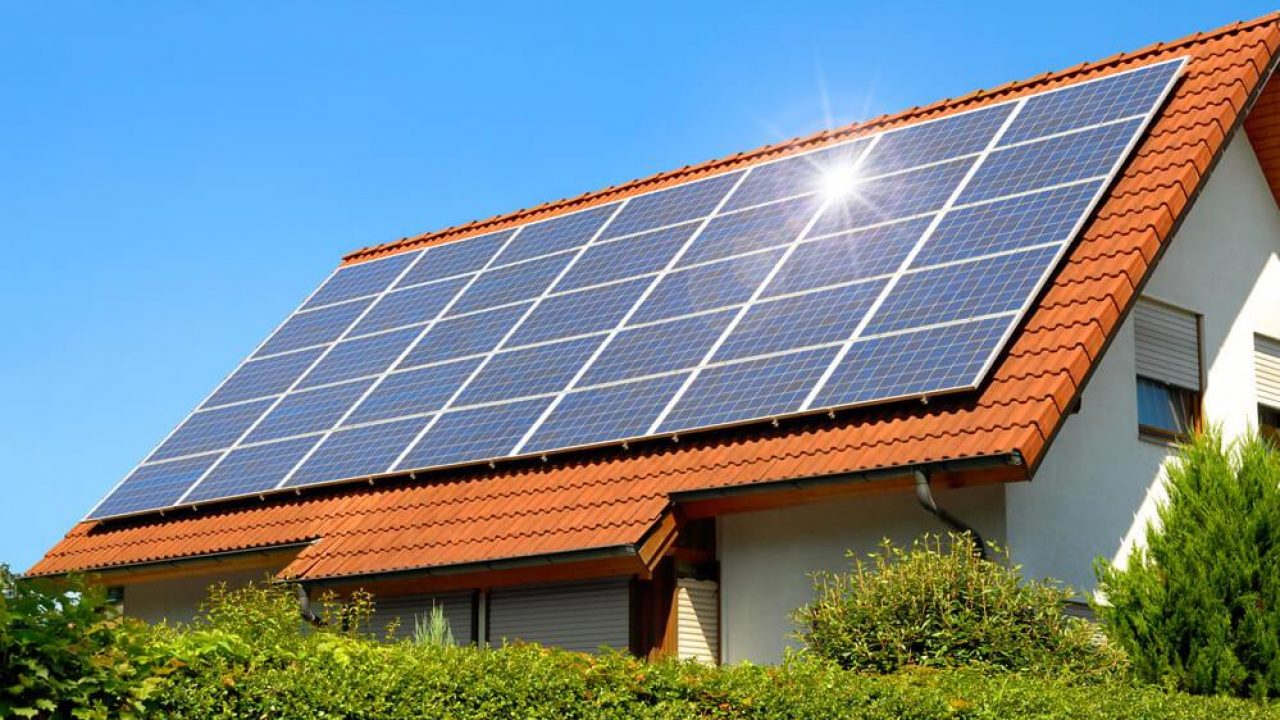
If your solar system is producing less power than it used to and you live in Narrabeen, there are several likely explanations. Some are straightforward to identify and fix. Others require a closer look at the system and the environment it is operating in. What they have in common is that none of them resolve themselves without some form of intervention.
Narrabeen’s coastal position creates a specific set of conditions for solar panels that differ meaningfully from what inland Sydney homeowners experience. Understanding those conditions is the starting point for diagnosing why your system is underperforming and what it will take to bring it back to where it should be.
Before going through the specific causes of output decline in Narrabeen, it is worth establishing what a meaningful decline actually looks like in practice, because the way most homeowners monitor their system makes it easy to miss.
Most solar system owners check their inverter app occasionally and note that the system is producing something. What they rarely do is compare current output against a consistent baseline that accounts for seasonal variation.
A system that produced an average of 28 kilowatt-hours per day last October and is producing 23 kilowatt-hours this October, with similar weather conditions, has lost approximately 18 percent of its output. That loss is happening every single day. At current NSW electricity rates and typical feed-in tariff levels, that daily gap represents between $1.50 and $2.50 depending on the household’s self-consumption profile.
Most homeowners do not notice this because the absolute number still looks reasonable and the seasonal variation in output provides a convenient rationalisation for any decline. The comparison that reveals the problem requires looking at the same month across multiple years, not just at yesterday’s figure.
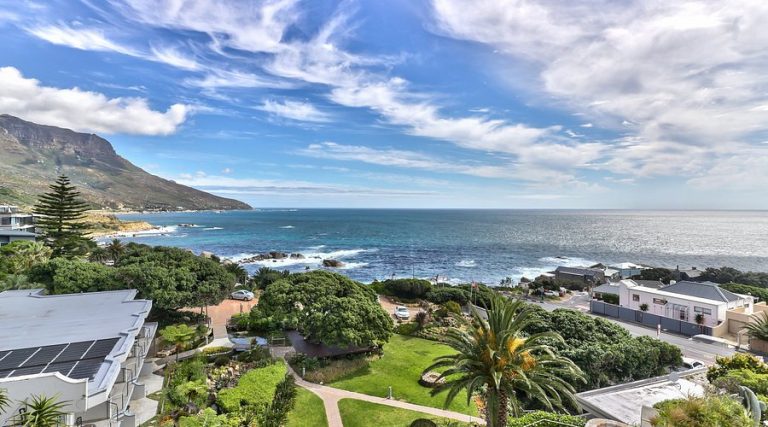
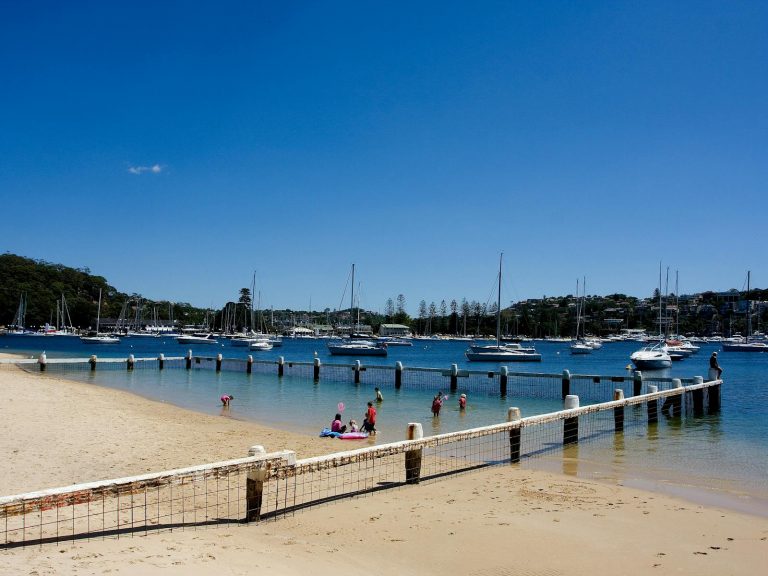
Narrabeen sits directly on the northern beaches coastline with Narrabeen Lagoon to its south and the Pacific Ocean to its east. This position means solar panels here operate in one of the more challenging coastal environments in metropolitan Sydney.
The Bureau of Meteorology’s climate data for the northern beaches shows Narrabeen receiving consistent onshore winds that carry salt aerosols from the ocean surface across residential rooftops. The suburb also experiences the marine layer effect, a coastal atmospheric phenomenon where fine salt mist sits at low altitude during calm overnight and morning periods, settling on every exposed surface before the day’s wind clears it.
This combination of active salt air deposit and marine layer settlement means that solar panels in Narrabeen accumulate surface contamination faster than panels in non-coastal locations, even when debris from surrounding vegetation is minimal.
There are several distinct causes of output decline on Narrabeen solar systems, and they are not mutually exclusive. Multiple causes can operate simultaneously, each contributing a portion of the total loss.
This is the primary cause of output decline specific to Narrabeen and other beachside northern beaches suburbs. Salt particles that settle on panel glass create a surface film that reduces light transmission into the photovoltaic cells below.
Unlike dust or dry debris, salt residue is not easily removed by rainfall. Salt is hygroscopic and absorbs atmospheric moisture, which means it forms a persistent wet film on panel surfaces during humid periods and leaves concentrated crystalline deposits as conditions dry out. Each wet-dry cycle concentrates the salt layer further rather than removing it.
The CSIRO’s research on solar panel soiling in coastal Australian environments has documented that marine aerosol contamination produces output losses that are measurably higher than equivalent soiling from non-coastal sources, because the salt-particulate composite layer that forms in coastal environments has higher optical density than dry dust alone and bonds more firmly to glass surfaces.
For a Narrabeen property, a system that has not been professionally cleaned for twelve months may be carrying a surface layer that is part salt residue, part fine marine particulate and part biological material from coastal vegetation. This composite layer can reduce panel output by 10 to 20 percent or more depending on the specific conditions of the property.
Coastal properties near Narrabeen Beach and Narrabeen Lagoon experience bird activity that is distinct from what inland Sydney solar systems face. Seagulls and coastal wading birds use rooftops as resting and observation points, and their droppings are more frequent per surface area on coastal rooftops than on properties further from the water.
Bird droppings cause a type of output loss that is disproportionate to their physical size. The Clean Energy Council’s guidance on residential solar performance explains that because solar cells are wired in series strings, shading or blocking one cell suppresses the output of the entire string it belongs to. A single seagull dropping covering a cell area can therefore reduce the output of a string containing many more cells for as long as it sits on the panel.
On a Narrabeen roof with regular seagull and coastal bird activity, the string-level suppression effect from concentrated bird dropping deposits can add several additional percentage points to the total output loss beyond the general surface soiling calculation. Measured output losses on active coastal bird properties often exceed what standard soiling estimates predict.
An output decline cause that is less obvious than surface soiling but equally real in coastal environments is the effect of salt corrosion on the structural and electrical components of the solar system itself.
Panel frames, mounting rails, fasteners and the conduit systems that carry wiring across the roof are all metal components that corrode faster in Narrabeen’s salt air environment than they would in non-coastal Sydney. The Australian Standard AS 4312 corrosivity classifications place properties within direct coastal proximity in the highest deterioration categories for metal components.
As frame and mounting components corrode, several performance-affecting issues can develop. Panel frames that corrode at their edges can create surface staining that spreads onto the glass and reduces light transmission in the affected area. Corroding junction box covers on the rear of panels can allow moisture ingress into the electrical connections, increasing resistance and generating heat at the connection point. In advanced cases, corroded wiring conduit can expose DC cables to moisture, creating safety concerns and measurable resistance losses.
The inverter is the component that converts the DC electricity generated by the panels into the AC electricity used in the home. It is also the component most sensitive to environmental conditions and most likely to develop performance issues that are not reflected as outright faults in the system monitoring.
Inverters installed in outdoor locations on Narrabeen properties are exposed to salt air continuously. Even well-sealed inverter units experience gradual degradation of internal components under sustained coastal exposure. The Clean Energy Regulator’s guidance on solar system maintenance recommends that inverters be inspected by a qualified technician periodically, with coastal installations warranting more frequent assessment than inland equivalents.
An inverter that is operating at 95 percent efficiency rather than its rated 97 percent efficiency does not generate an error code. It simply produces slightly less output, which appears in the monitoring data as a gradual unexplained decline that is easy to attribute to other causes.
Working through a systematic diagnosis of low output on a Narrabeen solar system requires addressing the most common and most tractable causes first before moving to more complex investigation.
For Narrabeen properties where output decline has been caused primarily by coastal soiling, the inverter data in the days following a professional clean typically shows an immediate and measurable improvement in daily generation. This before-and-after comparison is one of the most direct ways to confirm that soiling was the primary cause and quantify how much output the contamination was suppressing.
For systems where the decline is partially from soiling and partially from inverter or component issues, the post-clean data will show partial improvement, with the remaining gap indicating that additional investigation is warranted.
Beyond the diagnostic process, understanding the ongoing factors that affect solar panel efficiency on a Narrabeen property helps establish a maintenance approach that keeps output losses within a manageable range rather than allowing them to accumulate unchecked.
The standard recommendation for solar panel cleaning in non-coastal Sydney suburbs is once to twice per year. For Narrabeen and other beachfront northern beaches properties, this recommendation needs adjustment.
Given the continuous salt air deposit, the marine layer effect and the active coastal bird population, most Narrabeen properties benefit from two to three professional cleans per year. The most impactful timing windows are:
The coastal environment of Narrabeen means that the standard of cleaning required to restore full performance is higher than what suffices in non-coastal suburbs.
A professional clean that uses mains tap water is not appropriate for Narrabeen panels. Sydney’s mains water contains dissolved minerals that leave a residue as the water evaporates. On a coastal panel that already has a salt residue layer, a mains water rinse can add to the contamination rather than reducing it. Deionised or reverse osmosis water, which leaves no residue on evaporation, is the correct choice for panel cleaning in this environment.
The cleaning technique also matters. The adhesive salt-particulate composite film that forms on Narrabeen panels requires a soft brush and appropriate technique to break down, not just water pressure. A rinse without mechanical action leaves embedded residue that continues to reduce output.
A thorough service for a Narrabeen solar system should include:
For Narrabeen homeowners dealing with declining solar output and wanting to understand what professional panel cleaning involves in a coastal environment, GutterGorilla’s solar panel cleaning page covers the full scope of what a coastal-appropriate clean should include.
Narrabeen residents wanting locally specific information on rooftop maintenance services for their coastal environment can find relevant detail on GutterGorilla’s Narrabeen page.
Declining solar output in Narrabeen is almost always traceable to one or more identifiable causes, and most of those causes are addressable with the right maintenance response. Salt air accumulation is the most pervasive and most specifically coastal factor, but it is one that a consistent professional cleaning program manages effectively.
The homeowners in Narrabeen who get the most from their solar systems over the long term are not the ones with the newest or largest systems. They are the ones who understand what the coastal environment does to their panels, monitor their output with enough consistency to catch decline early and respond to it promptly rather than rationalising it away as seasonal variation.
In a suburb where the ocean is a constant presence, it pays to understand the effect that presence has on every exposed surface of your home, including the panels that are quietly converting sunlight into savings on your roof every day.