
There is a particular pattern that plays out in homes up and down the Tweed Coast. Gutters get ignored for a season or two. A few blockages go unnoticed. Overflow starts during storms but it is out of sight and no alarm goes off inside the house. Then one wet summer, a ceiling stain appears, or a section of fascia crumbles when someone leans against it, or a building inspection before sale uncovers rot in the roof framing.
What follows is a repair bill that is many times what preventative maintenance would have cost over the entire period of neglect.
This is not an unusual story on the Tweed Coast. The local climate is unforgiving on drainage systems, and the consequences of ignoring gutters here are financial in a way that is concrete and measurable. This article lays out exactly how the costs accumulate, what homeowners are typically facing when they leave gutters unattended, and what a sensible approach to protection looks like.
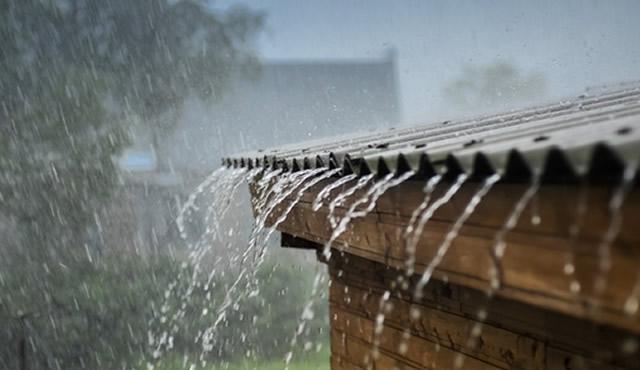
The Tweed Coast receives some of the highest annual rainfall totals on the New South Wales coastline. Summer storm events regularly deliver 50 to 100 millimetres of rain in a single sitting, and the surrounding vegetation, a mix of subtropical natives, garden trees, and hinterland species, produces debris year-round. This is an environment that stresses gutters continuously, not just seasonally.
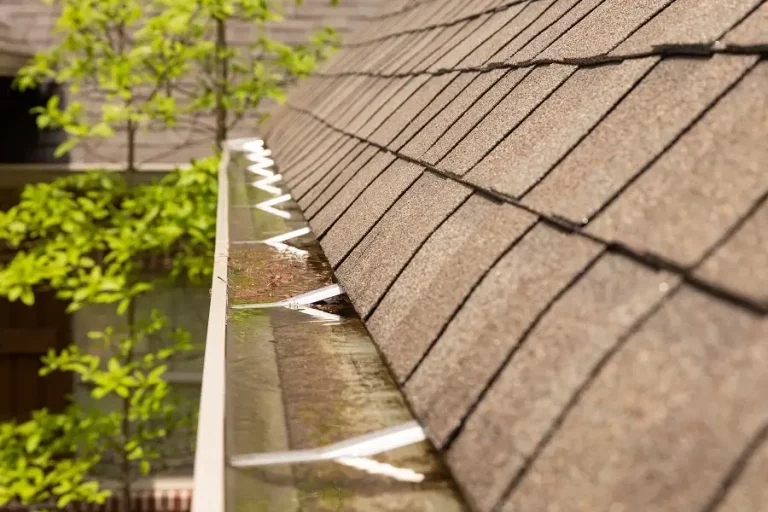
When gutters are functional and clear, all of that water is managed quietly and efficiently. When they are blocked, it has nowhere to go but over the edge and into the structure of the home. The financial problem begins the moment that overflow starts and compounds with every subsequent rain event until the underlying issue is resolved.
The reason ignored gutters become such a significant financial problem is the nature of how water damage progresses. It is slow, hidden, and cumulative. A homeowner who addresses a blocked gutter within one storm season faces a clean and perhaps a minor repair. A homeowner who waits three years faces a different calculation entirely.
Water that repeatedly contacts timber causes progressive fibre breakdown. Rot does not pause between rain events. Once established in fascia boards, rafter ends, or roof framing, it continues to develop even during dry periods as fungal activity persists in damp timber. The cost of rectification rises steeply with the duration of the problem.
The financial consequences of neglected gutters fall into several categories. Understanding each one separately makes it easier to appreciate how quickly the total cost of inaction accumulates.
The fascia board is the first timber element that gutter overflow contacts. On Tweed Coast homes, particularly those built in the 1980s and 1990s with finger-jointed pine fascia, the material is not highly resistant to prolonged moisture exposure. A section of fascia that has been repeatedly wetted from overflow can deteriorate to the point of replacement within two to three years of the problem beginning.
Fascia replacement requires scaffolding or elevated work access, removal of the gutter system, replacement of the board and any affected rafter ends, repainting, and reinstallation of the gutters. Costs for a standard single-storey home can range from several thousand to over ten thousand dollars depending on the extent of the damage and how many rafter ends need attention.
Water that enters the roof cavity from sustained overflow or from overflow that travels beneath the first course of roofing material contacts insulation, roof battens, and sarking. Insulation that has been wetted and dried repeatedly loses its thermal performance and may require full replacement. Sarking that has broken down no longer provides a secondary water barrier.
Roof batten replacement in a cavity that has sustained moisture damage is a significant undertaking. The roofing material needs to be temporarily removed, affected battens identified and replaced, and the roof system reinstated. This type of repair on a Tweed Coast property of average size represents a cost in the range of tens of thousands of dollars.
Once moisture has progressed through the roof structure to the ceiling lining, the visible damage inside the home begins. Plasterboard staining, sagging ceiling sections, and mould growth on ceiling surfaces are all downstream effects of a gutter overflow problem that has been running for an extended period.
Ceiling repairs in isolation are relatively modest in cost. The problem is that without addressing the gutter issue, they are temporary. Multiple cycles of ceiling repair without resolving the source is an outcome that a number of Tweed Coast homeowners have experienced, each cycle adding cost without solving the underlying problem.
In the Tweed Coast’s warm, humid conditions, mould establishes quickly in wet materials and spreads to adjacent surfaces. Mould in a roof cavity or wall cavity that has been present for an extended period may require professional remediation rather than simple surface cleaning. This involves containment, removal of affected material, treatment of remaining surfaces, and replacement of linings.
Mould remediation costs vary considerably depending on the extent of the contamination, but significant infestations in roof cavities or wall spaces represent a cost in the range of several thousand to tens of thousands of dollars.
Overflow that lands consistently at the base of external walls saturates the soil immediately adjacent to the foundation. On the Tweed Coast, where soil profiles vary considerably across the region, sustained saturation can contribute to soil movement, erosion at slab edges, and in older homes with raised floors, moisture ingress into the sub-floor space.
Foundation-related repairs are among the most expensive categories of residential building work. Even relatively minor reactive work to address moisture-affected concrete edges or compromised sub-floor bearers can exceed the cost of years of gutter maintenance.
The financial case for regular gutter maintenance is not complicated. The cost of professional cleaning and inspection is a fraction of the cost of any of the damage categories described above. The challenge is that preventative spending feels optional in a way that reactive spending does not. The following framework is designed to make maintenance a structural habit rather than a reactive emergency.
Two professional gutter cleans per year is the minimum appropriate for most Tweed Coast residential properties. The first should occur in late September or October before the summer storm season. The second should occur in late autumn, after the leaf fall period and before winter storms arrive. Properties with heavy tree coverage may require three cleans per year.
Surface debris removal from the gutter channel is necessary but not sufficient. Sediment, fine organic material, and partial blockages in downpipe bends are not visible from above and do not clear with rainfall alone. Every maintenance visit should include pressurised flushing of all downpipes to confirm free flow from roof to outlet.
A small patch of rust on a gutter joint, a section that has sagged slightly, a downpipe that runs slowly during heavy rain: these are all early-stage problems that are inexpensive to address. The mistake is monitoring rather than acting. In a coastal subtropical environment, minor issues progress faster than they would in gentler climates.
Dated invoices for gutter cleans, repair receipts, and photographs of the system before and after maintenance serve two purposes. First, they provide evidence of reasonable upkeep if a water damage insurance claim is ever disputed. Second, they help identify whether a system is deteriorating faster than normal, which may indicate a more fundamental issue with the gutter design or installation.
In years where El Nino or La Nina conditions are forecast to produce above-average rainfall along the eastern seaboard, the stakes of going into storm season with a compromised gutter system are higher than usual. An assessment that specifically evaluates the structural condition of the gutter system, not just its cleanliness, gives homeowners a clear picture of their exposure before the season arrives.
The financial impact of neglected gutters is not confined to the cost of repairs. It also affects property value at the point of sale, and the Tweed Coast property market is active enough that buyers and their inspectors pay close attention to maintenance history.
A pre-purchase building inspection on a Tweed Coast property will assess the gutter system as part of the roof and drainage evaluation. Inspectors look for overflow staining, fascia condition, rust and corrosion, sagging, and evidence of moisture damage in the roof cavity. Issues identified in an inspection report become negotiating points for buyers.
A property with documented gutter-related damage, even if repairs have been quoted, gives a buyer grounds to seek a price reduction. In some cases, if the extent of the damage raises questions about what else may have been neglected, buyers withdraw entirely.
Research from Australian property valuation bodies consistently shows that deferred maintenance reduces buyer confidence and depresses sale prices relative to comparable maintained properties. The impact is not limited to the direct cost of the identified repairs. It extends to the broader perception of the property’s condition and the uncertainty about what else might be lurking.
A Tweed Coast home that has been consistently maintained, with records to demonstrate it, is a more attractive and confident purchase than one where the maintenance history is unknown or clearly inadequate.
For Tweed Coast homeowners looking to understand what a professional gutter service covers in this region, the Tweed Coast page outlines what is typically included in an inspection and clean for local properties.
For a broader range of articles on the financial and structural consequences of gutter neglect across different Australian regions, the Gutter Gorilla blog is a useful ongoing reference.
Ignored gutters do not stay a small problem on the Tweed Coast. The climate, the vegetation, and the rainfall intensity combine to turn a modest maintenance gap into a significant structural and financial one faster than most homeowners expect. The cost of prevention is low, predictable, and controllable. The cost of remediation is high, unpredictable, and unavoidable once the damage has progressed. Understanding that gap is the starting point for making maintenance a consistent priority.