Willoughby is one of Sydney’s most consistently vegetated lower north shore suburbs, and that character is central to why people choose to live here. The mature eucalypts, angophoras, plane trees and established garden canopy that line the streets and fill the gardens of Willoughby, Naremburn, Castle Cove and Castlecrag create a living environment that is genuinely hard to replicate in more open suburban settings.
But that same canopy creates a solar panel performance challenge that many Willoughby homeowners discover only after their system has been installed and they start comparing their output figures to what the installer projected. Tree coverage affects solar panels in Willoughby in two distinct ways, and understanding both of them helps homeowners make better decisions about system design, maintenance and what to realistically expect from their investment.
The relationship between trees and solar panels is not simply about whether a shadow falls on the panels during certain parts of the day. It involves a broader set of interactions that collectively determine how much of a system’s rated capacity is actually delivered in real-world conditions.
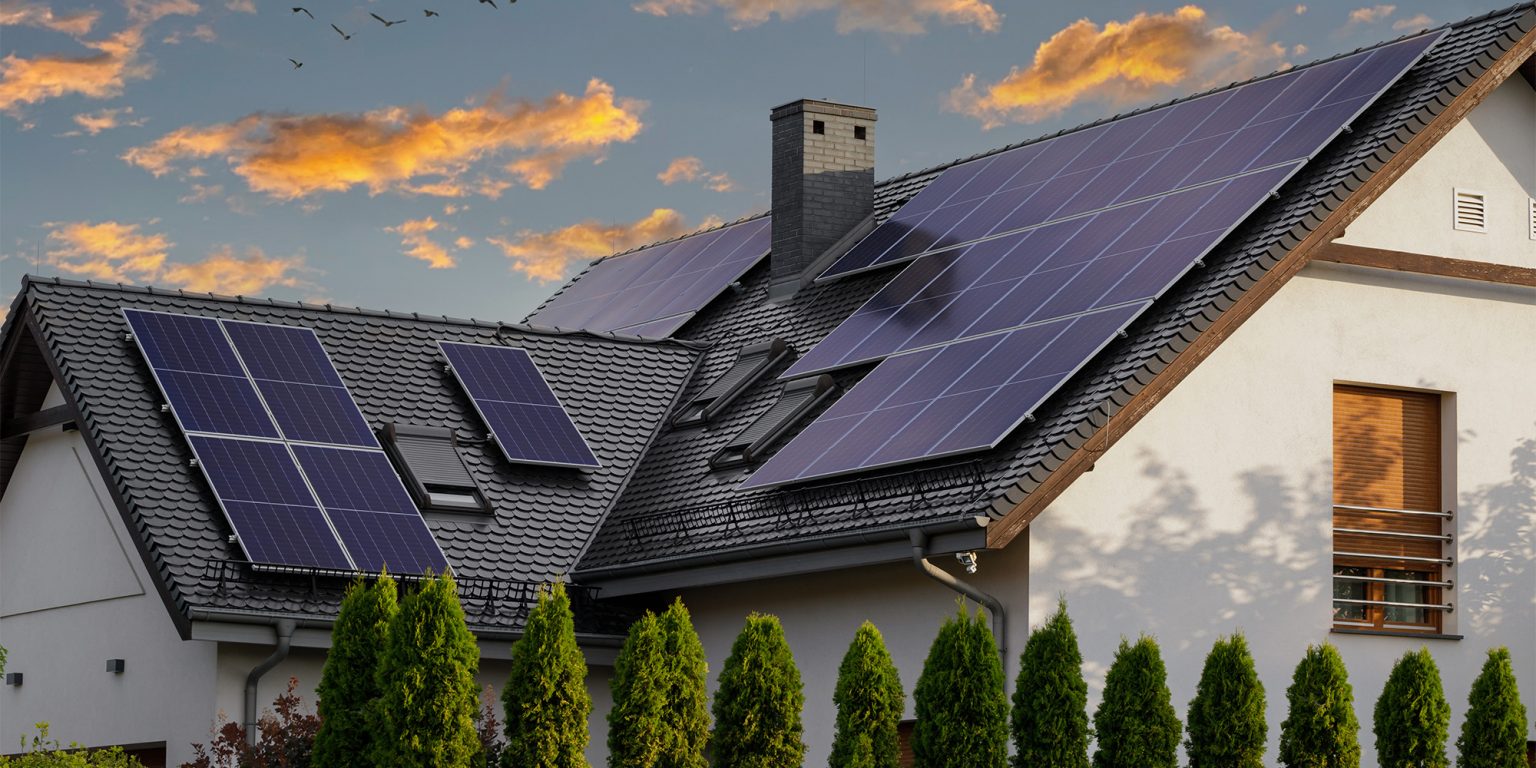
The most immediately understood impact of tree coverage on solar panels is direct shading, where a tree or branch casts a shadow over part of the panel array during some portion of the day. On a Willoughby property where mature trees are present on the property itself, on neighbouring blocks or on the nature strip, this shading can occur at predictable times that are determined by the sun’s position relative to the tree and the panel.
The severity of direct shading losses depends on several factors.
Which direction the shadow falls. Trees to the north of a solar array in the Southern Hemisphere are the most impactful because the sun’s path in Australian skies is primarily in the northern portion of the sky. A mature eucalyptus directly to the north of a roof-mounted solar system in Willoughby can cast a shadow that covers part of the array for a significant portion of each day during winter months when the sun’s arc is lower.
How much of the array is shaded. Even partial shading of a small section of the array can have a disproportionate effect on total output due to the way solar panel circuitry works. Modern panels are wired in series strings, and when one cell in a string is shaded, the output of the entire string is reduced to match the weakest cell. The Clean Energy Council’s guidance on residential solar system design identifies shading as one of the most significant factors affecting real-world system performance, noting that even small shaded areas can cause output losses that exceed the proportional area of shading.
The time of day the shading occurs. Shading that falls during the peak solar generation hours of 10am to 2pm causes more financial loss than the same shading occurring in the early morning or late afternoon when irradiance is lower. A tree that casts a shadow across panels between 11am and 1pm is removing generation during the highest-value period of the day.
Willoughby’s housing stock includes a significant number of properties on sloped blocks where the garden rises above the roofline toward neighbouring higher ground. On these properties, trees growing on the uphill side can cast shadows that fall directly across the roof during morning and sometimes mid-day hours. This topographic shading effect is not always apparent during a pre-installation site assessment if the assessment is conducted during a season when the sun’s arc is higher and the shadow angle is different from winter conditions.
The Lane Cove National Park corridor to the west of the suburb also means that in sections of Willoughby directly adjacent to the park, tree heights are not subject to the same council management as street or garden trees, creating a canopy edge effect that can shadow properties on the park boundary during certain times of year.
Understanding the mechanism by which shade reduces solar panel output explains why the impact of partial shading is so often greater than homeowners expect when they are first told that only a small part of the array is affected.
The vast majority of residential solar panel installations in Australia use a string inverter configuration where multiple panels are connected in series. In this configuration, the electrical output of the series string is constrained by the lowest-performing panel in the string.
When a shadow falls across a portion of one panel in the string, that panel’s output drops. The string output drops to match. All the other panels in the string that are receiving full sunlight are effectively throttled back to the level of the shaded panel. A shadow covering 10 percent of one panel in a ten-panel string can reduce the output of all ten panels, not just the one that is partially covered.
This is the reason why solar performance loss from shading is described as non-linear. The relationship between the area of shading and the magnitude of output loss is not one-to-one. On a Willoughby system where morning shadows from a neighbouring tree cover one corner of the array for two to three hours per day, the actual output loss is typically several times the proportional area of shade.
Modern solar panels include bypass diodes that partially mitigate the string-suppression effect by allowing current to bypass heavily shaded sections of a panel rather than forcing the entire panel to operate at the shaded cell’s output level. This technology reduces but does not eliminate the string-level loss from shading.
The Fraunhofer Institute for Solar Energy Systems research on shading losses in residential solar installations documents that bypass diodes reduce shading-induced losses by approximately 50 to 70 percent in typical residential shading scenarios, but that meaningful output losses persist even in systems with well-functioning bypass protection. For Willoughby systems experiencing regular partial shading from tree coverage, this means the loss is real and financially significant even if modern panel technology limits how severe it becomes.
Some solar installations use micro-inverters or power optimisers at the individual panel level rather than a single string inverter. These configurations convert DC to AC at the panel rather than at the string level, which means shading on one panel does not suppress the output of adjacent panels in the same string.
For new solar installations on Willoughby properties where tree shading is identified as a significant risk, a micro-inverter or optimiser-based system is worth discussing with the installer. The additional upfront cost is typically offset by better real-world performance on shaded sites compared to a string inverter system of the same rated capacity.
For existing string inverter systems on Willoughby properties experiencing shading losses, retrofitting power optimisers to individual panels in the shaded strings is an option worth assessing if shading is causing documented and measurable output losses.
Quantifying the actual output reduction from tree shading on a Willoughby property requires looking at the specific shading pattern rather than applying a generic percentage estimate. But some benchmarks help contextualise the financial stakes.
Research on residential solar system performance in Australian urban environments, including work published through the Australian Renewable Energy Agency, consistently identifies shading as one of the top three causes of underperformance in installed systems. Properties in heavily vegetated suburbs like Willoughby where shading cannot be entirely avoided represent a meaningful proportion of the systems where actual output falls short of installation projections.
A system experiencing consistent morning shading from a neighbouring eucalyptus across two panels in a string for three hours per day across the full year can experience total annual generation losses of 10 to 25 percent depending on the string configuration, the panel angle and the specific shading geometry. At current NSW electricity rates and feed-in tariffs, a 15 percent output loss on a 6.6kW system translates to an annual financial shortfall of $400 to $600 relative to the unshaded projection.
Over a twenty-five year system life, the compounding impact of consistent shading losses represents a significant gap between projected and actual returns on the installation investment.
For homeowners whose shading source is on their own property, tree management is the most direct solution to shading losses. This does not necessarily mean removing trees, which raises amenity, ecological and council approval issues that need to be considered carefully.
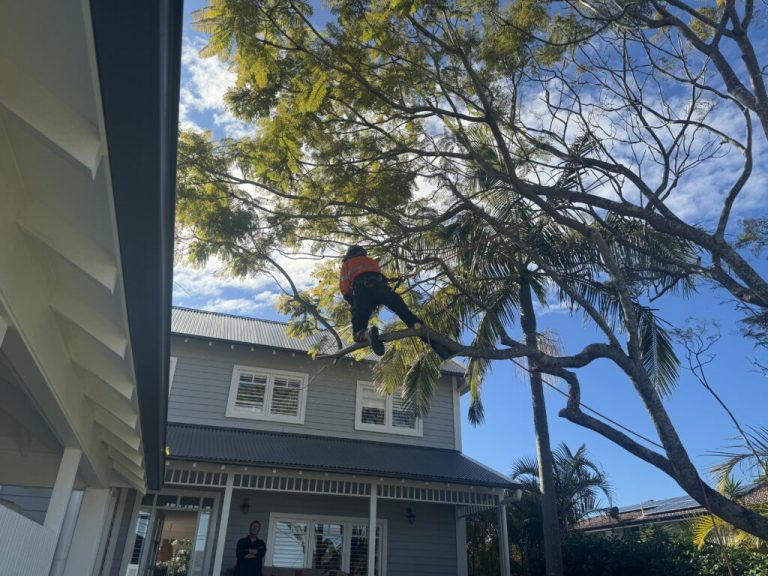
Strategic pruning that removes specific branches responsible for the most impactful shading, while retaining the bulk of the tree’s canopy, can meaningfully reduce shading losses without eliminating the tree from the garden. The timing of pruning matters because different seasons produce different shade geometries. A pruning assessment conducted in winter, when the sun’s arc is lowest and shading is most severe, is more informative than one conducted in summer.
For trees on neighbouring properties or on council-managed nature strips that are causing shading issues, the options are more limited. A discussion with the neighbour about specific branches, or a request to council regarding nature strip tree management, may be worth pursuing where the shading impact on a significant solar investment is demonstrably severe.
Beyond the shading impact itself, tree coverage in Willoughby affects solar panel performance through a second, equally important mechanism: biological and organic contamination from the trees themselves.
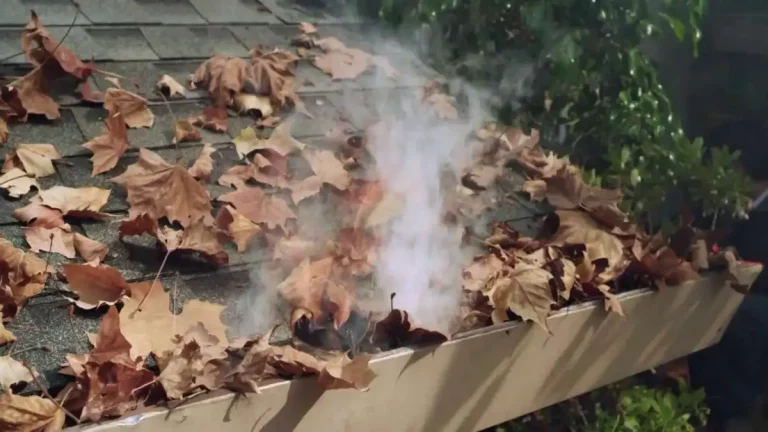
A Willoughby property under mature tree canopy does not just receive shade from that canopy. It receives a continuous stream of organic debris, pollen, fine dust and biological material that settles on panel surfaces and creates a soiling layer that reduces light transmission independently of any shadow.
The combination of shading and soiling on the same property is the most challenging performance scenario for Willoughby solar systems. Shading suppresses output during certain hours. Soiling from tree-derived contamination suppresses output across all hours regardless of whether a shadow is falling on the panels.
The Australian Renewable Energy Agency’s research on urban solar performance notes that combined shading and soiling losses in heavily vegetated suburban environments consistently exceed projections made at the time of installation, because installation projections typically account for one factor or the other but not their combined impact.
The output differential between a shaded and an unshaded system on the same Willoughby street can be substantial. A system on a north-facing roof with no significant tree coverage to the north, cleaned twice yearly, may produce 90 to 95 percent of its rated capacity on average across the year. A comparable system on the same street on a property with significant tree coverage, less frequent cleaning and string inverter configuration may produce 65 to 75 percent of rated capacity under the same conditions.
That 20 to 30 percent output gap between neighbouring systems of the same rated size represents a financial difference of $600 to $900 per year on a 6.6kW system at current rates, or $15,000 to $22,500 across a twenty-five year system life.
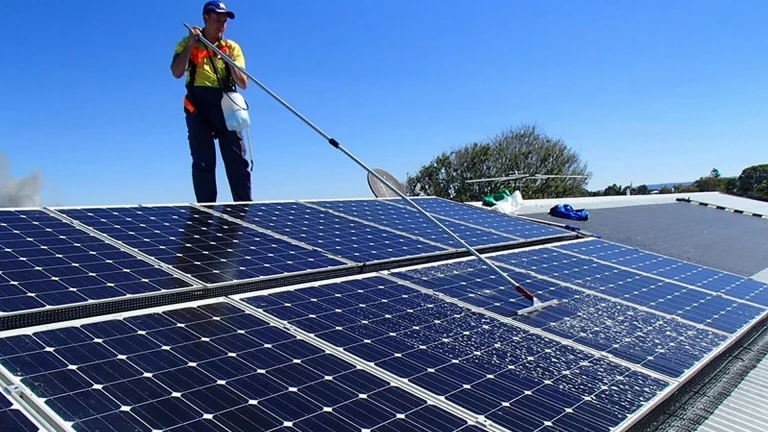
While shading from established trees cannot always be fully resolved, the soiling component of the combined performance impact is entirely controllable. A rigorous cleaning program that removes the organic contamination from the tree canopy, conducted twice yearly with deionised water and appropriate technique, addresses the controllable portion of the output loss.
For Willoughby homeowners whose system is affected by both shading and soiling, ensuring the cleaning program is not skipped or delayed means the uncontrollable shading loss is not compounded by an additional avoidable soiling loss.
For locally relevant information on professional solar panel cleaning services for Willoughby properties, details are listed in the sources below alongside the external research references cited in this article.
GutterGorilla, Willoughby local rooftop maintenance services: https://guttergorilla.com.au/professional-gutter-cleaning-in-willoughby-guttergorilla/
GutterGorilla, Solar panel cleaning service scope and approach: https://guttergorilla.com.au/solar-panel-cleaning/
Australian Renewable Energy Agency, Urban Solar Performance and Soiling Research: https://arena.gov.au/
Clean Energy Council, Residential Solar System Design and Shading Guidance: https://www.cleanenergycouncil.org.au/
Fraunhofer Institute for Solar Energy Systems, Shading Loss Research in Residential Installations: https://www.ise.fraunhofer.de/
Bureau of Meteorology, Sydney Solar Irradiance and Seasonal Sun Path Data: http://www.bom.gov.au/
Solar Energy Journal, Combined Shading and Soiling Loss Studies: https://www.sciencedirect.com/journal/solar-energy