North Manly sits on Sydney’s northern beaches in one of the most appealing locations for rooftop solar in New South Wales. The suburb receives strong year-round sunlight, has good roof orientation across much of its housing stock, and benefits from the reliable generation conditions that the northern beaches climate provides. For homeowners who have invested in solar, those fundamentals are excellent.
What is less discussed is that North Manly’s proximity to the ocean creates a specific set of environmental stresses on solar panel systems that can cause problems to develop quietly over months or years. And because solar panels are on the roof, out of daily view, those problems often go unnoticed until they have already caused meaningful performance loss or component damage.
This article identifies the critical warning signs that a North Manly solar system needs attention, explains what causes them, and gives homeowners a practical framework for checking their system regularly.
The first challenge with solar panel warning signs is that most of them are not immediately obvious. A solar system that is underperforming does not typically announce itself through dramatic failure. It gradually produces less than it should, and without a baseline reference and regular monitoring, that decline can progress significantly before it registers as a concern.
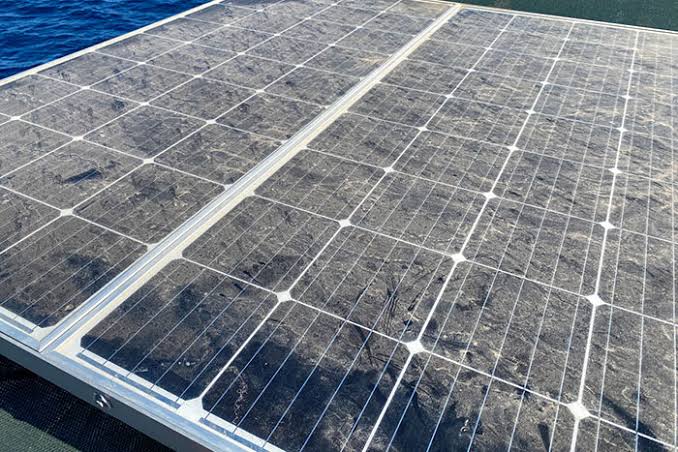
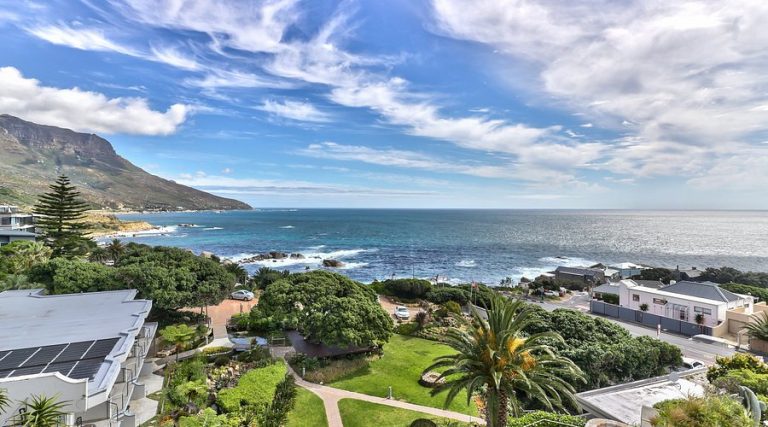
North Manly is located within two to three kilometres of Manly Beach and the open Pacific. Prevailing north-easterly sea breezes carry salt particles inland on a consistent basis, particularly during summer and autumn when onshore winds are strongest. Salt deposits on panel glass reduce light transmission by scattering and absorbing incoming sunlight before it reaches the photovoltaic cells beneath the surface.
Unlike dust or pollen, which are often partially washed off by rainfall, salt residue is hygroscopic. It attracts moisture from the air, bonds to the glass surface, and becomes progressively harder to remove the longer it is left in place. Rainfall can actually make this worse in some conditions, as light rain dissolves surface salt and redistributes it rather than washing it away completely.
For a detailed overview of how coastal salt affects solar performance on Sydney’s northern beaches, the article on coastal salt and solar panels in Sydney covers the mechanisms involved and what homeowners across the coastal strip should understand about their environment.
Many homeowners know their system generates power. Fewer know how much it should be generating on any given type of day, which means they have no reliable way to identify when performance has dropped below its design output.
Establishing a baseline is the foundation of effective solar monitoring. Most modern inverters record daily, monthly, and annual generation data. By noting what the system produces on clear summer days, clear winter days, and overcast days in each season, homeowners build a reference that makes deviation visible. A system producing fifteen percent less than it was this time last year on comparable weather days is a warning sign, even if the absolute output still looks reasonable.
Several specific symptoms indicate that a North Manly solar system has a problem requiring attention. Some are detectable through monitoring data. Others require physical inspection.
A sudden drop in output that coincides with clear, sunny weather is one of the clearest warning signs available. If the system typically generates a known range on clear summer days and the monitoring app shows output significantly below that range without any obvious explanation such as weather change or shading, something has changed in the system.
Common causes include a panel fault, inverter issue, connection degradation, or a shading obstruction that has developed since the system was installed. A new rooftop structure on a neighbouring property, a tree that has grown significantly, or even a satellite dish installed at the wrong position can create shading that reduces output in ways that are not immediately obvious from inside the home.
A slower decline over months rather than a sudden drop is the signature of surface soiling, component degradation, or gradual shading increase. In North Manly’s salt air environment, progressive surface soiling is the most likely cause of steady output reduction in an otherwise intact system.
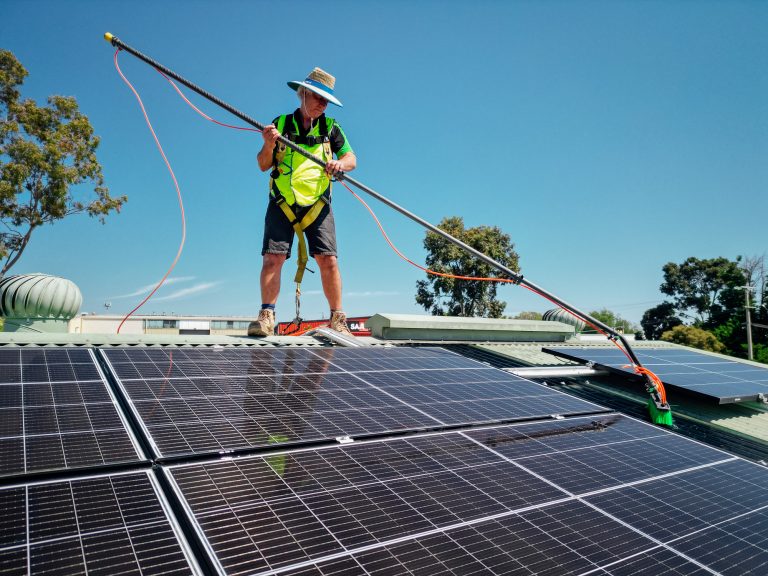
If monitoring data shows that the system has been producing progressively less over the past six to twelve months with no obvious changes to weather patterns, a professional clean and inspection is the appropriate first response. A clean that restores output to previous levels confirms soiling was the cause. If output does not recover after a thorough clean, a deeper inspection of panels and inverter is warranted.
The inverter is the central processing unit of the solar system. Most modern inverters have a display or app interface that shows current status, daily generation, and any fault events. Warning lights, error codes, or repeated alarm notifications from the inverter are direct signals that something in the system requires attention.
Common inverter fault indicators include:
None of these fault codes should be ignored or cleared without understanding what caused them. Recurring faults in the same category indicate an underlying issue that requires professional diagnosis.
While solar panels are not routinely visible from inside the home, a ground-level visual check from the garden or street can sometimes identify physical damage that requires attention. Signs worth investigating further include:
Any of these findings warrants a closer inspection by a qualified solar technician. Panel-level damage in a string inverter system can affect the output of every other panel connected to the same string, meaning one damaged panel can reduce whole-array performance significantly.
A structured approach to checking your solar system gives North Manly homeowners a way to identify issues early and respond before they cause significant output loss or component failure.
Set aside five minutes once a fortnight to review the output data from your inverter app or portal. Look at daily generation totals for comparable recent days and compare them to the same period in previous months and years. Note any days where output appears lower than expected given the weather conditions.
Most inverter monitoring platforms include graphing tools that make this comparison straightforward. If your system does not currently have remote monitoring capability, ask your installer about adding a monitoring device, as the visibility it provides is worth the modest cost.
From the garden or a safe ground-level position, look at the panel array. You are not looking for fine detail at this stage. You are looking for anything that is obviously different from what you would expect: visible debris accumulation on or around panels, evidence of bird nesting at the panel edges or underneath the array, obvious discolouration on the panel face, or any panel that appears misaligned from the rest of the array.
A ground-level check takes five minutes and should be done at least twice a year and after any significant weather event including hailstorms, strong winds, or heavy rain.
Walk the perimeter of the property and assess whether any new shading sources have emerged since the system was installed. Trees grow. Neighbouring properties change. New structures or additions on adjacent lots can cast shadows that were not present when the system was designed and installed.
Shading is particularly impactful in systems without panel-level power optimisation, where the output of an entire string of panels is limited by the lowest-performing panel in that string. Even partial shading of one panel during peak hours can reduce whole-system output significantly.
Look at the inverter display or indicator lights and confirm that the system is operating normally. A green operational indicator is expected during daylight hours when sufficient irradiance is present. Any other status light, particularly amber or red indicators, should be cross-referenced with the inverter manual to identify what the code means and whether it requires service action.
If the inverter, cable conduit runs, and AC isolator switch are accessible without roof access, carry out a brief visual inspection. Look for discolouration on the inverter casing that might indicate heat damage, check that cable conduits are intact and secured, and confirm that the isolator switch housing shows no signs of moisture ingress or discolouration around the terminals.
Do not open electrical enclosures or touch any wiring. The visual inspection is a surface-level check only. Any concerns identified should be referred to a Clean Energy Council accredited installer or licensed solar electrician.
Understanding what specific warning indicators mean helps homeowners respond proportionately, acting promptly on genuinely urgent signals while not overreacting to normal system behaviour.
Not every output variation is a warning sign. Cloud cover, smoke haze, morning and afternoon low sun angles, and winter versus summer generation differences all produce legitimate variation in daily output. A system that generates much less on a cloudy day than on a clear day is functioning normally.
The warning signs are deviations from what the system should produce given the actual conditions. A clear summer day that produces significantly less than a comparable clear day three months ago is the pattern to watch for.
Some warning signs warrant prompt action rather than a scheduled review:
These are safety-relevant indicators. Turn the system off using the AC and DC isolators if it is safe to do so, and contact a qualified solar electrician.
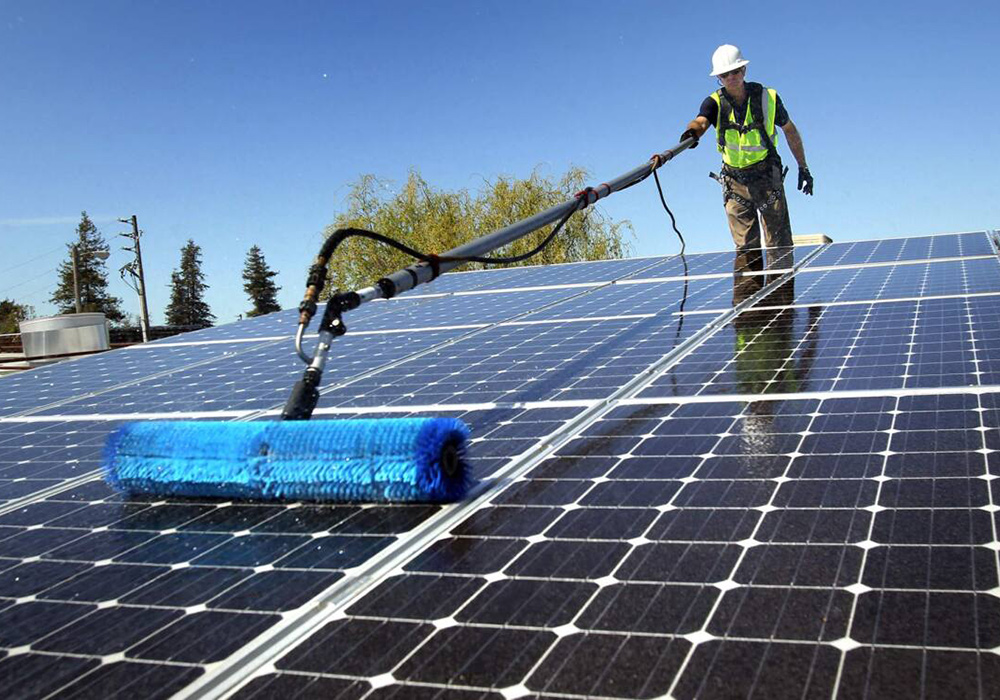
For performance-related warning signs that are not safety-urgent, scheduling a professional inspection and clean within a few weeks is appropriate. A comprehensive service for a North Manly solar system should include:
Professional solar panel cleaning combined with this level of inspection gives North Manly homeowners confidence that the system is operating correctly and that any emerging issues have been identified before they become more serious.
For North Manly homeowners looking for locally relevant information on solar system maintenance and service, the North Manly page provides details on what professional solar and gutter services cover in the area.
Solar panels in North Manly are working in a demanding coastal environment where salt air, bird activity, and UV intensity combine to create maintenance needs that exceed what homeowners in less exposed locations face. The warning signs covered in this article are the practical signals that a system needs attention. Acting on them promptly protects both the performance and the longevity of a significant investment, and in most cases, the cost of early intervention is a fraction of what delayed attention eventually requires.