
The question sounds almost too simple to take seriously. Gutters? The metal channels along the roofline that most homeowners only think about when they overflow? The idea that keeping them clean and functional could meaningfully influence property value might seem like a stretch.
But the connection is real, it is well-established in the way buyers, building inspectors, and property valuers actually work, and it operates through multiple channels simultaneously. Well-maintained gutters do not add value in the same way that a kitchen renovation does. They contribute to it differently: by preventing the damage that devalues properties, by providing a visible maintenance signal that increases buyer confidence, and by ensuring the property performs well at exactly the moment when performance is being formally assessed.
Property appraisal in Australia is not purely an art. It is a structured process that considers a property’s condition systematically, and the condition of the roof and drainage system is one of the assessed categories. Understanding how appraisers and building inspectors actually evaluate drainage system condition helps homeowners understand why gutters matter at sale time.
Valuers use condition ratings to adjust the assessed value of a property relative to comparables. A property in excellent condition achieves its full potential value. A property with visible deferred maintenance, even on components that seem minor compared to the overall building, is rated lower because deferred maintenance creates uncertainty that buyers and their advisors factor into their pricing.
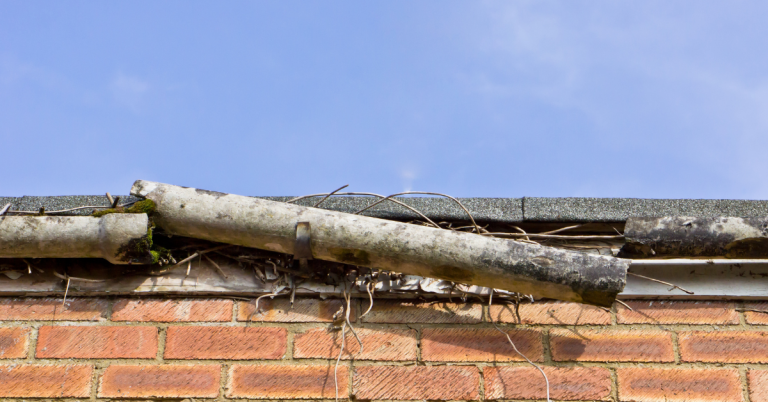
The specific issue with gutters is that they are both visible and informative. A buyer approaching a property at an open inspection can see the gutters from street level. Overflow staining on the external wall below the gutter line, sagging sections, rust staining, or visible debris overflowing the channel edge are all observable in the first thirty seconds of arriving at the property. And because gutters are a visible maintenance item, their condition is used as a proxy for how the rest of the property has been maintained, particularly the less visible systems like the roof cavity, the sub-floor space, and the building envelope.
Building inspections are a standard part of virtually every Australian property transaction. A licensed inspector assessing a property will note the condition of the gutter and drainage system in their report. If they identify blocked gutters, corroded or sagging sections, overflow staining on the fascia or walls, or downpipes that appear non-functional, these findings appear in the written report that the buyer receives.
Each finding in an inspection report has a value consequence. It either becomes a negotiating point for price reduction, a request for pre-settlement repair, or in cases where the findings raise questions about broader maintenance history, a reason for a buyer to reconsider their offer entirely. Gutters that are clean, correctly pitched, and in sound condition generate no negative inspection findings. Their positive contribution is the absence of a problem, which sounds modest but in the context of a high-stakes property transaction, the absence of documented problems is genuinely valuable.
The mechanisms by which gutter condition affects appraisal value are more specific than a general statement about presentation. They operate through the damage prevention function of gutters, the maintenance narrative they contribute to, and the specific ways that inspection findings translate into price.
The most significant way that maintained gutters contribute to property value is by preventing the water damage that reduces it. A gutter system that has been consistently maintained does not overflow during rain events. It channels water efficiently from the roof to the downpipe and away from the building. This means the building’s fascia boards, external render, foundation perimeter, and ceiling spaces are not subjected to the repeated wetting that causes the most common and most expensive property damage categories.
A property that goes to market with no ceiling stains, no overflow staining on masonry, no softened fascia timber, and no foundation moisture issues is presenting as the sum of all the water damage it has not suffered. Each of those avoided damage items represents a repair cost that the next owner will not need to incur. Avoided repair costs translate directly into the price a buyer is willing to pay.
Properties tell a story through the cumulative evidence of how they have been managed. A property where gutters are obviously maintained, where the drainage system is functional, and where there is no evidence of chronic overflow is telling buyers that the current owner takes care of things. A property with blocked gutters and overflow staining is telling the opposite story, and that story makes buyers wonder what other maintenance signals they might find on closer inspection.
This narrative effect is difficult to quantify but consistently noted by real estate agents, buyers, and valuers. The confidence that a well-maintained drainage system provides is real, and it manifests as buyer willingness to compete more aggressively for a property rather than applying a precautionary discount.
Consider a property that receives three professional gutter cleans per year at five hundred dollars per clean, representing an annual maintenance investment of fifteen hundred dollars. Over five years, that amounts to seven thousand five hundred dollars in gutter maintenance.
Over that same five years, the maintained drainage system has prevented overflow events that would otherwise have occurred during the rain events that tested the gutters in each season. The fascia boards have not been saturated and softened. The external walls have not been stained with overflow marks. The sub-floor space has not received the hydrostatic loading that consistently ponding water at the foundation perimeter would have created. The ceiling spaces are clean and stain-free.
When the property is sold at the end of that five years, the building inspection finds no drainage-related defects. The buyer’s inspector notes that the drainage system appears to be in sound condition. No findings relating to gutters, fascia, or overflow damage appear in the inspection report. The buyer proceeds with confidence rather than seeking price concessions based on identified defects.
The seven thousand five hundred dollars of maintenance investment has avoided a negotiating discount that buyers typically apply when drainage defects are identified. In a property worth one million dollars, a buyer’s negotiating discount for identified maintenance issues can easily exceed ten to fifteen thousand dollars, depending on the severity of the findings. The maintenance investment has delivered a positive return simply by preventing the negative outcome.
The connection between gutter maintenance and resale value has been noted in Australian property market analysis repeatedly, and the mechanisms are consistent with what the broader maintenance and property value research shows.
Research from Australian property industry bodies consistently identifies condition as a primary determinant of property value relative to comparable properties. A property in superior condition compared to its nearest comparables achieves a premium. A property in inferior condition achieves a discount. The premium or discount is not uniform: it reflects the perceived cost and effort of addressing the identified condition issues plus a risk premium for what might be undiscovered.
The article on the powerful link between roof maintenance and property value covers the broader relationship between roof system maintenance and property value outcomes in detail. Gutter maintenance is one component of that broader roof system relationship, but it is a particularly visible and particularly impactful component because of how directly it affects both the building’s condition and the first impression that condition creates.
In recent years, the awareness among buyers and real estate agents that documented maintenance history is a genuine asset has increased. A seller who can provide five years of dated professional gutter cleaning receipts, a roof inspection report from within the last three years, and any written documentation of repairs that were carried out is in a stronger position than a seller who can only assert that the property has been well maintained.
Documentation transforms a subjective claim into verifiable evidence. A building inspector who is told the gutters have been maintained consistently is not in a position to confirm this from a physical inspection alone. The same inspector shown dated service receipts from the past five years has a different basis for their assessment. This difference in the strength of the maintenance evidence available is reflected in buyer confidence and in the outcomes that confident buyers produce.
The broader relationship between rising insurance premiums and the value of documented maintenance is covered in the article on the hidden impact of rising insurance premiums on home maintenance decisions. The documentation that supports insurance claim outcomes is often the same documentation that supports property sale outcomes: a consistent record of professional maintenance visits with receipts and any written reports or findings.
One question homeowners frequently ask is whether having gutters cleaned immediately before sale, even if maintenance has been inconsistent, is worthwhile. The answer is yes, with an important qualification: a pre-sale clean removes the visible maintenance deficiency and ensures the drainage system is functional for any rain events that occur during the campaign, but it does not create a maintenance history.
A property where the gutters are clean at sale time but carry no maintenance documentation, and where inspection findings reveal overflow staining on external walls that suggest chronic blockages in the past, is in a different position from one where five years of documented cleaning confirm the staining pre-dates the current owner or that it has been addressed progressively over time.
The most strategically valuable position is a property that has been consistently maintained, is in clean condition at sale time, and has documentation to confirm the maintenance history. A pre-sale clean provides the last of these three elements. Building the first two requires committing to consistent maintenance over the ownership period rather than treating maintenance as a pre-sale preparation activity.
Bringing together the mechanisms above into a practical framework gives homeowners a clear picture of where the value contribution of gutter maintenance comes from and what actions best support it.
For homeowners looking to establish or maintain a consistent gutter cleaning program that supports both property condition and value, professional gutter cleaning that includes a basic condition assessment with each visit is the most straightforward way to build the maintenance record and maintain the drainage system function simultaneously.
Well-maintained gutters can increase your home’s value, but the mechanism is not direct in the way that a renovation adds value. It is protective and preventative: it prevents the damage that reduces value, provides the visible maintenance signals that support buyer confidence, and generates the documentation that strengthens a sale. The investment required is predictable and modest. The return comes partly in the sale price supported and partly in the repair costs avoided along the way. For most Australian properties, that combination makes consistent gutter maintenance one of the highest-return maintenance investments available.