Walk into any hardware store in Sydney and you will find an entire aisle dedicated to gutter protection products. Mesh rolls, foam inserts, brush systems, clip-on plastic covers. The marketing on all of them makes roughly the same promise: install this and stop worrying about your gutters.
The reality for South Sydney homeowners is more nuanced than any packaging claim suggests. Whether gutter guards are worth the investment depends on the specific property, the surrounding environment and, critically, which type of guard is being considered. Getting that decision wrong does not just waste money. It can create maintenance problems that are harder to deal with than an unguarded gutter would have been.
The first question to settle is what worth actually means in this context. A gutter guard that reduces clean frequency from three times per year to once per year on a heavily treed South Sydney property delivers measurable value. A guard that traps fine debris inside the gutter while blocking professional access to clear it creates a different kind of problem at additional cost.
South Sydney’s environmental profile is distinct enough from other parts of Sydney that product recommendations based on general Australian conditions do not always translate directly.
The coastal influence from Botany Bay affects suburbs including Brighton-Le-Sands, Kyeemagh, Rockdale and Botany. Salt-laden air is corrosive to unprotected metal surfaces and affects how debris behaves on guard surfaces. A product that performs well in a dry inland environment may corrode, warp or degrade faster in coastal South Sydney conditions.
The airport corridor through Mascot and surrounding suburbs adds fine particulate matter to the atmospheric environment. This material is fine enough to pass through most mesh apertures and settles as a silt layer in gutters regardless of what guard system is installed above.
Established residential trees throughout suburbs like Hurstville, Kogarah, Blakehurst and Sutherland contribute a seasonal debris load that includes large leaves, seed pods and fine organic dust. The variation in particle size is significant. A guard that handles large leaves effectively may allow fine material through, while one with a fine enough aperture to catch small particles may restrict water flow during heavy rainfall.
According to CSIRO research into building material performance in Australian conditions, UV exposure combined with coastal salt air creates an accelerated degradation environment for polymer-based products, which has direct implications for plastic gutter guard systems used in coastal South Sydney.
A gutter guard installation in South Sydney costs between $1500 and $3000 for a standard residential property, depending on the product, the linear metres of guttering and the access complexity. This is the upfront figure that most homeowners focus on.
The more meaningful calculation is the total cost over a five to ten year period, accounting for the installation cost, any reduced cleaning frequency, ongoing inspection costs and the product’s expected lifespan before replacement or significant degradation.
A well-chosen aluminium mesh guard installed professionally on a South Sydney property that is currently requiring three cleans per year at $250 per clean might reduce that to one clean per year. Over ten years, that represents a saving of approximately $5,000 in cleaning costs against an installation cost of $1000 to $2000. The guard pays for itself within two to three years and continues delivering cost reduction for the remainder of its lifespan, which for a quality aluminium product in South Sydney conditions is fifteen to twenty years or more.
A cheaper plastic mesh guard installed on the same property may last four to five years before UV degradation and coastal corrosion require replacement, reducing or eliminating the financial benefit and potentially adding the cost of removal and reinstallation.
Looking at each main guard category honestly against South Sydney’s specific conditions gives a clearer picture of what is genuinely beneficial and what is not.
Foam gutter inserts fill the gutter interior with a porous foam block that is meant to allow water through while blocking debris. On paper the concept is reasonable. In practice, foam performs poorly in almost every real-world environment and particularly badly in South Sydney.
Fine particulate matter from the airport corridor passes straight through the foam’s cell structure and accumulates at the gutter base below. Salt air accelerates the degradation of foam materials, causing them to become brittle and crumble in coastal South Sydney properties faster than the manufacturer’s expected lifespan. Biological material including pollen and organic dust from surrounding trees works into the foam and decomposes there, retaining moisture and creating a growing medium for plant roots from nearby trees and gardens.
Within two to three years in South Sydney conditions, foam inserts typically need complete removal and replacement, having accumulated a layer of material through their full depth that is more difficult and expensive to deal with than an open gutter would have been. Their removal also often reveals gutter corrosion that has been concealed and accelerated by the persistent moisture the foam retained.
Brush gutter guards use a cylindrical bristle insert similar in concept to a bottle brush, placed in the gutter to let water through while catching larger debris on the bristles. The problem in South Sydney’s specific debris environment is fundamental.
The fine particulate matter that characterises South Sydney’s air quality does not sit on top of bristles and blow away. It works into the bristle structure and compacts there over time. The seed pods and organic debris from residential street trees catch in the bristles and decompose, binding the bristles together into a matted mass that restricts water flow. In coastal sections of South Sydney, the salt air causes metal bristle spines to corrode, which can contaminate downpipes with rust particles.
After a season or two in these conditions, a brush guard becomes a gutter filled with a debris-laden, partially corroded bristle insert that is considerably harder to clear than an open gutter and requires complete replacement rather than cleaning.
Clip-on plastic mesh systems are widely available at hardware stores and at a price point that makes them seem like a sensible entry-level solution. For South Sydney properties they represent poor value over any meaningful timeframe.
The UV intensity in Sydney’s climate is significant. Australian Radiation Protection and Nuclear Safety Agency data shows Sydney regularly records UV index readings in the extreme category during summer, which accelerates polymer degradation in outdoor applications. Plastic mesh guards that are not specifically formulated for UV resistance become brittle and lose their structural integrity within three to five years, cracking at fixing points and developing gaps that allow debris to enter the gutter freely.
In coastal South Sydney, the combination of UV exposure and salt air further accelerates this degradation. A product that might last five years in a sheltered inland location may need replacement in three in a coastal South Sydney environment.
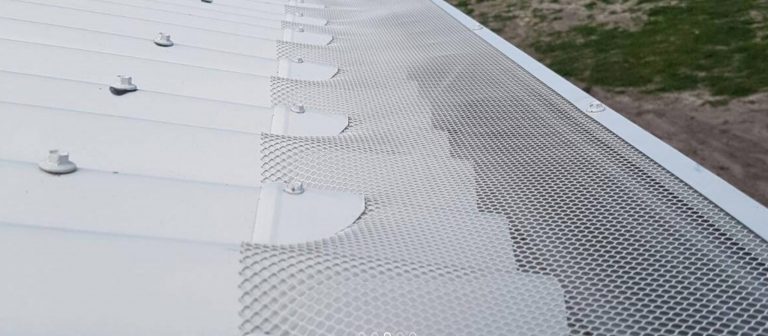
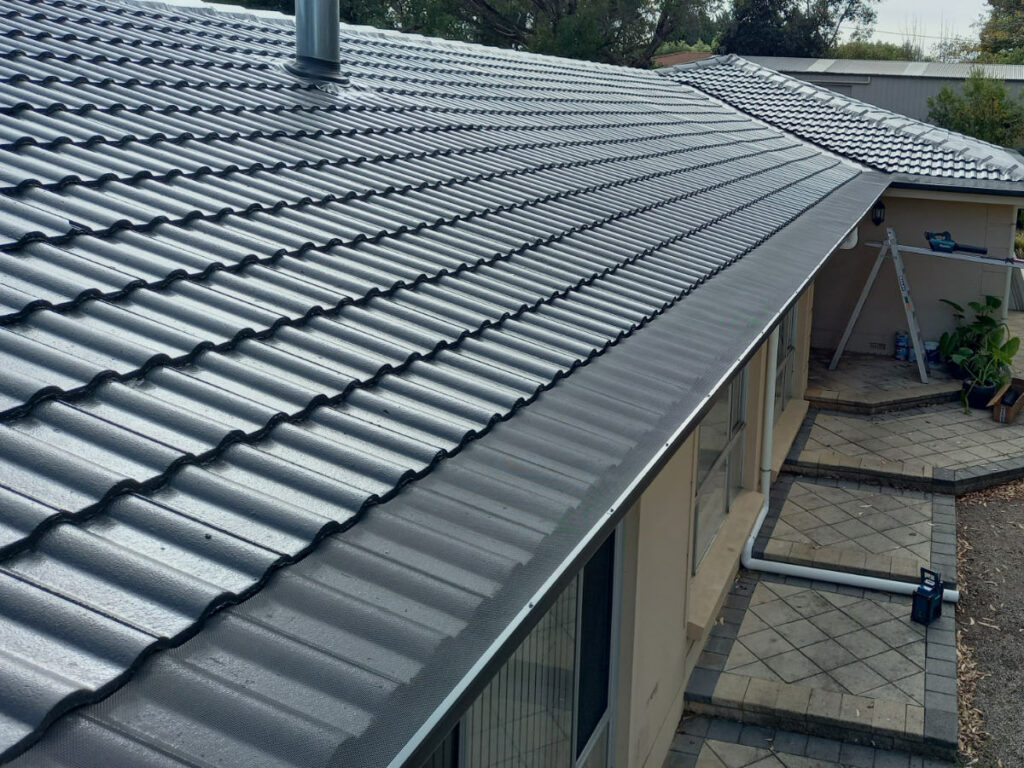
Aluminium mesh gutter guards occupy a different product category from the options above, and the difference is not marginal. It is fundamental in terms of material durability, performance consistency and long-term cost effectiveness.
Aluminium does not degrade under UV exposure. It does not become brittle in Sydney’s summer conditions. In coastal environments, properly treated anodised or powder-coated aluminium resists salt air corrosion effectively over long periods, which is precisely why aluminium is used extensively in coastal building applications across Australia.
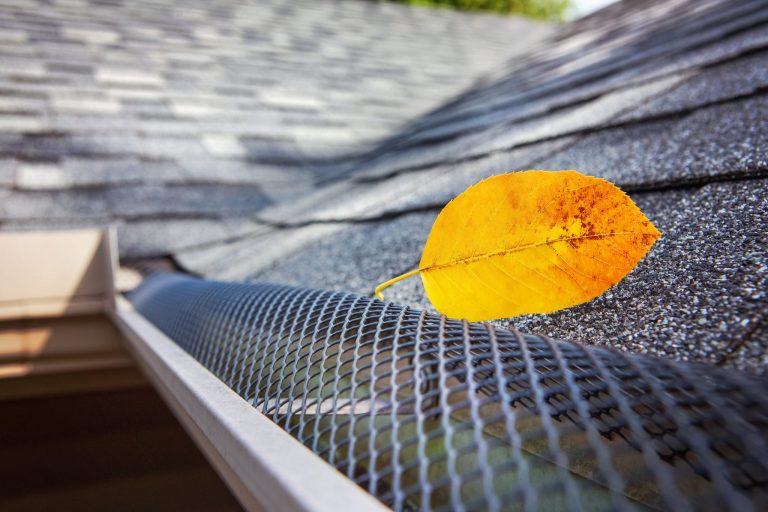
For South Sydney’s specific debris profile, the aperture size of the mesh is the critical specification. A 2mm to 3mm aperture handles the range of debris typical in South Sydney effectively, allowing water to pass freely while excluding the majority of leaf and seed material. Fine particulate matter in the airport corridor range will still pass through any mesh that permits adequate water flow, which is an honest limitation of any guard system in this environment. The benefit is in preventing the bulk of the organic debris that would otherwise compact and block the gutter.
A structured comparison of the main guard types against the factors that matter most for South Sydney properties makes the decision framework clear.
Large leaves and seed pods: Aluminium mesh handles these effectively. Foam, brush and plastic mesh allow or retain these in varying degrees.
Fine particulate from airport corridor: No guard system fully excludes this material. All guard types allow some fine material through. Aluminium mesh keeps the gutter cleaner than open gutters and makes the fine material that does enter easier to flush out during periodic maintenance.
Salt air exposure: Aluminium mesh with appropriate coating handles coastal exposure well over many years. Foam, brush and plastic mesh all degrade under salt air conditions faster than their rated lifespan in non-coastal environments.
Bird and animal debris: Aluminium mesh prevents birds and animals from nesting inside gutters, which is a genuine benefit in South Sydney where blocked gutters from nesting material are a documented issue.
These lifespan differences are not minor. They represent the difference between an investment that pays for itself multiple times over and one that costs more to maintain and replace than an unguarded gutter would have.
South Sydney experiences intense short-duration storm events during summer. A gutter guard system must be able to handle peak rainfall rates without causing overflow that would not have occurred with an open gutter.
Aluminium mesh with an appropriate aperture maintains adequate water infiltration during normal and moderately heavy rainfall. During extreme events, some overflow is possible on any mesh system, though this is typically less frequent and less severe than what an unguarded blocked gutter would produce.
Foam and brush systems that have accumulated debris in their structure can actually restrict water flow below what an open gutter would allow, creating overflow events on properties that would not have overflowed with a properly maintained open gutter.
For South Sydney homeowners who have assessed their property and concluded that aluminium mesh gutter guards are the right investment, understanding what the installation process involves and what to expect afterward sets realistic expectations.
The quality of installation is as important as the quality of the product. Common installation issues that undermine performance include gaps at the rear of the guard where it meets the fascia, insufficient fixing points and incorrect cutting at corners and downpipe inlets.
A professional installation on a South Sydney property should cover the following.
A common misconception about gutter guards, including quality aluminium mesh systems, is that they eliminate the need for maintenance. They do not. They change the nature and frequency of maintenance required.
Fine material that passes through the mesh accumulates as a silt layer at the gutter base over time. This layer builds more slowly than it would in an open gutter but still needs periodic removal. Downpipes should still be flushed annually to confirm they are clear. The mesh surface itself should be checked periodically and cleared of any accumulated surface debris, particularly after significant storm events.
For most South Sydney properties with aluminium mesh guards, an annual inspection and clean rather than two to three open-gutter cleans per year is a realistic expectation. The Australian Standard AS/NZS 3500 for plumbing and drainage notes that all roof drainage systems require periodic inspection and maintenance regardless of protection systems installed.
For South Sydney homeowners researching gutter guard options and what is appropriate for their specific property, GutterGorilla’s South Sydney page provides locally relevant information on the area’s conditions and what services are available.
Detailed information on gutter guard products, installation and what to expect from a professional installation service is available on GutterGorilla’s gutter guard page.
For most South Sydney homeowners with established tree coverage, a history of regular blockages or properties in coastal sections of the area, a professionally installed aluminium mesh gutter guard system is a worthwhile investment. The financial return is clear, the product durability is appropriate for the environment and the reduction in maintenance burden is genuine.
For homeowners on properties with minimal tree coverage, newer gutters in good condition and no documented history of frequent blockage, the case is less clear and an honest assessment of the property-specific conditions is worth doing before committing to the installation cost.
What is clear is that the cheaper guard alternatives available at hardware stores are not worth it for South Sydney conditions. The lifespan is too short, the performance against the area’s specific debris profile is too limited and the maintenance complications they create over time outweigh any upfront cost saving. If a gutter guard is worth installing at all in South Sydney, it is worth installing properly.