Solar panels are one of those investments that seem self-sufficient. They sit on the roof, the sun hits them, electricity gets generated and the inverter app shows numbers that look broadly reasonable. For a lot of South Sydney homeowners, that is where the relationship with their solar system ends.
The problem is that reasonable-looking numbers are not the same as optimal numbers. And in South Sydney specifically, the gap between what a dirty panel produces and what a clean one should produce is wider than most people realise until they actually investigate it.
South Sydney covers a stretch of suburbs with a distinctly varied environmental profile. From the industrial heritage of Alexandria and Mascot to the coastal fringe around Brighton-Le-Sands and Botany, and through the denser residential streets of Rockdale, Kogarah and Hurstville, the conditions that affect solar panels differ from street to street. But across all of it, the combination of urban pollution, coastal influence and biological debris creates one of the more demanding solar maintenance environments in metropolitan Sydney.
The contamination on a South Sydney solar panel is not a uniform layer of harmless dust. It is a composite of several distinct sources that each contribute to surface soiling in different ways.
Traffic and aviation particulates. The airport corridor running through Mascot and Botany deposits a consistent load of fine carbon particles from jet and vehicle exhaust across the southern suburbs. These particles are hydrophobic, meaning they resist being washed away by water, and they bond to panel glass surfaces in a way that light rainfall cannot address. The NSW Environment Protection Authority identifies fine particulate matter from transport as a primary air quality concern across the Sydney basin, and South Sydney sits in one of the highest-exposure corridors in the metropolitan area.
Salt air from Botany Bay. Properties within a few kilometres of the bay and coastal foreshore face salt-laden air that settles on panel surfaces continuously. Salt residue on glass does not reduce light transmission as dramatically as carbon deposits, but it creates a surface texture that captures and holds other particles more effectively than clean glass. The cumulative effect of a salt-particulate composite layer on panel performance is more significant than either contaminant alone.
Biological matter. South Sydney’s residential streets have established tree canopy and support significant bird populations. Pollen, leaf residue, insect matter and bird droppings all contribute to the biological component of surface contamination. Bird droppings in particular cause disproportionate output losses relative to their physical size, due to the way solar panel circuitry handles concentrated shading at the cell level.
Industrial residue. Parts of South Sydney retain light industrial activity, and the broader atmospheric environment carries residual particulates from decades of industrial use in areas like St Peters, Sydenham and the inner southern suburbs. This background level of industrial particulate adds to the overall contamination load on surfaces across the area.
A panel that has not been cleaned does not simply accumulate a thicker version of the same layer month after month. The process is more complex and, importantly, self-accelerating.
Initial contamination creates microscopic surface roughness that captures subsequent particles more readily than clean glass. Organic material begins to decompose on the panel surface, forming a mildly acidic microenvironment. Salt residue attracts moisture during humid nights and releases it during the day, creating repeated wet-dry cycling that progressively integrates the contamination layer into the glass surface rather than sitting loosely on top of it.
By twelve months without cleaning in a South Sydney environment, the contamination layer is typically well beyond what rainfall alone can address. By two years, professional cleaning may require multiple passes rather than a single treatment to fully restore surface clarity.
The practical question for South Sydney homeowners is what this contamination actually costs in terms of system performance and household finances.
Research into solar panel soiling losses in Australian urban environments provides a consistent reference point. Studies examining real-world performance data from residential systems in Sydney metropolitan areas show output reductions ranging from 5 to 25 percent for panels that have not been professionally cleaned over a twelve-month period.
The Australian Renewable Energy Agency has noted in published research that soiling losses are among the most underappreciated factors affecting residential solar system performance, particularly in urban environments where multiple contamination sources combine. For South Sydney properties, where the airport corridor pollution combines with coastal salt air and biological debris, losses toward the higher end of that range are a realistic expectation for panels that go more than a year without a proper clean.
The Clean Energy Council, which provides accreditation and guidance for the Australian solar industry, includes panel cleaning as part of its recommended maintenance framework for residential solar systems, noting that soiling losses directly affect the financial return on solar investment.
For a 6.6kW system in South Sydney producing an average of around 24 to 26 kilowatt-hours per day under clean conditions, a 12 percent soiling loss represents roughly 3 kilowatt-hours of lost generation daily. At current NSW electricity rates and feed-in tariffs, that daily loss is worth between $0.90 and $1.50 depending on the household’s self-consumption profile.
Over twelve months, that is a financial loss in the range of $330 to $550 on a single residential system. For a 10kW system, proportionally more. For a system that has gone two years without cleaning and is experiencing losses closer to 20 percent, the annual financial impact can exceed $800 on a larger system.
The cost of a professional clean in South Sydney for a standard residential system sits between $180 and $320. The return on that investment is recovered within weeks through restored generation output.
South Sydney’s coastal and urban environment supports a diverse and active bird population, and rooftop solar panels are frequently used as perching spots. This creates a specific performance issue that is worth understanding separately from general surface soiling.
Modern solar panels wire individual cells into series strings. When one cell is significantly shaded or blocked, the output of the entire string it belongs to is suppressed to the level of the weakest cell. A single bird dropping sitting over one cell can therefore reduce the output of a string containing many more cells for as long as the deposit remains on the panel surface.
In South Sydney, where multiple droppings may accumulate across an array between cleans, the string-level shading effect from concentrated deposits can add several additional percentage points to the total output loss beyond what general surface soiling accounts for. Measured performance losses on bird-active South Sydney properties often exceed what standard soiling estimates predict.
For homeowners weighing up whether and how often to invest in professional panel cleaning, a clear-eyed cost-benefit analysis is more useful than a general recommendation.
At current South Sydney market rates for professional solar panel cleaning:
Against these cleaning costs, the annual output recovery for a well-maintained 6.6kW system cleaning up a 10 to 15 percent soiling loss delivers a financial benefit in the range of $350 to $550 per year at current rates. The clean pays for itself in weeks and continues delivering the benefit until contamination rebuilds.
For a system with a 25-year design life, the difference between a maintained and a neglected system in terms of total lifetime generation output is substantial. Regular cleaning does not just recover lost output in the short term. It also protects the long-term degradation rate of the panels, as accumulated contamination that is not removed can affect anti-reflective coatings and panel surfaces over extended periods.
Solar panel warranties from reputable manufacturers typically include performance guarantees that require reasonable maintenance as a condition. The Australian Consumer Law provides broader consumer protections on goods and services, but manufacturer warranties for solar panels commonly specify that neglected maintenance can affect warranty claims for performance degradation.
A homeowner who discovers their panels have degraded beyond the warranted performance threshold and cannot demonstrate a maintenance history may find their warranty claim assessed unfavourably. Keeping records of professional cleaning dates and any condition reports received provides evidence of reasonable maintenance if a warranty claim ever becomes necessary.
Home and contents insurance policies also typically include conditions around reasonable maintenance. While solar panel soiling is unlikely to be a direct insurance issue, a roof or structural claim that involves panels and mounting hardware may be affected by a demonstrated pattern of maintenance neglect.
The financial return on solar panel cleaning is clear and well-supported. But there are aspects of the cost-benefit picture that sit outside the direct financial calculation.
A professional cleaning visit provides close-range inspection of panel surfaces, frames and visible mounting hardware that is not achievable from the ground or through inverter monitoring. Issues including micro-cracking, delamination, frame corrosion and hotspots are frequently first identified during a cleaning service. Catching these issues early typically means a warranty repair or minor intervention rather than panel replacement.
For South Sydney properties near the coast, frame and mounting hardware corrosion is an accelerated risk. Annual inspection during a cleaning service is a practical way to monitor this without commissioning a separate inspection visit.
The cleaning frequency question is one where the answer varies by property but where the underlying logic is consistent.
For most South Sydney residential properties, one to two professional cleans per year is the appropriate range. The specific frequency within that range depends on several factors.
Properties within two kilometres of Botany Bay or the airport corridor benefit from two cleans per year. The combination of salt air and aviation particulates creates a faster contamination rate than properties further from these sources. A spring clean before the high-sunlight summer months and an autumn clean before winter are the two most useful windows.
Properties further inland in suburbs like Hurstville, Kogarah or Rockdale with moderate tree coverage and less direct coastal or airport exposure may be adequately maintained with a single thorough annual clean, provided monitoring data does not show a faster performance decline.
Rather than relying solely on the calendar, these signals suggest a clean should be booked regardless of where you are in the schedule.
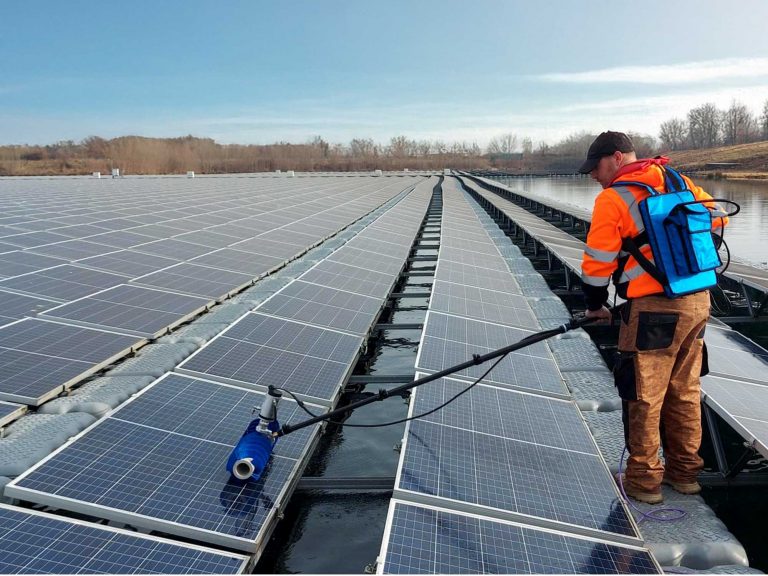
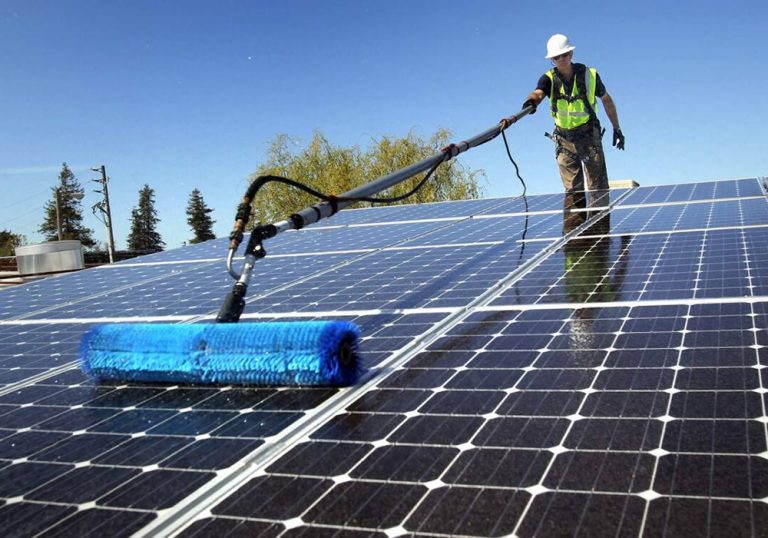
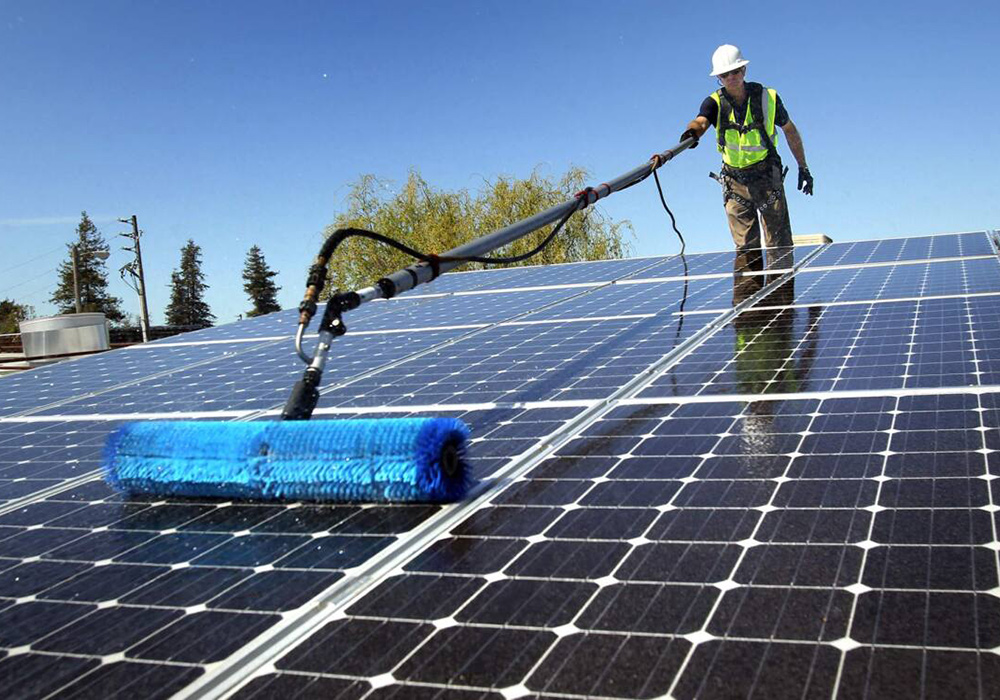
When comparing solar panel cleaning providers in South Sydney, the key differentiators are the water type used, the inspection scope included and whether the service is documented with before and after photography.
A provider using deionised or reverse osmosis water delivers a fundamentally different result to one using mains tap water. The difference is visible in output figures within days of the service and persists over the period between cleans.
For South Sydney homeowners wanting local service information relevant to their area and property type, GutterGorilla’s South Sydney page provides detail on what is available locally.
Full information on what GutterGorilla’s professional solar panel cleaning service covers, including equipment, technique and what to expect from the process, is available on their solar panel cleaning page.
Dirty solar panels in South Sydney do not announce their underperformance. The inverter still shows numbers. The system still runs. The household still gets a bill that is lower than it would be without solar. But behind those numbers is a gap between what the system is delivering and what it should be delivering, and that gap widens every month a clean is overdue.
For an investment that most South Sydney homeowners paid between $6,000 and $12,000 to install, the case for spending $200 to $300 once or twice a year to protect its output and longevity is one of the cleaner financial decisions in home maintenance. The cost of doing nothing is real, it accumulates daily, and it is entirely avoidable.