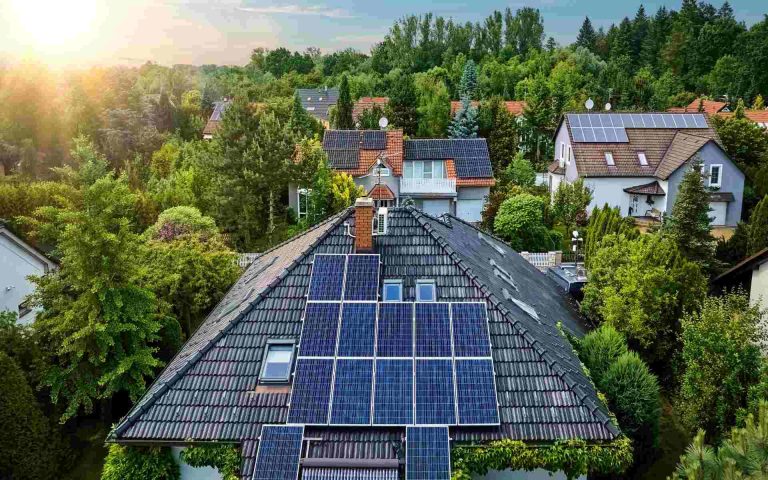
Western Sydney has one of the highest concentrations of rooftop solar installations in New South Wales. Suburbs from Parramatta and Blacktown through to Penrith, Liverpool, and Campbelltown have embraced solar energy in large numbers, driven by strong generation potential, rising electricity costs, and attractive feed-in tariff structures that made the economics compelling.
What many of those homeowners do not realise is that the same environmental conditions that make Western Sydney such a productive solar location also create specific maintenance demands that, when unmet, silently erode the financial returns the system was installed to deliver. The problem is real, measurable, and far more common than the solar industry’s marketing tends to acknowledge.
Western Sydney sits in a climate zone that differs significantly from the coastal suburbs most people associate with solar energy discussion. Inland from the coast moderating influence, the region experiences hotter summers, colder winters, higher dust loads, and greater temperature variation than Sydney’s eastern and northern beaches suburbs. Each of these characteristics has direct consequences for solar panel performance and maintenance requirements.
Western Sydney is one of the dustiest urban environments in Australia outside of regional outback areas. The region sits downwind of significant rural land to the west and south-west, and during the hot, dry months from November through to March, westerly and north-westerly winds carry fine particulate matter from agricultural areas, cleared land, and bushfire smoke into the suburban environment.
This dust settles on every horizontal and angled surface, including solar panels. Unlike coastal salt deposits, which are sticky and hygroscopic, dust in Western Sydney is fine-grained and tends to accumulate in a thin, even layer across panel surfaces. The effect is a reduction in light transmission that is proportionally consistent across the array rather than concentrated in specific spots.
Research into solar panel soiling in Australian conditions consistently shows that dust soiling produces output losses in the range of three to eight percent under typical conditions, with higher losses during extended dry periods followed by a single rain event that creates a muddy residue rather than cleaning the surface. A Western Sydney system that has not been cleaned for six months can easily be operating at five to seven percent below its clean performance level throughout that entire period.
Solar panels produce less electricity as they heat up, a characteristic described by the temperature coefficient of power in panel specifications. Western Sydney regularly records summer temperatures above 35 degrees Celsius, with heatwave periods pushing to 40 degrees and above in areas like Penrith and Richmond.
At these temperatures, panels operating in full sun can reach surface temperatures of 60 to 75 degrees Celsius. Depending on the temperature coefficient of the specific panel model, output at these temperatures can be ten to fifteen percent lower than the standard test conditions used to calculate rated output. A homeowner who purchased a system based on projected annual output figures may not realise that those figures assumed standard conditions that the panels only experience during cooler months.
This is not a maintenance issue that can be resolved by cleaning, but it is a hidden cost in the sense that it reduces actual returns relative to reasonable expectations. Understanding it helps homeowners interpret monitoring data correctly and avoid attributing normal seasonal variation to system faults.
The combination of soiling losses, temperature derating, and in older systems, natural panel degradation, creates a gap between what a Western Sydney solar system was designed to produce and what it is actually producing. For a moderately sized 6.6 kilowatt system, a combined soiling and temperature-related underperformance of eight to twelve percent over a full year represents hundreds of dollars in lost generation value annually.
Over the ten to fifteen years that most households keep their original solar system before considering an upgrade, that cumulative loss is substantial. The hidden cost is not a single dramatic event. It is the slow, consistent underperformance that never generates a complaint because the homeowner has no easy way to know it is happening.
Beyond the Western Sydney-specific environmental conditions, there are system-level problems that affect solar installations across Greater Sydney and produce financial consequences that compound over time.
Solar panels are typically warranted for twenty-five years of performance. Solar inverters are warranted for ten to twelve years in most cases, with a realistic operational life of twelve to fifteen years for quality brands and somewhat less for budget equipment. Many of the systems installed during the solar boom of 2010 to 2015 in Western Sydney are now at or approaching inverter end-of-life.
An inverter that is degrading may not fail catastrophically. It may instead produce increasingly frequent fault events, operate inefficiently under certain conditions, or reduce output during high-temperature periods when cooling capacity declines. The monitoring data from a degrading inverter may show inconsistent patterns that are difficult to interpret without technical knowledge.
A homeowner who replaces their inverter when it is genuinely at end-of-life, rather than waiting for complete failure, avoids the extended periods of reduced output or non-generation that occur when a failing inverter is in service. The financial case for proactive replacement is often stronger than it appears when the cost of lost generation during a declining inverter’s final operational years is factored in.
Western Sydney’s established suburban areas have mature tree canopies that were not always considered adequately when solar systems were installed. As trees have grown over the decade-plus since installation, shading that affects panels during peak generation hours has developed on properties where the original design assumed an unshaded array.
In string inverter systems, which remain the most common configuration in Western Sydney’s residential solar fleet, shading of even one panel in a string reduces the output of every other panel in that string to match the shaded panel’s reduced output. A single branch shading ten percent of one panel’s face during peak hours can therefore reduce the output of six, eight, or ten panels simultaneously.
The financial impact of string shading is disproportionate to the physical area of the shade. Homeowners who have noticed a persistent underperformance relative to earlier years should include a shading assessment in any diagnostic inspection, as shading growth is one of the most common causes of unexplained output decline in older Western Sydney systems.
New South Wales feed-in tariff rates have declined significantly from the early solar installation era. Where homeowners once received premium rates for exported generation, current rates are substantially lower. In this environment, the financial case for maximising self-consumption has become more important than maximising total generation.
A soiled panel that reduces generation by six percent has a greater financial impact in the current tariff environment than it did when feed-in rates were higher, because each unit of lost generation that would have been used for self-consumption is now replaced by grid electricity at full retail price. The cost of the soiling loss has therefore effectively increased as tariff structures have changed.
The pattern of hidden performance loss in Western Sydney solar systems is not speculative. It follows from well-documented mechanisms that are consistent with the environmental characteristics of the region.
Solar technicians and cleaning services working across Western Sydney report a consistent pattern in properties where systems have not been maintained. Panels carrying six to eighteen months of accumulated dust, often with a baked-on mud residue from a single rain event following an extended dry period, producing measurably below their clean benchmark on equivalent weather days.
Beyond soiling, inspections of older systems are identifying:
None of these issues is unusual for systems approaching ten to fifteen years of age in Western Sydney conditions. What makes them financially significant is the combination of multiple factors affecting the same system simultaneously, each contributing a small percentage loss that adds up to a meaningful total.
A substantial proportion of Western Sydney homeowners with solar systems do not actively monitor their generation data. Some have inverters without remote monitoring capability. Others have monitoring set up but do not review it regularly. Many use the very basic check of looking at the inverter display occasionally to confirm it is running.
This monitoring gap means that performance losses accumulate undetected. A system that has lost twelve percent of its output to combined soiling, shading growth, and minor panel degradation is still producing eighty-eight percent of its potential. It does not look broken. It generates power every sunny day. Without a monitoring baseline and regular data review, the homeowner has no way to know what they are missing.
The financial losses from hidden solar performance issues in Western Sydney are real but largely preventable with a structured maintenance approach.
If your inverter has remote monitoring capability, review the generation data for the past twelve to twenty-four months and identify any pattern of declining output relative to earlier periods on equivalent weather days. If monitoring capability is not currently set up, ask your installer or an accredited solar electrician about adding it. The visibility it provides is worth the modest cost.
The most important clean of the year for a Western Sydney solar system is the one carried out in September or October before the hot, high-generation summer months begin. Entering summer with clean panels ensures that the highest-value generation period of the year is not compromised by accumulated soiling.
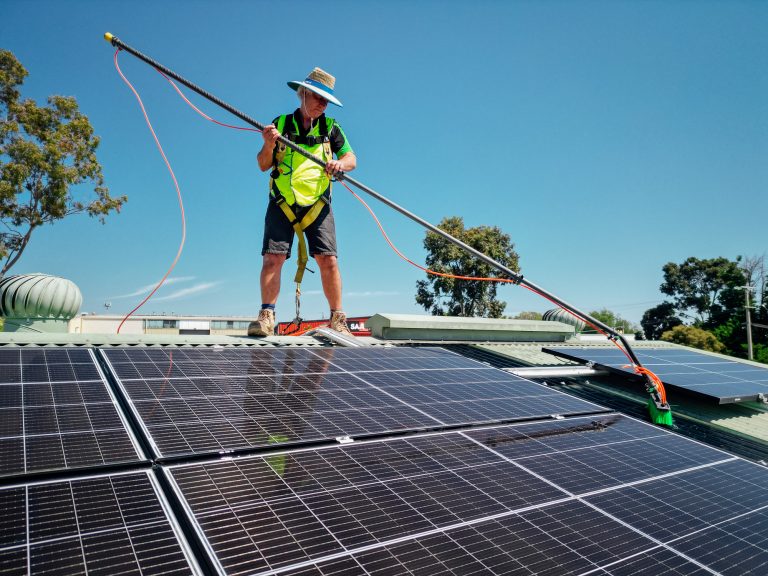
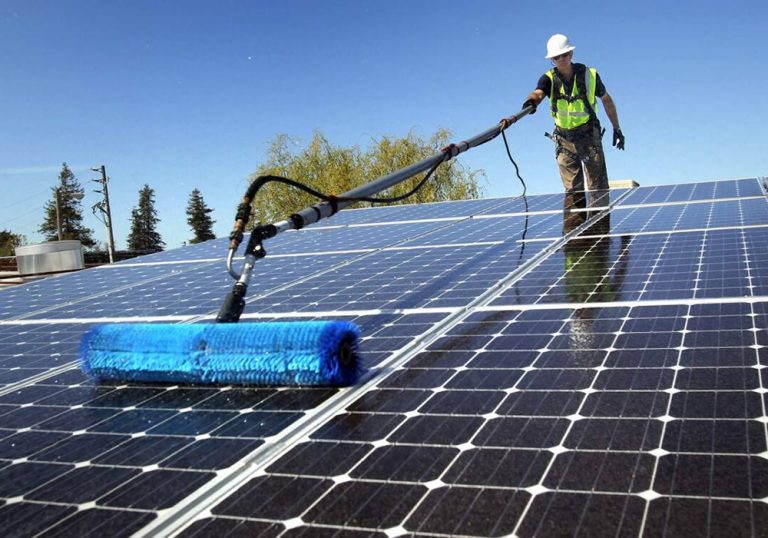
Professional solar panel cleaning uses appropriate water quality and cleaning technique to remove baked-on dust and muddy residue without damaging anti-reflective coatings or panel frames. DIY cleaning with garden hoses and inappropriate brushes can scratch panel surfaces or force water into electrical components.
Western Sydney systems installed between 2010 and 2016 are now old enough to have developing component-level issues that a cleaning alone will not identify. A comprehensive inspection by a Clean Energy Council accredited installer should cover panel condition including micro-crack assessment, inverter log review, mounting hardware condition, cable inspection, and an updated shading analysis.
If your system was installed more than five years ago, carry out or commission a shading assessment that reflects current vegetation and neighbouring structure heights. If string shading is identified as a significant factor, discuss with a qualified installer whether adding power optimisers to affected strings, reconfiguring the array layout, or selective tree management is the most cost-effective response.
If your inverter is approaching or past ten years of age, get a quote for replacement and factor the timing into your financial planning. Replacing an inverter on your schedule, when the market for suitable products is competitive and installation can be planned, is significantly more cost-effective than an emergency replacement after failure during a high-generation period.
For Western Sydney homeowners looking for locally relevant information on solar maintenance services in the region, the Western Sydney page outlines what professional services cover in this area and what to expect from an inspection and clean visit.
The hidden solar panel problem in Western Sydney is not a single dramatic failure. It is the steady, compounding accumulation of soiling losses, temperature performance gaps, shading growth, and ageing component effects that together reduce what a system delivers relative to what it should. The dollar value of that gap is real, measurable, and in most cases, largely recoverable through appropriate maintenance. Homeowners who understand the conditions their system operates in and maintain it accordingly are the ones who realise the full financial benefit of their investment over its operational lifetime.