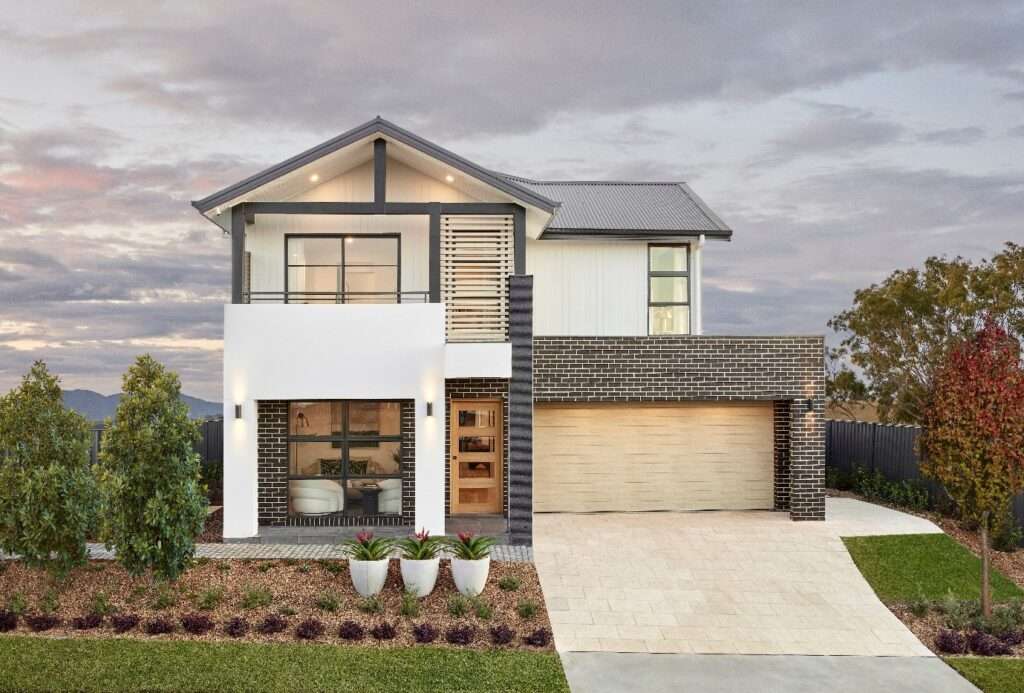
Buying a new home should come with confidence that the major building systems are installed correctly and will perform as intended. For many Western Sydney homeowners, that confidence is tested sooner than expected. Roof leaks, gutter overflow, and drainage failures in properties that are only one or two years old are common enough in the region to constitute a pattern rather than an exception.
This is not an unavoidable reality of new construction. It is the predictable outcome of specific conditions that have characterised the Western Sydney building industry during sustained periods of high activity. Understanding those conditions, knowing what to look for, and being clear on what homeowners can do about it are the practical foundations for protecting a significant investment.
The growth corridor suburbs of Western Sydney, stretching from the Hills District and Blacktown through to Penrith, Camden, and the south-west corridor around Campbelltown and Liverpool, have produced an enormous volume of new housing over the past decade. That volume of construction has created conditions where defects in roof and drainage systems are more likely to appear than they would in a slower, more measured construction environment.
Roofing is a skilled trade. Correct installation of tiles, metal cladding, ridge capping, flashings, valley systems, and guttering requires both technical knowledge and consistent attention to detail across every stage of the installation. During periods when construction is running at high volume, experienced roofing tradespeople are in short supply relative to the number of concurrent projects requiring their work.
The practical consequence is that roofing crews in busy markets are often operating at the outer limits of their capacity, working multiple sites simultaneously, supervising less experienced workers more thinly, and progressing each project quickly to meet construction program demands. Quality outcomes in these conditions are less consistent than in lower-pressure environments.
The defects that result from this pressure are not always immediately visible. A flashing that has not been sealed adequately may perform through months of normal rainfall before a wind-driven storm event exposes the inadequacy. A gutter section that has been fixed at insufficient fall may retain water and begin to cause fascia deterioration months after handover.
The National Construction Code sets minimum requirements for residential roof drainage systems, including gutter sizing, downpipe capacity, and stormwater discharge provisions. These requirements are based on design rainfall intensity values for specific locations, and Western Sydney’s values are higher than those applicable to much of the rest of Greater Sydney due to its inland position and exposure to intense convective storm activity.
The gap between what the code requires for a Western Sydney site and what a standard residential drainage package delivers is a common source of performance problems. A builder who applies a generic drainage specification without calculating it against the local design rainfall intensity may produce a system that is compliant for a lower-intensity rainfall zone but is genuinely undersized for Western Sydney conditions.
The result is a gutter system that overflows in the first significant storm after occupation and continues to overflow during every subsequent storm season. To the homeowner it looks like a blockage or a defect. To the builder it may appear to be an acceptable result from a standard installation. The actual problem is a design specification that does not reflect local conditions.
Flashings at roof penetrations, parapet junctions, and valley transitions are among the most technically demanding elements of a residential roof installation. They require accurate measurement, correct material selection, proper bedding or mechanical fixing, and careful sealing at all edges and laps. When any of these steps is not executed correctly, the result is a point of water entry that may not be obvious until the first high-wind, high-intensity storm tests it.
New Western Sydney homes are built at a density and pace that does not always allow for the level of quality control inspection that would catch flashing defects before the property is completed and handed over. In some cases, flashings are installed and then covered by subsequent work, making post-construction identification difficult without specialist diagnostic methods.
Beyond the broad construction environment factors, several specific mechanisms explain the failure patterns that new homeowners report.
Western Sydney experiences significantly greater temperature variation than coastal suburbs. Summer temperatures regularly exceed 38 to 40 degrees Celsius in areas like Penrith and Richmond. Winter nights can drop to near freezing. The temperature range that a roof surface experiences across a full year in Western Sydney is substantially greater than the same material would experience at the coast.
Metal roofing, gutters, and flashings all expand and contract with temperature. A correctly installed system accommodates this movement through expansion joints, flexible sealants, and appropriate fixing methods. When expansion accommodation is insufficient, or when sealants that have not been specified for the local temperature range are used, thermal movement creates stress at fixed points that progressively opens joints, lifts flashing edges, and works fixings loose.
This type of failure often does not appear in the first year. It accumulates over several thermal cycles before the stress concentration at a particular joint or fixing point exceeds what the installation can accommodate.
Gutter brackets support the gutter profile and maintain its pitch toward the downpipe. Australian standards specify maximum bracket spacing based on the gutter profile, material, and the expected load from rainfall and debris. When brackets are installed at excessive spacing, which is a common shortcut in fast-paced construction environments, the gutter run deflects under load, creating low points that retain water and eventually cause sagging visible as early as twelve months after installation.
In Western Sydney, where storm events can saturate a gutter with both water and wind-deposited debris simultaneously, the dynamic load on a gutter during a peak event can be substantial. A bracket spacing that was marginal under normal conditions may produce visible deflection after the first significant storm, and once the gutter has sagged, the low point it creates accelerates debris accumulation and further deterioration.
Sarking, the reflective membrane installed beneath roof tiles or metal sheeting, provides a secondary barrier against water entry and contributes to the thermal performance of the roof. Its correct installation requires careful lapping at joins, proper fixing at edges, and attention to how it integrates with flashings and valley liners.
In new Western Sydney homes where sarking has been installed hastily or without adequate supervision, common defects include insufficient lap at joins that opens under roof movement, inadequate fixing at eave edges that allows wind to lift the membrane, and failure to correctly integrate sarking with flashings so that any water that passes the primary surface is directed out of the roof system rather than tracked into the ceiling space.
These defects may not produce a leak during normal rainfall. They become apparent during the type of sustained storm with strong wind component that Western Sydney experiences regularly during summer.
For homeowners dealing with roof or drainage problems in a new Western Sydney property, the response pathway begins with understanding the legal framework that protects them.
New South Wales law provides statutory warranty protection for residential building work under the Home Building Act 1989. The warranties most relevant to roof and drainage defects include:
A roof that leaks due to defective installation, a gutter system that overflows because it was incorrectly sized or installed at insufficient fall, and a flashing that fails because it was not correctly bedded are all within the scope of these statutory warranties. The warranty runs from the date of completion of the building work.
Homeowners should document any defects in writing and submit them to the builder formally. If the builder does not respond appropriately, the matter can be escalated to NSW Fair Trading. Keeping detailed records from the outset, including dated photographs, weather conditions during leak events, and all communications with the builder, makes a warranty claim significantly easier to pursue.
The most effective way to identify warranty-actionable defects in a new Western Sydney home is to commission an independent building inspection from a licensed inspector within the first year of occupation. An experienced inspector will assess the roof and drainage system systematically, identify deviations from code requirements and manufacturer installation specifications, and produce a documented report that forms the basis for a warranty claim.
Many new homeowners are surprised by the number of defects that a thorough inspection identifies in a recently completed property. This is not unusual. End-of-construction sign-off by builders focuses on completion rather than detailed performance testing, and minor defects that will become significant problems can pass unnoticed without systematic independent assessment.
When gutter and drainage defects are identified in a new property, the question of whether to pursue a warranty claim or to seek a practical repair depends on the severity, the builder’s responsiveness, and the homeowner’s circumstances. For significant defects, the warranty pathway is appropriate. For minor issues where the builder has already been unresponsive, having the defects documented and then repaired by a qualified professional creates an evidentiary record while restoring the system to function.
For Western Sydney homeowners whose gutter or drainage system requires professional rectification, the gutter repair page outlines what professional repair services involve and what a qualified assessment of a defective system covers.
The relationship between roof condition and property value outlined in the Gutter Gorilla article on the powerful link between roof maintenance and property value is relevant here: defects that are not addressed within the warranty period can reduce a property’s value at future sale in ways that exceed the cost of the repair itself.
The pattern of roof and drainage complaints from new Western Sydney homeowners has drawn attention from both regulatory bodies and consumer advocates. Understanding the broader context helps individual homeowners see their experience in perspective and understand what resources are available to them.
NSW Fair Trading data on building complaints consistently shows that residential construction defects are among the highest-volume complaint categories across the state. Within building complaints, roofing and waterproofing issues are among the most frequently reported defect types. The western growth corridors produce a disproportionate volume of these complaints relative to their share of the overall housing stock, which reflects the specific construction environment described throughout this article.
This complaint volume is not simply a reflection of homeowner expectations. It reflects genuine defects in building work that falls short of the standard required by law and by reasonable construction practice.
For new Western Sydney homeowners who have not yet encountered a problem, the most productive approach is proactive:
For more information on Western Sydney-specific gutter and drainage services and what professional maintenance covers in the region, the Western Sydney page provides details on locally available services and what to expect from a maintenance or repair visit.
New homes in Western Sydney develop roof problems for reasons that are well understood and, in most cases, legally actionable within the statutory warranty period. The construction environment that produced them, high volume, compressed timelines, variable quality control, and design specifications that do not always reflect local conditions, is documented and its consequences are predictable. Homeowners who understand this, who document their observations carefully, and who engage their warranty rights promptly are the ones who achieve resolution at the builder’s cost rather than their own.