Ask most Australian homeowners whether they understand that gutters filled with leaf debris create a fire risk and most will say yes. Ask them what a dangerous amount of debris looks like, how quickly an ignition in a gutter can progress to a structural fire, or what the science behind the risk actually is, and the answers become much less clear.
The gap between general awareness of the risk and specific understanding of how it works is where the danger lives. A homeowner who knows debris is bad but assumes their modest accumulation is not enough to matter may be wrong in ways that have serious consequences. This article explains the mechanics behind why even small amounts of roof debris create genuine fire risk, what makes debris in particular locations especially dangerous, and what the practical responses are.
The starting point for understanding why small amounts of roof debris are dangerous is understanding how bushfire ember attack actually works. The mechanism is more specific, more targeted, and more dependent on the characteristics of the debris environment than most people appreciate.
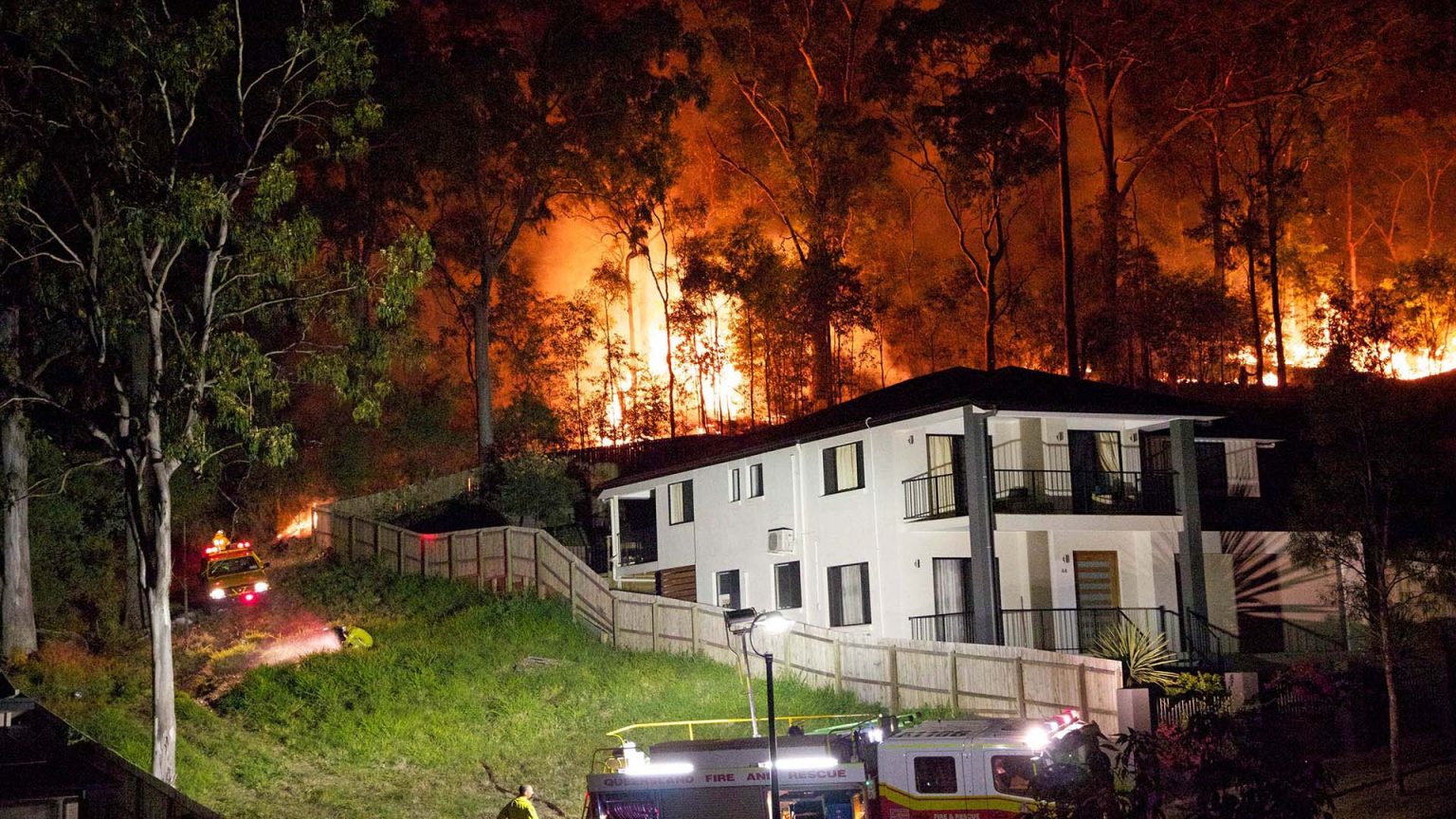
Australian bushfires kill homes through ember attack far more commonly than through direct flame contact. Research from the Bushfire and Natural Hazards Cooperative Research Centre consistently shows that the majority of homes lost in significant Australian fire events are ignited by embers rather than by the advancing fire front. Embers travel ahead of, around, and well beyond the fire front on wind currents, and they do not require a large fuel load to ignite. They require a receptive surface: something that will catch, hold, and sustain combustion from a brief energy input.
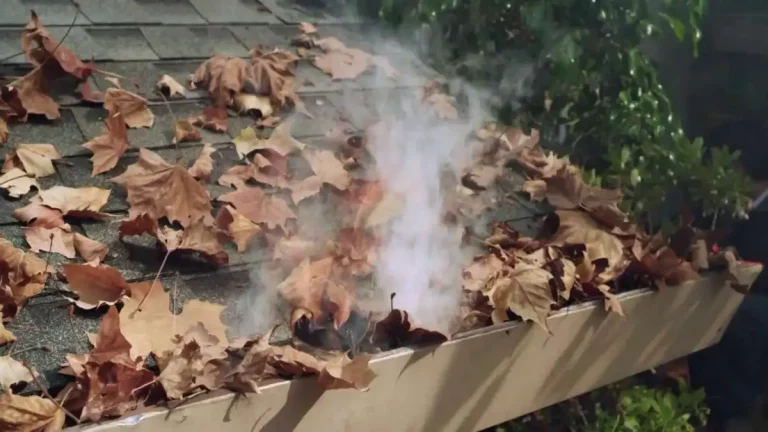
This is where the characteristics of roof debris become critical. A loose sheet of bark, a cluster of dry eucalyptus leaves, or a compacted layer of fine organic material in a gutter channel are each a receptive surface for ember ignition. They do not need to be a substantial accumulation to provide the ignition conditions an ember needs. They need only to be dry, contained, and accessible to wind that provides oxygen.
There is a misconception among homeowners that fire risk from gutter debris is primarily about large accumulations, gutters that are visibly packed with leaf litter and overflowing. The reality is that the ignition risk does not scale linearly with the volume of debris. It scales with the fuel moisture content of whatever debris is present and the configuration in which it sits.
A small amount of fine, dry bark dust sitting in a gutter valley on a thirty-five degree day with forty kilometre per hour winds has a fuel moisture content potentially below five percent. Research on fine fuel ignition thresholds shows that material at this moisture level ignites readily from small energy inputs and sustains combustion even when the initial fuel volume is modest.
An ember that lands in this small amount of dry material does not need a full gutter of debris to start a fire. It needs enough material to maintain combustion while it contacts adjacent surfaces, which in the case of a gutter means the fascia board, the timber rafter end, or the roof batten visible at the gutter edge. Once combustion transfers from the debris to a structural element, the fire has moved from a debris event to a building fire.
Roof debris accumulates in multiple locations: on flat tile surfaces, in valleys where two roof planes meet, on the upper surface of gutter guards, and inside gutter channels. Of these locations, the gutter channel is where the risk profile is most severe, for two reasons that relate directly to the physics of fire ignition.
The first is containment. An ember that lands on an open tile surface and ignites a small amount of debris there is burning in a location where the fire can spread outward in multiple directions onto surfaces that may or may not be combustible. An ember that lands in a gutter channel ignites debris that is contained within a metal or plastic channel, directing the heat from combustion toward the channel walls, the fascia behind the gutter, and the rafter end directly adjacent. The geometry of the gutter concentrates the heat rather than dispersing it.
The second is airflow. A gutter channel acts as a natural wind tunnel along the roofline. Wind moves through the channel, fanning any ignition source from below and providing continuous oxygen. The same airflow that clears loose debris from open surfaces accelerates combustion in the confined geometry of the gutter channel.
Understanding why roof debris is so ignition-prone explains why the risk threshold is lower than most homeowners assume.
Fuel moisture content is the primary determinant of whether organic material will ignite from ember contact. Fine fuels, which include leaves, bark fragments, and organic dust, respond rapidly to atmospheric conditions. In hot, dry weather, fine fuels can reach critically low moisture levels within hours of the previous rainfall. On a day where the temperature is above thirty-five degrees Celsius, relative humidity is below twenty percent, and wind speed is above thirty kilometres per hour, fine fuel moisture content across the landscape can be in the range of three to eight percent.
At these moisture levels, fine fuels ignite from very small energy inputs, including a burning ember no larger than a matchhead. The material at this moisture level burns rapidly and produces embers of its own that can extend the combustion event.
In Australian El Niño years, where extended dry periods precede fire seasons and vegetation is under drought stress, gutter debris reaches critically low moisture content earlier in the season and maintains it through longer periods than in average rainfall years. The articles on the hidden bushfire risk in gutters during El Niño conditions and on whether leaf-filled gutters make North Shore homes more vulnerable to bushfires provide additional context on how these climate and geographic factors combine to elevate risk in specific locations and seasons.
Not all roof debris carries equal fire risk. The risk varies by particle size, species origin, and the structural characteristics of the material.
Fine organic particles, including bark dust, small leaf fragments, and the powdery residue of decomposed debris, present the highest ignition risk because they have a very high surface area to volume ratio. More surface area exposed to atmospheric conditions means faster drying and faster moisture loss. More surface area exposed to an ignition source means more efficient heat transfer and more complete ignition from a small energy input.
Australian eucalypts produce large quantities of fine bark material that is particularly high-risk. Stringybark in particular sheds fibrous, feather-light bark that packs loosely in gutter channels, provides significant air pockets between particles, and presents an extremely high surface area to each particle’s mass. This material type is known to fire agencies as one of the most ember-receptive fine fuels in the Australian landscape.
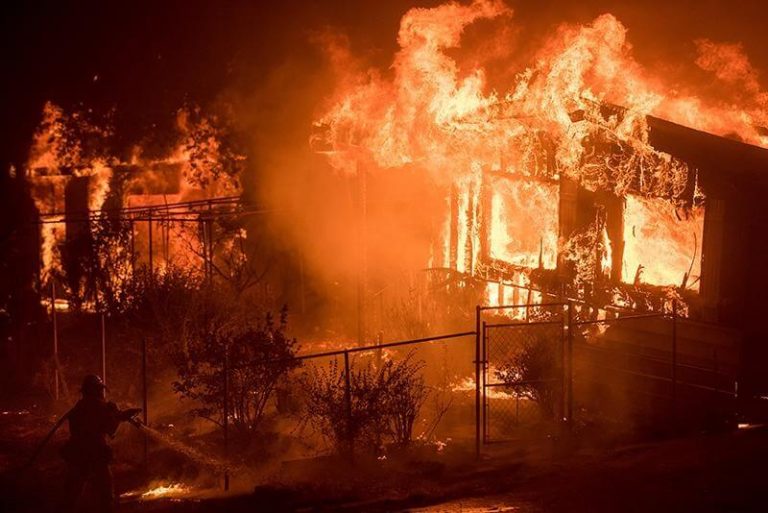
The progression from debris ignition to structural involvement is faster than most homeowners visualise. If fine debris in a gutter ignites, the initial combustion produces heat that is conducted through the gutter material to the fascia board and rafter end in direct contact with the gutter. Timber heated to sufficient temperature autoignites, and at that point the fire has moved from a combustible fuel source to the structural material of the building.
On a high fire danger day with strong winds, the time between ember contact with dry debris in a gutter and observable flame involvement of the fascia can be measured in minutes. This is the timescale within which home defence, if any is attempted, must operate. It underscores why prevention, in the form of a debris-free gutter entering fire season, is a fundamentally different category of protection from any reactive response to ignition.
Fire prevention through debris management is one of the most direct actions available to Australian homeowners in bushfire-prone areas. The guidance from fire agencies is consistent and the research behind it is strong.
The single most effective action is ensuring gutters are clear before the onset of fire-dangerous conditions. In most of south-east Australia, this means completing a thorough gutter clean by the end of September. In El Niño years, this should be moved forward to August to account for the earlier onset of extreme fire weather days that above-average fire seasons produce.
The clean should not just remove surface debris from the gutter channel. It should include clearing of gutter valley sections where debris accumulates at the junction of two roof planes, removal of material from the upper surface of any installed gutter guards, and flushing of downpipes to ensure that the system is fully functional for both drainage and fire season management.
Debris on the roof surface itself is a secondary risk that homeowners often overlook when focusing on the gutters. Debris that accumulates on flat tile surfaces, in the low points of valley areas, or against any upstand or penetration on the roof can provide an ignition pathway that connects to the structure. After any significant wind event that deposits debris during the fire season, a visual check of the roof from ground level with binoculars can identify accumulations worth addressing.
For properties where debris input is high and the interval between cleans is long enough to allow meaningful re-accumulation, gutter guards that comply with AS 3959 Construction of Buildings in Bushfire-Prone Areas provide a tested product category that specifically addresses the ember penetration and debris accumulation problems relevant to fire risk.
The important distinction is that not all gutter guards provide ember attack protection. Standard consumer mesh products are not necessarily tested or rated for this purpose. The article on whether gutter guards are worth it for Western Sydney homes covers the product specification considerations in detail, including which product categories are relevant in bushfire exposure zones.
Properties in bushfire-prone areas across Australia are assigned Bushfire Attack Level ratings that quantify the expected fire threat at the specific site based on vegetation proximity, slope, and regional fire behaviour. Understanding your BAL rating provides a framework for interpreting how much urgency applies to your fire preparation, including gutter management.
A BAL-12.5 property in a semi-rural fringe suburb and a BAL-40 property on a north-facing slope adjacent to dry eucalypt woodland have fundamentally different risk profiles, even if both have debris in their gutters. BAL rating information is available from your local council or state planning authority.
Homes with rooftop solar installations have a second debris accumulation zone that many homeowners are not aware of: the space beneath the panel array. Fine debris that blows across the roof surface accumulates in the shadow zone beneath the panels and is sheltered from the rainfall that would otherwise remove it from an open surface.
This debris accumulation beneath solar panels is invisible from the ground and from any standard gutter inspection position. It represents a genuine secondary fire risk because the debris is close to the roof surface, sheltered from moisture, and can contain material that has been drying and concentrating for extended periods between inspections.
Professional solar panel cleaning that includes inspection and clearance of the space beneath the panel array addresses this second debris zone in the same service visit. This should be scheduled as part of pre-fire-season preparation on any property with both solar panels and bushfire exposure.
The materials that make up Australian roofs interact differently with ignition events from debris, and understanding these differences helps homeowners make informed decisions about both prevention and, in some cases, material selection for future roof work.
Concrete and terracotta tiles are inherently non-combustible. A fire that starts in gutter debris on a tiled roof does not have a direct pathway to spread across the tile surface. The risk on a tiled roof is primarily through the gutter to fascia pathway described earlier, and secondarily through any accumulation in tile joints, broken tiles, or the valley areas where combustible underlining materials may be exposed.
On tiled roofs, the critical junction is the gutter to fascia to rafter end connection. Keeping this area clear of debris eliminates the most direct ignition pathway.
Corrugated metal roofing presents a different risk profile. While the metal itself is non-combustible, the profile of corrugated iron and Lysaght style metal sheeting creates channels along the roof surface that can direct embers toward the roof edge and into the gutter. On metal roofs, the interface between the roof sheeting and the gutter is a critical zone, and debris accumulation in the corrugation channels adjacent to the gutter edge is a specific risk point.
Older corrugated iron roofs with gaps at the verge and eave edges also provide a pathway for burning embers or debris to enter the roof cavity directly, where they can contact combustible materials including sarking, insulation, and timber battens.
In homes where sarking is installed beneath the roof surface, the combustibility of the sarking material is relevant to how quickly a gutter or eave ignition progresses into the roof structure. Older non-compliant sarking materials that are combustible can allow rapid fire progression from an external ignition point into the roof cavity. Current standards specify fire-resistant sarking in bushfire-prone areas, but older homes may not meet this standard.
Small amounts of roof debris create serious fire risks because the physics of ignition does not depend on large fuel volumes. It depends on moisture content, configuration, and proximity to structural materials. In the Australian fire environment, where ember attack is the primary ignition mechanism and where fire weather conditions can push fine fuel moisture to critically low levels rapidly, even modest debris accumulations in gutters and on roof surfaces represent a genuine risk. The response is the same regardless of how much debris is present: clear it before the season that makes it dangerous, and maintain that clear state through the highest-risk periods of each year.