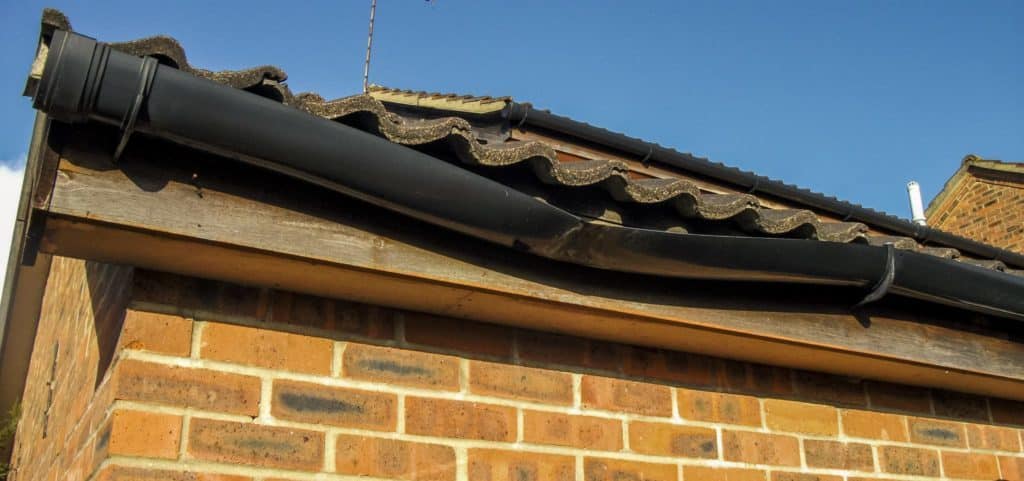
A sagging gutter is one of those problems that starts as a minor visual concern and quietly becomes a significant structural and drainage issue. On Western Sydney homes, where the combination of an ageing housing stock, intense storm seasons, and specific environmental conditions creates an unusually demanding environment for gutter systems, sagging is among the most common maintenance problems homeowners encounter.
Understanding what actually causes gutters to sag, why the problem is more prevalent in Western Sydney than in many other parts of Greater Sydney, and what the appropriate response looks like helps homeowners act before a cosmetic issue becomes an expensive repair.
Gutter sagging is not a single problem with a single cause. It is the visible outcome of one or more underlying failures in the system that connects the gutter profile to the building. Identifying which failure is responsible determines what needs to be fixed and whether a targeted repair or a more comprehensive intervention is the appropriate response.
The most immediate cause of gutter sagging in Western Sydney is the accumulated weight of debris and water in the gutter channel. A gutter that is partially or fully blocked cannot drain freely, which means it carries a persistent weight load between rain events that it was not designed to sustain continuously.
A single metre of standard residential gutter profile filled to capacity with wet, compacted leaf debris and standing water can weigh considerably more than the same section in clean, dry condition. Multiply this across a long run of blocked gutter and the total weight loading on brackets and fascia fixings is substantially beyond the design assumption of a clean, free-draining system.
In Western Sydney, where native eucalypts, paperbarks, and other vegetation shed continuously throughout the year, gutters can accumulate significant debris loads between cleans. When storms arrive and add rainfall to this loading, the combined weight frequently exceeds what degraded fixings or softened fascia can support.
Western Sydney experiences more frequent and more intense severe weather events than most other parts of Greater Sydney. As covered in the article on how Western Sydney storms create serious roof and gutter damage, the region sits within a geography that makes it particularly exposed to fast-moving storm cells that deliver hail, high winds, and concentrated rainfall in short periods.
Each storm event that drives large volumes of water and wind-stripped debris into gutters tests the loading capacity of the bracket and fixing system. In a new installation with intact brackets and sound fascia, this loading is manageable. In an older installation where brackets have corroded, fixing screws have loosened, or the fascia timber has softened, each storm event applies stress that incrementally widens any existing sag.
The structural explanation for gutter drooping runs through the components that hold the gutter in position. Each of those components has a service life that is affected by age, material quality, maintenance history, and the specific environmental conditions of the property.
Gutter brackets hold the gutter profile at the correct pitch and carry the dead load of the gutter system plus the dynamic load of rainfall. In older Western Sydney homes, brackets installed in the 1970s, 1980s, and 1990s are frequently showing significant corrosion. The galvanised or painted steel brackets used in this era have a finite coating life that, in most cases, has long been exceeded.
A corroded bracket does not fail all at once. It loses load-bearing capacity gradually as the cross-section of intact metal reduces. The bracket continues to hold the gutter in position through light conditions and moderate rain, but under a fully loaded gutter in storm conditions, it fails and the gutter sags between the failed bracket and the next intact one on either side.
Bracket failure is particularly common in sections of the gutter run that carry the highest water volume during storm events, specifically at internal corners, in valleys, and in longer runs without intermediate fixing points.
Gutter brackets attach to the fascia board with screws. The screws’ ability to hold the bracket in position depends entirely on the integrity of the timber they are fixed into. Fascia boards that have been repeatedly wetted from gutter overflow, from rain dripping behind loose gutter lips, or from condensation have degraded timber fibres that no longer grip fixing screws reliably.
In Western Sydney homes where gutters have been overflowing for extended periods, the fascia is frequently in poor condition along the same sections where the overflow occurs. This creates a self-compounding problem: the blocked gutter overflows, wets the fascia, the fascia softens, the fixings loosen, the gutter sags, the sag creates a low point that accumulates more debris and water, and the cycle continues.
Screw withdrawal from softened fascia is one of the most common causes of progressive gutter sagging on older Western Sydney properties and is typically identified during a professional inspection by pressing on the gutter bracket and feeling whether it pulls away from the fascia surface.
In addition to fixing failures, the gutter profile itself can deform under sustained loading. This is more common in lightweight or lower-gauge gutter products and in older profiles that have experienced corrosion at the base, where standing water concentrates and where metal section loss reduces the structural rigidity of the profile.
A gutter profile that has lost rigidity from base corrosion will deform downward between brackets even if the brackets themselves remain intact. The visible result is a gentle curve between bracket points that becomes more pronounced over time as the metal weakens further.
Metal gutters expand and contract with temperature changes. In Western Sydney, where summer temperatures regularly exceed 35 degrees Celsius and winter nights can drop to single figures, the temperature range experienced by a gutter run across a year is significant. A long gutter run experiences considerable dimensional change between its hottest and coolest points.
Gutter systems accommodate this movement through expansion joints and flexible end caps. When these components are absent, incorrectly installed, or have deteriorated, thermal movement creates stress at fixed points that can gradually work screws loose, fatigue metal at joints, and contribute to progressive pitch change across the run.
Beyond the age-related failures described above, several installation-specific factors contribute to premature sagging in Western Sydney gutters.
Australian standards for gutter installation specify maximum bracket spacing based on gutter profile, material, and expected loading conditions. In practice, particularly in older installations and in some budget new installations, brackets are sometimes placed at intervals wider than standards recommend. The result is a gutter run with insufficient fixing points to distribute the load from debris and rainfall without deflecting between brackets.
A gutter with excessive bracket spacing may appear correctly installed when new and may function adequately under light loading. It is under the conditions of a full debris load combined with a heavy rain event that the insufficient fixing interval becomes apparent as a visible sag.
Gutters should be installed with a consistent slope toward the downpipe so that water drains freely by gravity. When the initial pitch is incorrectly set, water does not drain completely from low points in the run. These persistent low points accumulate fine sediment over time, create conditions for biological growth, and hold water weight between events.
Incorrect pitch is common in older Western Sydney homes where the original installation may have been carried out to less rigorous standards than current practice, and where subsequent repairs have altered the gutter alignment without attention to the original design pitch.
Many Western Sydney homes have had gutter repairs carried out over the years, often reactively after specific failures rather than as part of a planned maintenance approach. When repairs are carried out without addressing the underlying cause, they frequently result in a gutter run with inconsistent pitch, mismatched profiles, and varying bracket spacings that create new low points and new sagging risks.
A gutter run that has been partially replaced at different times with different products is also more likely to have expansion joint issues at the joins between sections, creating stress concentration points that contribute to both leaking and further sagging.
Addressing sagging gutters in Western Sydney requires identifying the specific cause before committing to a repair approach. A sagging section that results from bracket failure needs different treatment from one that has sagged because the fascia has softened and can no longer hold fixings.
Before carrying out any repair work on a sagging gutter, a proper assessment should determine:
This assessment determines whether targeted bracket replacement is sufficient or whether the fascia needs repair or replacement before the gutter can be correctly re-fixed.
Targeted bracket replacement is appropriate when the sagging is limited to one or two bracket positions, the fascia behind those positions is structurally sound, and the gutter profile itself has not been permanently deformed. The repair involves removing the failed or corroded brackets, confirming the fascia timber is capable of accepting new fixings, and refixing the gutter at the correct pitch with new corrosion-resistant brackets.
For properties in high-exposure conditions, specifying stainless steel or aluminium alloy brackets rather than standard galvanised steel for any replacement reduces the likelihood of repeat corrosion failure within a short timeframe.
If the fascia has softened to the point where it cannot hold fixings, bracket replacement alone will not produce a durable repair. The fascia needs to be replaced before the gutter is re-fixed. In older Western Sydney homes where the fascia has been affected along an extended section of the run, this represents a more significant scope of work but is the only approach that provides a lasting result.
For gutter profiles that have been deformed by corrosion or sustained loading, profile replacement produces a better outcome than attempting to reshape a structurally compromised section. A new profile installed on repaired fascia with correctly spaced brackets and appropriate pitch restores the drainage system to a functional condition.
For Western Sydney homeowners considering their options, the gutter repair page provides information on what professional assessment and repair involves and what to expect from the process.
Preventing gutter sagging from recurring after repair requires addressing the conditions that caused the original failure:
For Western Sydney homeowners looking for more information on local gutter services, the Western Sydney page covers what professional gutter maintenance and repair services are available in the region.
Gutter sagging on Western Sydney homes is a predictable outcome of the combination of factors the region presents: an ageing housing stock with brackets and fascia beyond their original service life, intense storm loading that tests fixing systems beyond their degraded capacity, and continuous debris accumulation that adds persistent weight between events. Understanding those causes and addressing them through appropriate maintenance and timely repair keeps drainage systems functional, protects the building structure they serve, and avoids the progressive escalation from a sagging gutter to a detached one during the next significant storm.