
Sydney is often described as having a mild, temperate climate, and by global standards that is true. There are no blizzards, no permafrost, and no sustained extreme cold that other parts of the world contend with. But mild does not mean easy on a building, and for residential roofs in particular, Sydney’s four seasons create a cumulative set of stresses that most homeowners significantly underestimate.
The problem with Sydney’s climate from a roofing perspective is not any single dramatic event but the combination of what each season contributes to the ongoing deterioration of materials, systems, and the junctions between them. Summer brings UV intensity, heat-driven thermal expansion, and storm events. Autumn delivers debris loads and the first frontal rain tests. Winter provides sustained moisture exposure and slower drying times. Spring intensifies UV again and brings early storm activity alongside fire preparation. Each season picks up where the last one left off, and the cumulative effect on a roof system over five, ten, and twenty years is substantially more damaging than any single season would suggest.
The roof does not experience Sydney’s climate as a human does. It does not benefit from shelter, does not adjust its clothing layers, and does not recover between seasons. It is continuously exposed to whatever each season delivers, and the materials it is made from respond to that exposure in ways that accumulate over time.
Sydney summers are characterised by high UV intensity, above-average temperatures, and the concentrated storm events that the east coast low pressure and convective thunderstorm systems produce. For roofing materials, these three characteristics work on the roof simultaneously in different ways.
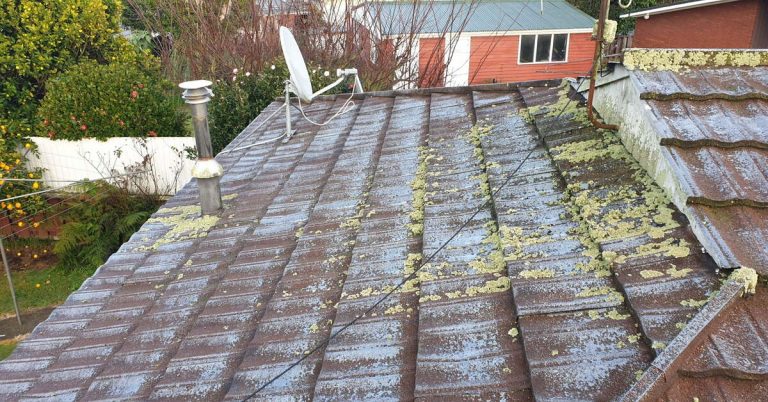
UV radiation breaks down the polymer-based components of virtually every modern roofing product. The anti-reflective coating on solar panel glass, the paint system on Colorbond steel, the encapsulant in roof membranes, and the surface sealant on concrete tiles all experience photodegradation from sustained UV exposure. This process is invisible until it manifests as chalking, fading, or surface brittleness, but it is occurring every sunny day across the full summer.
High temperatures drive thermal expansion in metal roofing, gutters, and the metal components of tile systems. The daily cycle of heating during the day and cooling overnight creates repeated expansion-contraction cycling that stresses joints, fixings, and sealants with each cycle. Over a Sydney summer that includes many days above thirty-five degrees Celsius, this cycling accumulates significant mechanical stress at the most vulnerable points in the roof system.
Summer storms, when they arrive, deliver the most intense rainfall events of the year in the shortest periods. A system that is already slightly compromised by UV and thermal stress may manage moderate summer showers but fail under a sustained storm event that exceeds its design capacity. This is when cracked flashings become active leaks, when partially blocked gutters overflow, and when tiles with existing micro-cracks begin admitting water they previously excluded.
Autumn in Sydney brings leaf fall from deciduous species, accelerated shedding from native eucalypts and banksias, and the first significant frontal rainfall of the cooler season. For gutters specifically, this combination is the most demanding period of the year from a debris management perspective.
The organic material that accumulates in gutters through autumn compacts rapidly when wet, creating the dense, moisture-retaining layer that restricts drainage, holds salt and acidic compounds against the gutter surface, and provides the fuel load that makes the gutter a fire risk when it dries out again under summer conditions. As covered in the article on why small amounts of roof debris can create serious fire risks, even modest debris accumulations create genuine ember attack ignition risk when conditions are right.
The first sustained autumn rain also provides the first real test of whatever condition the roof system has reached after summer. Flashings that degraded during summer heat, mortar on ridge capping that cracked during thermal cycling, and tiles that developed micro-cracks from UV or hail are all tested for the first time since the damage occurred. The leak that appears in April after the first significant autumn rain typically reflects summer deterioration, not autumn damage.
Sydney winters are mild by national standards but are characterised by frontal rainfall systems that deliver sustained rainfall over extended periods rather than the brief, intense events of summer. This duration is the defining characteristic that makes winter the most damaging season for building materials that are already compromised.
A flashing with cracked sealant that holds water out during a fifteen-minute summer storm may admit water during eight hours of continuous winter rain. The sustained hydrostatic pressure of prolonged rainfall finds pathways that intermittent pressure does not. And once water enters the building envelope in winter, it does not dry quickly: cooler temperatures, higher ambient humidity, and reduced ventilation from closed-up winter living all extend the period during which materials remain wet after each event.
This extended drying time is the mechanism behind the mould, structural timber degradation, and insulation performance loss that characterise the most serious consequences of winter roof and drainage failure. Problems that would resolve quickly in summer persist through weeks of winter conditions.
Sydney springs combine the return of high UV intensity with the onset of conditions that can support early bushfire activity, and the first storm events of the new storm season can arrive while fire risk is still elevated. This overlap creates the most complex seasonal maintenance challenge of the year.
As the article on the gutter problems that North Shore homes are often ignoring illustrates, the specific vegetation and debris patterns of Sydney’s northern areas create maintenance demands in spring that are easy to underestimate. The same pattern, debris accumulation from surrounding native vegetation during winter, accelerating shedding as spring growth begins, and the rapid drying of any accumulated material as temperatures and UV intensity rise, applies across most of Sydney’s bush interface suburbs.
Understanding how each season’s specific characteristics contribute to roofing material deterioration provides the context for making maintenance decisions that match the actual demand rather than a generic schedule.
The most consistent casualty of Sydney’s four-season cycle is the flexible and semi-rigid materials used at roofing junctions: sealants around flashings, mortar at ridge capping and hip ends, and the bedding materials at tile-to-wall interfaces.
Each summer’s thermal cycling stretches and compresses sealants beyond what their formulation can accommodate indefinitely. Each autumn’s moisture and debris contact introduces chemical stress. Each winter’s sustained moisture exposure tests whether the remaining integrity of the sealant is sufficient to maintain the seal under hydrostatic pressure. Each spring’s returning UV intensity begins breaking down the surface layer of the material again.
Over a five-year cycle, a sealant that was correctly installed and initially elastic becomes increasingly brittle and prone to cracking. The material does not fail suddenly in most cases: it reaches a tipping point after years of seasonal cycling where it can no longer accommodate the movement and moisture conditions the seasonal cycle produces.
Roofing systems that have been through many seasonal cycles accumulate deterioration that accelerates the impact of each subsequent cycle. A sealant that is fifty percent degraded after ten years may fail completely within two more years. A fascia board that has been partially softened by moisture over fifteen years of occasional overflow becomes significantly weaker through the next sustained overflow event than it was through all previous ones combined.
This accelerating deterioration pattern is one reason why maintenance that kept pace with a roof’s condition for its first decade may not be adequate in its second and third decades. The same maintenance frequency and scope that was appropriate for a newer roof often needs to increase as the roof ages into the period where accumulated seasonal stress has reduced the resilience of all its components.
The maintenance costs associated with Sydney’s four-season climate reflect both the seasonal demands described above and the accumulated deterioration that each season contributes to.
Different seasons generate different maintenance priorities and different associated costs:
Summer generates the most acute events, the storm damage events that produce repair costs through specific failure modes: hail damage, gutter displacement from wind loading, and flashing failures exposed by storm intensity. These are episodic costs that can be large but are irregular.
Autumn generates the most predictable regular maintenance cost: gutter cleaning before the winter rain season. For most Sydney properties, the autumn clean before winter is the single most impactful scheduled maintenance action of the year, and its cost is well-defined and predictable.
Winter generates the investigation and repair costs associated with whatever failures the sustained rainfall exposes. For well-maintained properties, these costs are modest. For properties where maintenance has been deferred, the winter exposure of multiple failure points can generate significant repair scope.
Spring generates the pre-fire-season clean and inspection costs, the sealant renewal costs as the impacts of winter moisture on existing sealants become apparent, and the costs of addressing any hail damage that occurred in late spring storm events.
The financial benefit of maintenance that is timed to the Sydney seasonal cycle rather than distributed uniformly across the calendar is that it prepares the roof system for each season’s specific demands rather than providing maintenance at times when it is less impactful.
A gutter clean in February, when debris loads are lower and the fire season risk is declining, is less impactful than the same clean in April, which removes the autumn accumulation before winter tests the drainage system. An inspection in June is less useful than one in March, which can identify and address summer damage before winter moisture reaches it.
The timing of maintenance within the seasonal cycle is often as important as the frequency.
The specific ways that Sydney’s seasonal conditions affect different building materials can be summarised in a way that helps homeowners understand the specific vulnerabilities of their own roof system.
Concrete tiles: Most affected by summer UV and autumn moisture loading, both of which break down surface coatings and increase moisture absorption. Pre-autumn inspection of coating condition allows treatment before the season that tests absorption most severely.
Terracotta tiles: Most affected by joint mortar and ridge capping performance, which is tested by summer thermal cycling and winter moisture. More resistant to UV and surface degradation than concrete tiles but dependent on the mortar system remaining sound.
Colorbond and metal sheeting: Most affected by summer UV and thermal cycling on the coating system, and by the corrosive conditions created by debris holding moisture against the metal surface through autumn and winter. The thermal expansion characteristics of metal also make the fixing system more important in Sydney’s wide temperature range than in more moderate climates.
Flashings and sealants: Affected by all four seasons in sequence, with the seasonal cycling being the primary driver of the fatigue and brittle failure that characterises aged sealant systems. The two to three year resealing cycle appropriate for Sydney reflects the four-season stress these materials experience.
Gutters and drainage components: Affected primarily by debris loading through autumn, structural performance under winter rainfall volumes, and corrosion driven by the combination of moisture, organic acids from decomposing debris, and salt air in coastal zones. Consistent maintenance across the full seasonal cycle, rather than a single annual clean, is the appropriate response for most Sydney properties.
A practical maintenance program for a Sydney roof that reflects the actual seasonal demands looks like this:
Professional gutter cleaning at the April and August to September windows provides the most impactful scheduled maintenance in this cycle, addressing the debris and drainage management that underlies many of the secondary issues each season reveals.
For Sydney homeowners looking for more information on professional roof and drainage maintenance services across different parts of the city, the Sydney page provides details on what local services cover and what to expect from a maintenance visit.
Sydney’s four seasons are not a background condition that roofs simply exist within. They are an active set of forces that work on every material and every component in a roof system continuously, season after season, year after year. The homeowners who understand this and maintain their roofs with timing and scope that matches the actual seasonal cycle are the ones whose roofs deliver their full service life. Those who maintain against a generic undifferentiated schedule are often surprised to find their roofs aging faster than they expected.